
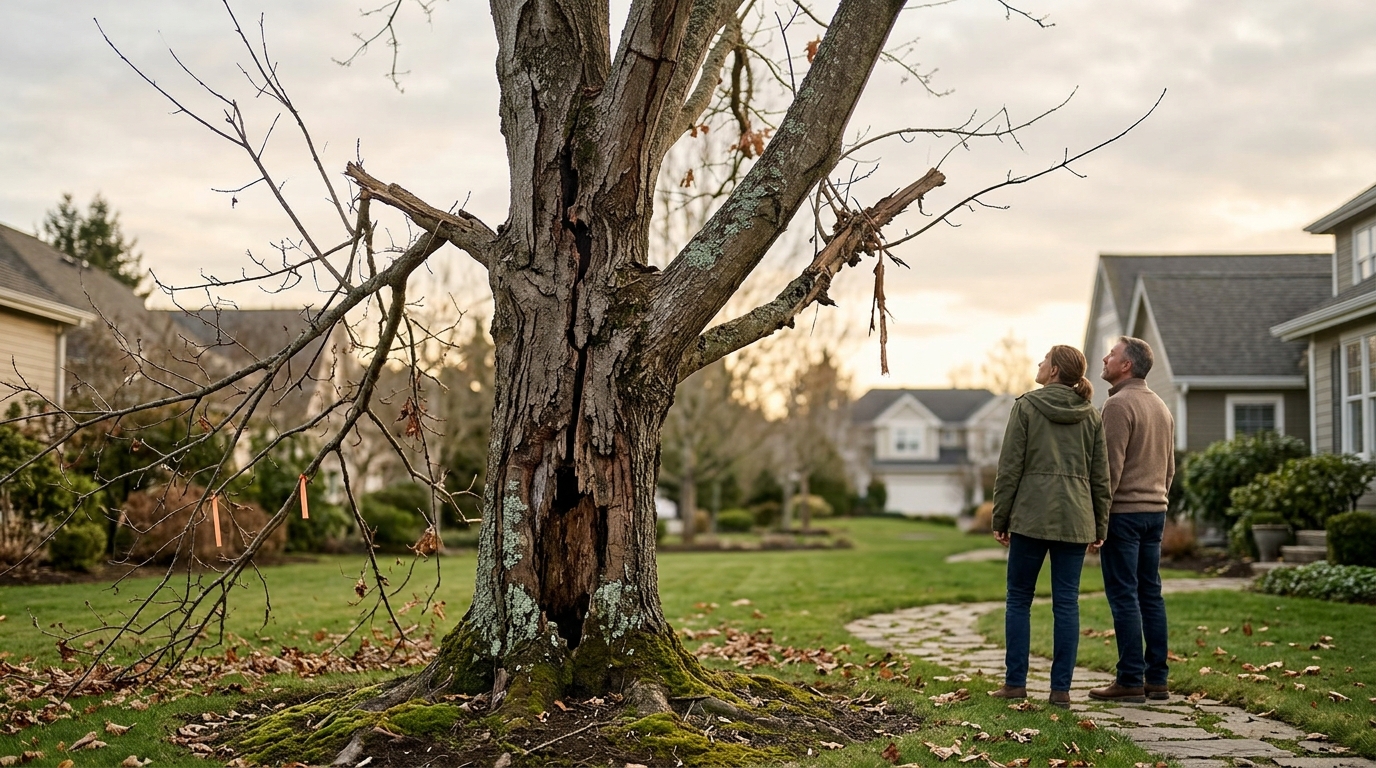
A dying tree becomes a safety hazard when structural defects, such as cracks, decay, or root failure, make it likely to fall. TreeProfessionals.com helps homeowners identify these risks by explaining the visual cues that indicate a tree is no longer stable. Recognizing these signs early allows you to take action before a limb or the entire trunk fails. according to Learn to recognize For additional details, review the About TreeProfessionals com TreeProfessionals.
Structural Defects in the Trunk and Branches
The most immediate danger comes from physical weaknesses in the wood itself. A hazard tree is one that has developed cracks, cavities, or weak branch unions that compromise its structural integrity. According to the Mississippi State University Extension Service, these defects are primary indicators of potential failure. You should look for large cracks in the trunk or major limbs, especially if they are deep or splitting. Cavities at the base of the tree are also critical, as they often hide internal decay that weakens the core support.
Weak branch unions, where two large branches meet, are another common failure point. If the bark is pinched between the branches, the union is weak and may split under the weight of the limbs. When you see these structural flaws, the tree is no longer just a landscape feature; it is a potential projectile. The implication is clear: a tree with visible structural defects requires a professional assessment to determine if it can be saved or must be removed.
Root Zone Indicators and Soil Failure
While the canopy gets the attention, the root system is the foundation. A tree is structurally compromised when its root plate lifts or when the soil around the base shifts. The US Forest Service notes that environmental stressors can uproot trees or break large limbs. Look for heaving soil, which indicates that the root ball is lifting out of the ground. This often happens when the tree is dying and the roots can no longer anchor it, or when the soil has become waterlogged.
Canopy Decline and Dieback
The health of the leaves and branches tells you how much life is left in the tree. A dying tree is one that shows significant dieback, where branches lose their leaves and turn brittle. The National Wildfire Coordinating Group identifies snags, or dead standing trees, as a specific hazard category. If the upper third of the canopy is bare or brown, the tree is likely dead or dying. Brittle branches are dangerous because they can snap off in a light breeze, falling on people or property.
Uneven leaf density is another sign. If one side of the tree is full and green while the other is thin and brown, the tree is struggling. This often points to root damage on one side or a disease that is spreading. The implication is that a tree with a declining canopy is losing its ability to support its own weight. As the wood dries out, it becomes more brittle and more likely to break. This is a visual cue that the tree is moving from a health issue to a safety issue.
Environmental Stress and External Damage
External factors can turn a healthy tree into a hazard quickly. Ice storms, for example, can inflict serious damage by uprooting trees or breaking off large limbs. The US Forest Service warns that cracks can develop in large branches during these events, even if the branches do not fall immediately. These hidden cracks weaken the branch, making it a future hazard. You should inspect your trees after any severe weather event for signs of stress.
Insect damage is another environmental factor that contributes to tree failure. Beetles and borers can weaken the wood from the inside, leading to decay. If you see sawdust or small holes in the bark, the tree may be under attack. The implication is that a tree under environmental stress is less resilient. It is more likely to fail during the next storm or heat wave. This is why regular monitoring is important, especially for trees that are close to structures or high-traffic areas.
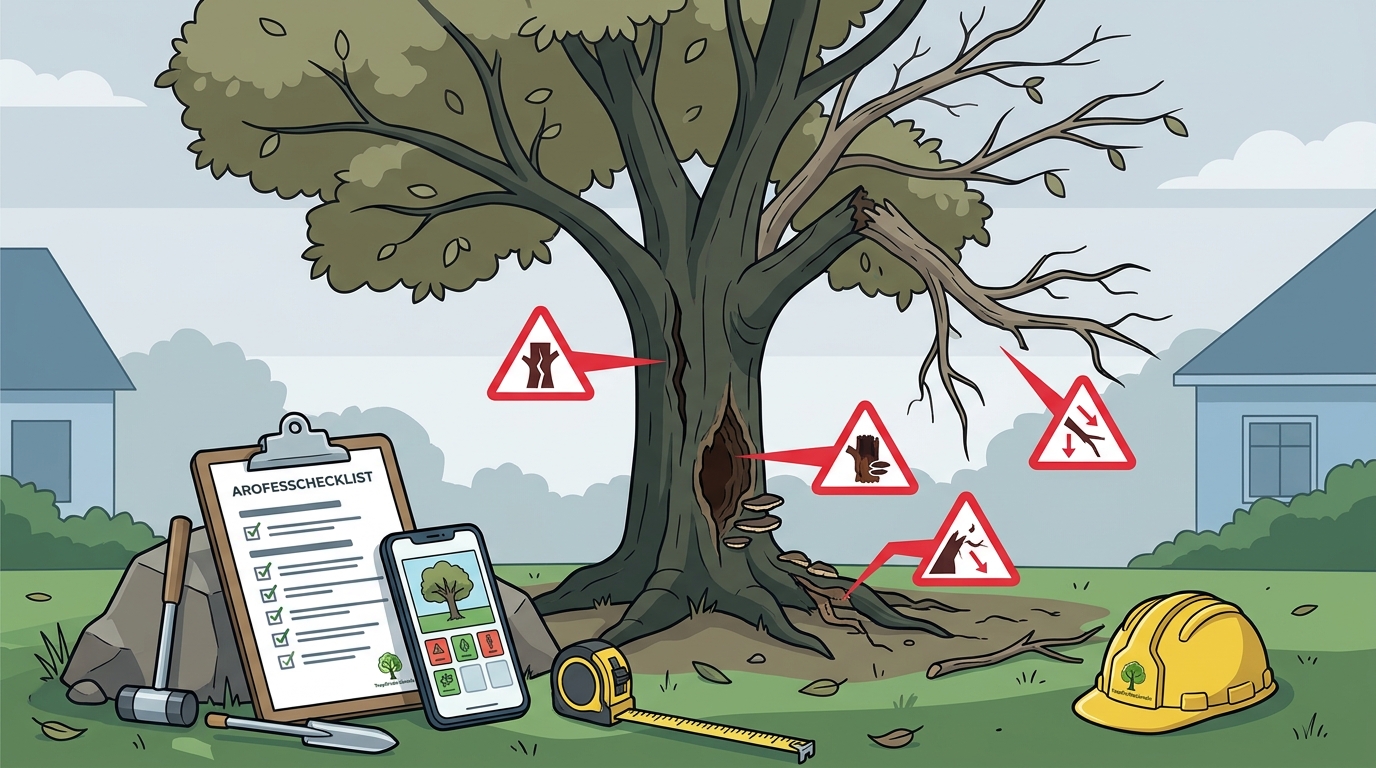
Assessing the Risk to Property and People
Not all dying trees are immediate hazards, but the risk depends on what is below the tree. A tree is a safety hazard when it is likely to fall on something valuable, such as a house, car, or a place where people gather. The OSU Extension Service emphasizes assessing trees based on risk factors like species, root damage, and decay. If a dying tree is standing over your patio, the risk is high. If it is in the middle of an open field, the risk is lower, but still present.
The implication is that you must weigh the tree's condition against its location. A tree with minor defects in an open area may be safe to monitor. A tree with major defects near a structure is an emergency. This is where professional assessment becomes critical. A certified arborist can evaluate the tree's structural integrity and recommend the best course of action. You can find a local professional through the directory to get a second opinion on your tree's safety.
Key Takeaways
- Cracks, cavities, and weak branch unions are primary structural defects that indicate a tree is a hazard.
- Lifting root plates and mushrooms at the base signal root decay and potential toppling.
- Significant dieback in the canopy, especially in the upper third, indicates the tree is dying.
- Environmental stressors like ice storms and insect damage can create hidden weaknesses.
- The risk level depends on the tree's location relative to structures and people.
- Professional assessment is necessary to determine if a tree can be saved or must be removed.
Frequently Asked Questions
What is the first sign that a tree is becoming a hazard?
The first sign is often structural, such as a large crack in the trunk or a weak branch union. These defects compromise the tree's ability to support its own weight.
Can a tree with mushrooms at the base be saved?
It depends on the extent of the decay. If the fungus is only on the surface, the tree might be stable. If it is on the lower trunk, the core is likely decayed, and the tree is a hazard.
How do I know if a leaning tree is dangerous?
A tree that has always leaned is usually fine. A tree that started leaning recently, or has cracked soil on one side, is an emergency and likely to fall.
Do I need a permit to remove a hazard tree?
Permit requirements vary by city and county. You should check with your local municipality before removing any tree, especially if it is large or protected.
Who is responsible if a dying tree falls on my neighbor's house?
Generally, the owner of the tree is responsible if the tree was known to be hazardous and they failed to take action. This is a legal issue, so you should consult with an attorney if a dispute arises.
How often should I inspect my trees for hazards?
You should inspect your trees at least once a year, and after any severe weather event. Look for cracks, decay, and changes in the canopy.
Conclusion
Identifying a dying tree as a safety hazard requires looking at the whole picture: structural defects, root health, canopy decline, and environmental stress. TreeProfessionals.com provides the plain-English guidance you need to spot these warning signs. If you are unsure about the safety of a tree on your property, the best next step is to get a professional assessment. You can browse the directory to find a local tree care professional who can evaluate your tree and recommend the right course of action.