
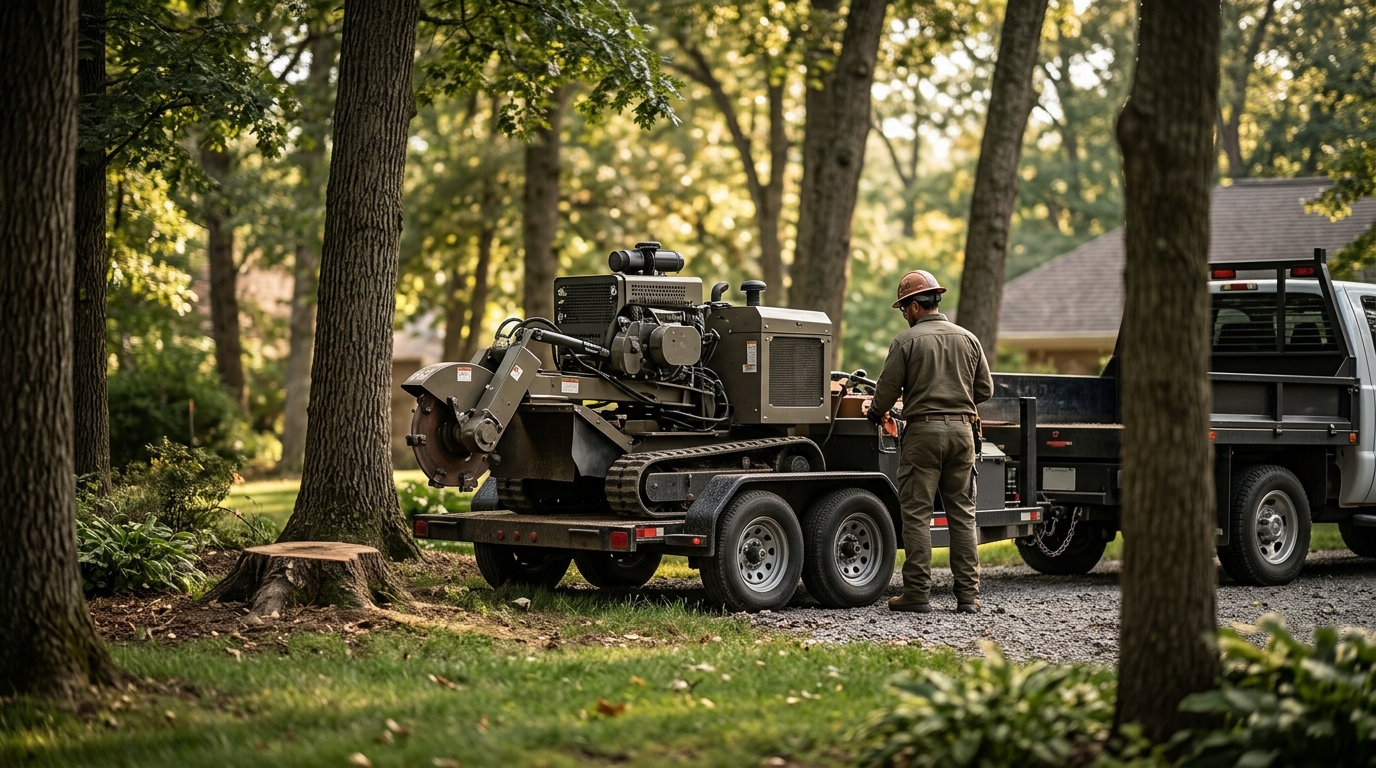
Most tree service companies charge a minimum fee of $100 to $150 for stump grinding, regardless of the stump's size. This baseline covers the cost of transporting the heavy grinding equipment to your property. While the per-inch rate determines the final price for larger stumps, the minimum charge ensures the operator covers travel and setup time for even small jobs.
Why Minimums Exist
Stump grinding is a specialized task that requires heavy machinery, typically a compact tractor or a dedicated grinder trailer. The equipment is expensive to maintain and transport, which drives the baseline cost. A minimum charge is a standard industry practice that protects operators from losing money on very small jobs where the travel time exceeds the grinding time. For a homeowner, this means that a small 6-inch stump and a 12-inch stump often cost the same to remove. The operator must drive to the site, unload the machine, and set up safety zones, which takes the same amount of time whether the wood is small or large. Understanding this logic helps explain why quotes do not scale linearly with size for smaller trees.
How Pricing Works
Most professionals use a tiered pricing model that combines a base minimum with a per-inch rate. After the minimum is met, the cost usually increases by $2 to $5 for every inch of stump diameter. This structure ensures that the operator is compensated for the actual time the grinder spends cutting through the wood. For example, a 20-inch stump might cost $100 to $150, while a 40-inch stump could cost $150 to $250. The per-inch rate is measured at the ground level, including the root flare where the trunk widens. It is important to measure the widest point of the stump to get an accurate estimate. This method provides a transparent way to compare quotes from different companies, as the variables are standardized across the industry.
Size and Diameter Impact
The diameter of the stump is the primary driver of cost once the minimum threshold is passed. Small stumps under 12 inches, often from ornamental or fruit trees, usually fall within the minimum charge range. Medium stumps between 12 and 24 inches, typical of mature fruit trees or small maples, start to incur per-inch charges. Large stumps over 24 inches, such as mature oaks or ash trees, command higher prices due to the density of the wood and the time required to grind it down. Dense hardwoods like hickory or oak grind slower than softwoods like pine, which can slightly increase the time and cost. The depth of the grind also matters; most operators grind 6 to 12 inches below ground level to prevent regrowth. Deeper grinding takes longer and may increase the price, so it is worth clarifying the depth in your quote.
Multiple Stumps and Discounts
If you have more than one stump to remove, you can often save money by scheduling them for the same visit. Once the equipment is on-site, the marginal cost of grinding additional stumps is significantly lower. Many companies offer a discount of $50 to $100 for each additional stump on the same job. This makes it more economical to address all stumps at once rather than booking separate appointments. For instance, if you have two 20-inch stumps, the first might cost $150 and the second $100, totaling $250 instead of $300. This discount structure rewards homeowners who consolidate their work. It is also a good time to ask about chip removal, as hauling away the wood chips is often an extra fee that can be negotiated when multiple stumps are involved.
Avoiding Surprise Fees
To avoid unexpected costs, request a written, itemized quote before work begins. The quote should clearly state the minimum charge, the per-inch rate, and any additional fees for chip removal or backfilling. Access to the stump is another factor that can affect the price; if the grinder cannot park close to the stump, the operator may need to use a smaller machine or do hand work, which can increase the cost. Rocks or buried debris can also damage the grinder teeth, leading to surcharges. By understanding these variables, you can ask the right questions during the estimate. TreeProfessionals.com provides plain-English guides on these costs to help you make informed decisions. You can browse our directory to find local professionals who provide transparent pricing.
Key Takeaways
- Most companies charge a minimum of $100 to $150 for stump grinding, covering travel and setup.
- After the minimum, prices typically range from $2 to $5 per inch of diameter.
- Small stumps under 12 inches usually cost the same as the minimum fee.
- Grinding multiple stumps in one visit often results in a discount for additional stumps.
- Access and wood density can affect the final price beyond the standard per-inch rate.
- Always request a written quote that itemizes grinding, chip removal, and backfilling.
Frequently Asked Questions
What is the average minimum charge for stump grinding?
The average minimum charge for stump grinding in the US is between $100 and $150. This fee covers the cost of transporting the equipment to your property and setting up the work area. It applies regardless of the stump's size, meaning a small 6-inch stump and a 12-inch stump often cost the same.
How is the price calculated for larger stumps?
For stumps larger than the minimum threshold, the price is calculated based on the diameter at ground level. Most operators charge between $2 and $5 per inch. You should measure the widest part of the stump, including the root flare, to get an accurate estimate. This per-inch rate is added to the base minimum fee.
Does the type of tree affect the cost?
Yes, the density of the wood can affect the time it takes to grind the stump. Dense hardwoods like oak or hickory grind slower than softwoods like pine or maple. While the per-inch rate may remain the same, the operator may charge more if the wood is particularly hard or if there are rocks present.
Can I save money by grinding multiple stumps?
Yes, grinding multiple stumps in a single visit usually results in a discount. Since the equipment is already on-site, the cost for additional stumps is lower. Many companies reduce the price of the second and subsequent stumps by $50 to $100 each. This makes it more cost-effective to address all stumps at once.
Is chip removal included in the minimum charge?
Chip removal is often not included in the base grinding fee. Hauling away the wood chips can cost an additional $50 to $150. Some operators may leave the chips on-site for you to use as mulch, which is free. Always clarify in your quote whether the price includes hauling away the debris or if you need to arrange removal separately.
Find a Professional
Understanding the minimum charge is the first step to getting a fair price for your stump removal. By knowing the standard rates and asking the right questions, you can avoid surprises and ensure you are hiring a reputable service. TreeProfessionals.com helps you navigate these costs with clear, plain-English guides. You can browse our directory to find local tree care professionals who provide transparent, itemized quotes for stump grinding and other services.