
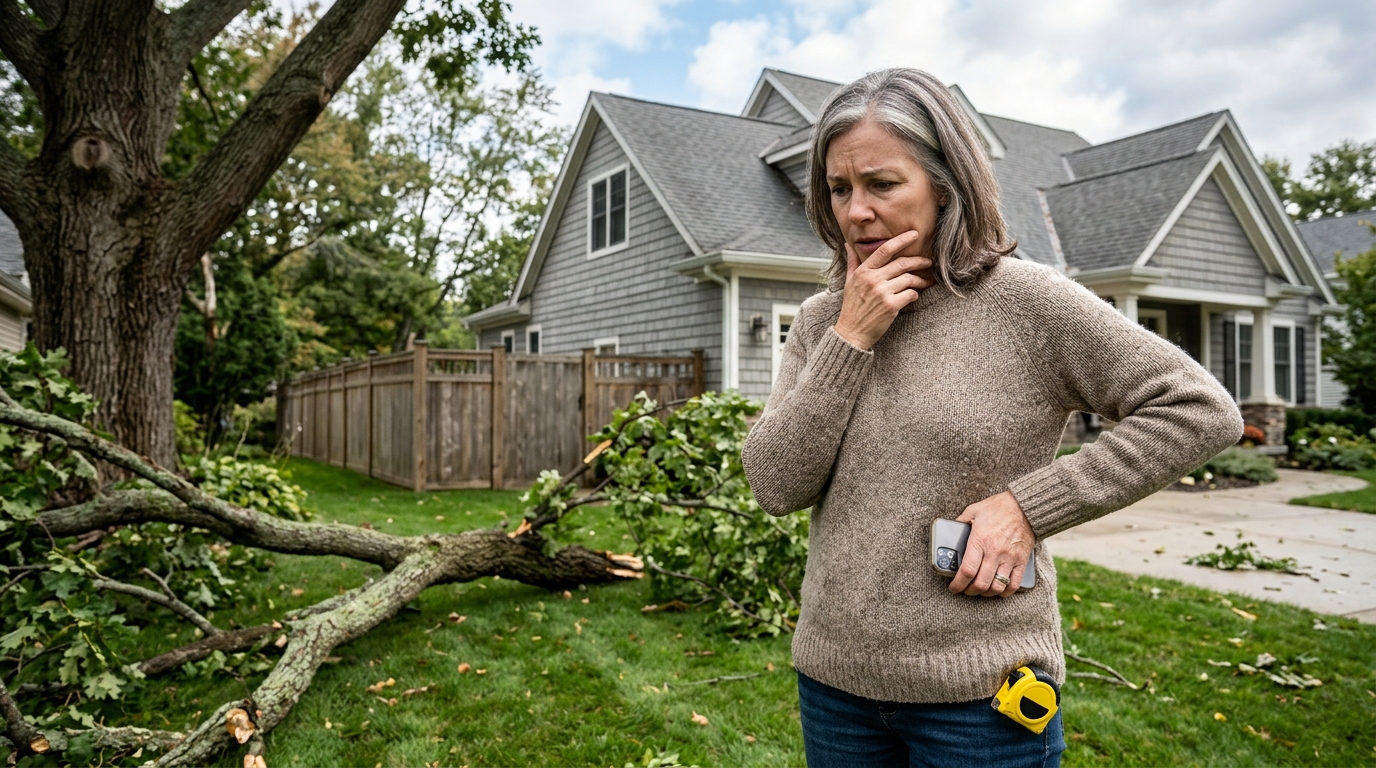
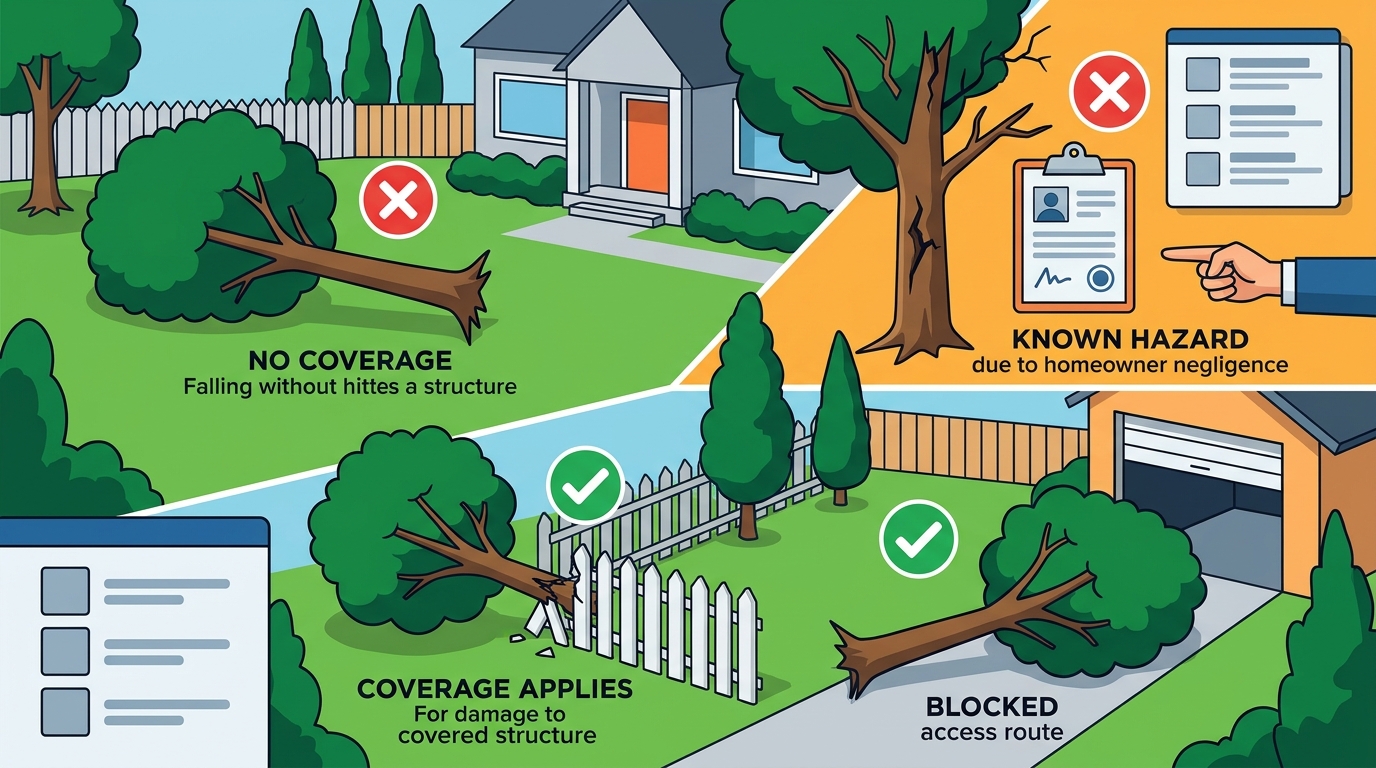
Homeowners insurance typically denies tree removal claims when the tree fell on the lawn without hitting a structure, or when the homeowner ignored a known hazard. Coverage generally applies only if the tree damaged a covered structure like a house or fence, or blocked a driveway. Understanding this distinction prevents costly surprises during a storm.
The Core Rule: Damage to Covered Structures
Homeowners insurance is designed to repair sudden, accidental damage to your property, not to maintain your yard. The fundamental rule is that a tree must hit something covered by your policy to trigger removal coverage. If a large oak falls on your roof, the insurer pays for the roof repair and the tree removal. If that same oak falls six feet to the left onto the grass, the claim is denied.
This distinction matters because maintenance is the homeowner's responsibility. Insurance companies view a standing tree as part of your landscape, similar to a shrub or a flower bed. They do not pay to remove healthy or even dead trees simply because you want them gone. The moment a tree becomes a hazard, it is still your problem until it actually causes damage. This is why a tree leaning toward your house does not qualify for coverage, even if it looks scary.
TreeProfessionals.com explains that the "only if it hit something" rule is the most common source of confusion for homeowners. When a tree falls on a garage, a fence, or a deck, the removal cost is typically covered up to a specific limit, often between $500 and $1,000 per tree. Any amount above that limit is your responsibility. If the tree hit nothing, the entire removal cost, which can range from $200 to $2,000 depending on size, is yours.
The Negligence Trap: Ignoring Known Hazards
A second major reason for denial is negligence. If you knew a tree was dead, diseased, or leaning dangerously and you did nothing, your insurer may deny a claim for the damage it causes. This is a legal and financial risk that many homeowners underestimate. A dead tree is not just an eyesore; it is a liability. If you leave a dead tree standing and it later falls on your neighbor's car, you can be held personally liable for the damages.
Insurance policies often include clauses that exclude coverage for damage caused by the policyholder's failure to maintain their property. This means that if an arborist or a tree service told you a tree was dying and you ignored the advice, the insurer has grounds to deny the claim. The logic is that you had the opportunity to prevent the damage but chose not to. This is why getting a professional assessment for sick or leaning trees is important, even if you do not plan to remove them immediately.
TreeProfessionals.com notes that preventive removal is considered maintenance, and maintenance is the homeowner's responsibility. Paying to remove a dead tree before it falls is expensive, but it is far cheaper than a denied insurance claim and potential liability to neighbors. If you are unsure whether a tree is a hazard, a consultation with a professional can provide the documentation you need to show you acted responsibly.
Policy Limits and Deductibles
Even when a claim is approved, the amount you receive is limited by your policy terms. Most standard homeowners policies, such as the HO-3 form, include a specific limit for debris removal. This limit is often a percentage of your dwelling coverage or a fixed dollar amount per tree. If your policy limits debris removal to $1,000 per tree and the removal costs $1,500, you pay the difference.
Your deductible also plays a role. If your deductible is $2,500 and the total damage, including roof repair and tree removal, is $3,000, you pay the first $2,500. The insurer pays the remaining $500. In some cases, the total damage may be less than your deductible, meaning you pay everything out of pocket. It is important to review your policy's "debris removal" section to understand these limits before a storm hits.
TreeProfessionals.com advises homeowners to check their policy for the exact wording on debris removal and coverage limits. Some policies require that a driveway be fully blocked for coverage to apply, while others may cover partial blockages. Knowing these details helps you decide whether to file a claim or pay out of pocket. Filing a small claim can raise your premiums, so it is worth weighing the cost of the removal against the potential increase in your insurance rates.
Documentation and the Claims Process
How you document the damage can also affect whether a claim is approved. If a tree falls on your house, the first step is to photograph everything before it is touched. This includes the base of the tree, the damage to the roof, and any debris in the yard. These photos serve as evidence for your insurer. If you let a crew start cutting before you take photos, you may lose the ability to prove the extent of the damage.
You should also call your insurer before hiring a tree service. Some policies require you to use an approved vendor or to get a written estimate before work begins. If you hire a crew without notifying your insurer, they may deny the claim or pay less than expected. The order of operations is critical: people out, check for hazards, photograph everything, call the insurer, then hire a crew. Skipping steps can lead to denial, even if the damage is covered.
TreeProfessionals.com provides a step-by-step guide for storm damage, emphasizing the importance of documentation and communication with your insurer. The guide notes that emergency removal off a house typically runs $1,500 to $5,000, and insurance pays up to the policy limit per tree. By following the correct process, you increase the likelihood that your claim will be approved and paid in full.
Key Takeaways
- Homeowners insurance covers tree removal only if the tree hit a covered structure, such as a house, garage, or fence.
- If a tree falls on the lawn and hits nothing, the removal cost is your responsibility, not the insurer's.
- Ignoring a known hazard, such as a dead or leaning tree, can lead to claim denial due to negligence.
- Policy limits for debris removal are often between $500 and $1,000 per tree, so you may pay the difference.
- Your deductible applies to the total damage, including tree removal and structure repair.
- Photograph all damage before any work begins and notify your insurer before hiring a tree service.
- Preventive removal of dead trees is considered maintenance and is not covered by insurance.
Frequently Asked Questions
Does homeowners insurance cover tree removal if the tree fell on the lawn?
No, homeowners insurance typically does not cover tree removal if the tree fell on the lawn and did not hit a covered structure. In this case, the removal is considered maintenance, which is the homeowner's responsibility. You would need to pay the full cost of removal, which can range from $200 to $2,000 depending on the tree's size.
What if I knew the tree was dead but didn't remove it?
If you knew a tree was dead or hazardous and did not take action, your insurer may deny a claim for the damage it causes. This is because you failed to maintain your property, which is a condition of most policies. It is safer to get a professional assessment and remove the tree before it falls.
How much does insurance pay for tree removal?
Insurance typically covers tree removal up to a specific limit, often between $500 and $1,000 per tree, after your deductible. If the removal costs more than the limit, you pay the difference. The structure repair is covered under your dwelling coverage, subject to your deductible.
Do I need to call my insurer before hiring a tree service?
Yes, you should call your insurer before hiring a tree service, especially if the tree hit a structure. Some policies require you to notify them before work begins or to use an approved vendor. Failing to do so can lead to claim denial or reduced payment.
Is it worth filing a claim for a small tree removal?
It depends on your deductible and the cost of removal. If the total damage is less than your deductible, you pay everything out of pocket. Filing a small claim can also raise your premiums, so it is worth weighing the cost of the removal against the potential increase in your insurance rates.
What should I do if a tree falls on my house?
First, get everyone out of the house and away from the tree. Check for gas smells or downed power lines and call 911 if there is any doubt. Then, photograph everything before it is touched, call your insurer, get the roof tarped, and hire an insured crew for removal. Emergency removal off a house typically runs $1,500 to $5,000.
Next Steps for Homeowners
Understanding how insurance works for tree removal helps you make informed decisions before and after a storm. If you are unsure whether a tree is a hazard or if your claim will be covered, start by reviewing your policy and getting a professional assessment. TreeProfessionals.com provides plain-English answers to these questions and a directory of local tree professionals you can contact directly. To find a pro in your area, visit the Find a Pro page on TreeProfessionals.com.