
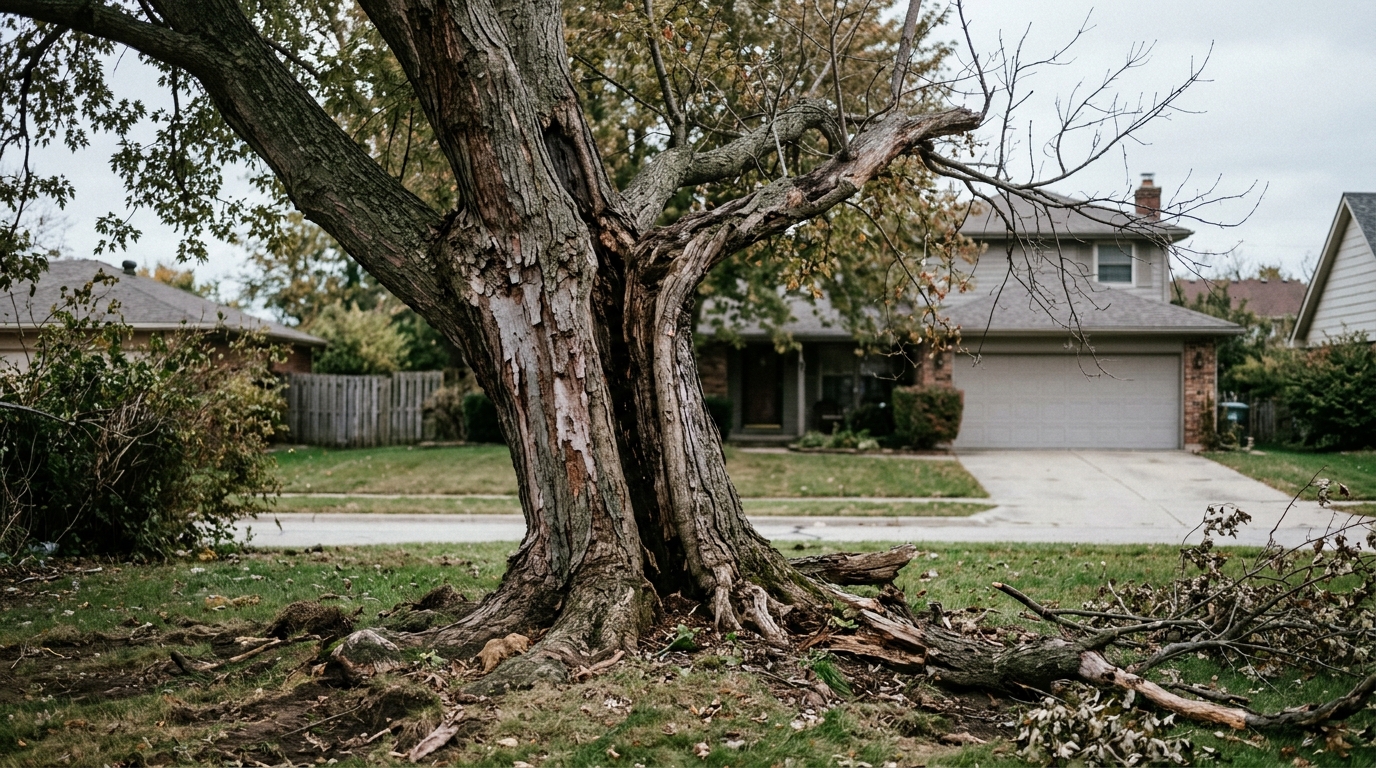
A dying tree becomes dangerous when structural failure is imminent, indicated by sudden leaning, deep trunk cracks, or root heaving. These signs signal that the tree can no longer support its own weight and may fall without warning. Homeowners should prioritize safety by assessing these hazards immediately, as a falling tree can cause severe property damage or injury. TreeProfessionals.com provides plain-English guidance to help you identify these critical structural failures before they become emergencies.
Sudden Lean and Root Heaving
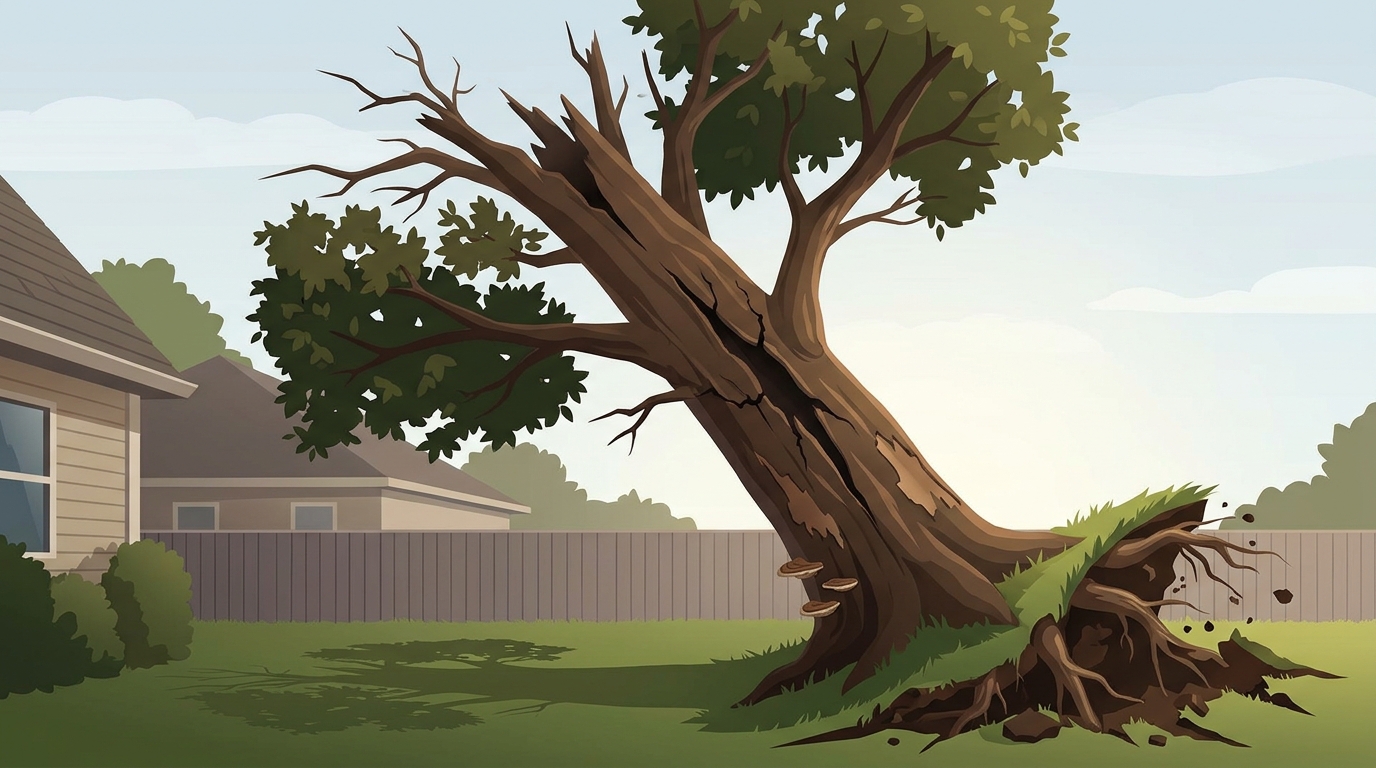
A tree that has always leaned is usually stable, but a recent change in angle is a major red flag. Sudden lean occurs when the root system fails on one side, causing the trunk to shift. This is often accompanied by root heaving, where the soil on one side of the base lifts upward. This physical displacement indicates that the anchor points holding the tree in the ground are breaking. If you notice a tree leaning toward a house, garage, or power line, treat it as an immediate hazard. The risk of collapse increases with every hour of wind or rain.
Deep Trunk Cracks and Cavities
Deep vertical cracks in the trunk, known as splits, compromise the structural integrity of the wood. When a crack extends more than one-third of the way through the trunk's diameter, the tree is at high risk of breaking in two. Cavities, or hollow spaces inside the trunk, also weaken the tree, especially if they are located near the base. A tree with a large cavity may look healthy on the outside but be structurally unsound within. These internal defects make the tree brittle and prone to snapping under stress. A professional assessment is necessary to determine if the remaining wood can support the canopy.
Base Decay and Fungal Growth
Fungal growth at the base of a tree is a reliable indicator of internal decay. Mushrooms or shelf fungus growing from the roots or lower trunk mean that the wood is rotting from the inside out. This decay weakens the root collar, which is the critical connection between the trunk and the root system. When the root collar decays, the tree loses its ability to anchor itself firmly in the soil. This type of failure often results in the entire tree toppling over rather than breaking. If you see persistent fungal growth at the base, the tree is likely structurally compromised and poses a significant risk to nearby structures.
Limb Failure and Deadwood
Large dead limbs are a direct threat to anything below them. A dead branch can fall without warning, even in calm weather, due to wind or the weight of snow. The presence of many small dead branches falling in calm conditions suggests that the tree is shedding weight it can no longer support. This is a sign of overall decline. Additionally, branches that are rubbing against each other can create wounds that lead to decay. These structural weaknesses make the tree more likely to fail in a storm. Removing deadwood is a safety measure, but if the main trunk is also compromised, full removal may be necessary.
Assessing the Risk and Next Steps
Identifying these structural signs is the first step, but determining the level of risk requires professional evaluation. An arborist can assess the tree's health and structural integrity to recommend the best course of action. This may involve pruning to reduce weight, cabling to support weak limbs, or full removal if the tree is beyond saving. TreeProfessionals.com offers a directory of local tree care professionals who can provide this assessment. You can browse the Find a Pro directory to connect with a local expert. For more information on the signs of a dying tree, read our guide on how to know if your tree is dead or dying. Understanding the cost of removal is also important, so check our tree removal cost guide for typical price ranges. If you are unsure about the health of your trees, our homeowner's tree care guide covers basic maintenance and warning signs. Finally, if you are considering hiring a service, learn how to vet a tree service to ensure you are working with a qualified and insured company.
Key Takeaways
- Sudden lean and root heaving are immediate signs of root failure and high collapse risk.
- Deep trunk cracks and cavities weaken the tree's structural integrity, especially near the base.
- Fungal growth at the base indicates internal decay that compromises the root collar.
- Large dead limbs pose a direct threat and can fall without warning in calm weather.
- Professional assessment is essential to determine if pruning, cabling, or removal is needed.
- Always prioritize safety by keeping people and property away from compromised trees.
Frequently Asked Questions
Is a tree with mushrooms at the base always dangerous?
Mushrooms at the base indicate internal decay, which weakens the root collar. While not every tree with base decay will fall immediately, it is structurally compromised and poses a higher risk of failure, especially in wind or rain. A professional should assess the extent of the decay to determine if the tree is safe to keep.
Can pruning save a tree with a deep trunk crack?
Pruning can reduce the weight of the canopy, which may lower the stress on a cracked trunk. However, if the crack is deep or the tree is already leaning, pruning may not be enough to prevent failure. In many cases, a tree with a significant trunk crack is a candidate for removal to ensure safety.
How do I know if a tree is leaning due to root failure?
Look for soil heaving on one side of the base, which indicates that the roots on that side have failed. A sudden change in the tree's angle, especially if it is leaning toward a structure, is a strong sign of root failure. This is an emergency situation that requires immediate professional attention.
What is the difference between a dead tree and a dying tree?
A dead tree has no living tissue, indicated by brown, dry twigs and no leaves in summer. A dying tree may still have some green leaves but shows signs of decline, such as thinning canopy or dead branches. Both types of trees can be structurally hazardous, but a dead tree is more likely to fall entirely, while a dying tree may break in two.
Should I remove a tree that is leaning but still has leaves?
If the lean is recent and accompanied by root heaving or deep cracks, the tree is likely to fall and should be removed. If the lean is old and the tree is stable, it may be safe to keep, but a professional assessment is recommended. The presence of leaves does not guarantee structural integrity, especially if the root system is compromised.
How much does it cost to remove a dangerous tree?
The cost of removing a dangerous tree depends on its size, location, and the level of hazard. Typical US ranges are $200 to $2,000, with emergency or hazardous removals costing more. Stump grinding is an additional $100 to $400. For a specific estimate, you should get a written quote from a local professional.