
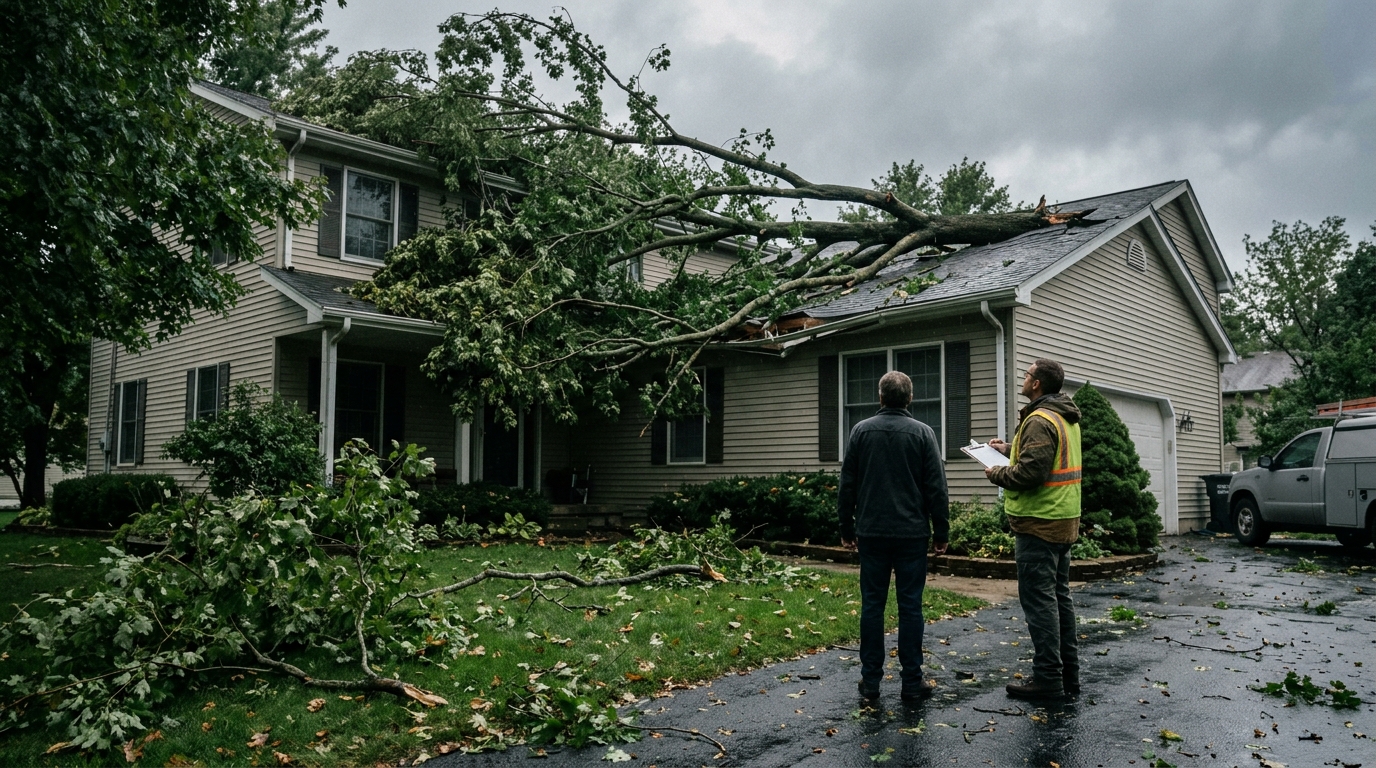
Filing an insurance claim after a tree falls on your roof involves documenting the damage, notifying your insurer, and coordinating with a licensed adjuster. You must prove the tree struck a covered structure to trigger coverage. TreeProfessionals.com provides plain-English guidance on the costs and steps involved in this process.
Immediate Safety and Documentation
The first step in the claims process is ensuring safety. A tree on a roof is an immediate hazard. You must evacuate the area and check for gas leaks or downed power lines. If you smell gas or see a live wire, call 911 immediately. Do not touch the tree or the lines. Once the area is safe, you need to document the scene. Take clear photographs of the tree, the roof damage, and the surrounding area. These images serve as primary evidence for your insurance adjuster. They help establish the extent of the damage before any cleanup begins.
Documentation is critical because insurance companies rely on visual proof to validate claims. Without photos, the adjuster may have to make assumptions that could lower your payout. Keep the debris in place until the adjuster arrives if possible. Moving the tree before the inspection can complicate the assessment of how it fell. This initial phase sets the tone for the entire claim.
Understanding Coverage Triggers
Homeowners insurance typically covers tree removal only if the tree falls on a covered structure. This is known as the "impact rule." If the tree falls on your house, garage, or fence, the removal cost is usually covered. However, if the tree falls in your yard and hits nothing, the removal is typically your responsibility. This distinction is vital for managing expectations. Most standard HO-3 policies include a debris removal limit, often between $500 and $1,000 per tree. If the removal cost exceeds this limit, you pay the difference out of pocket.
It is important to understand that insurance is not a maintenance fund. It does not cover the removal of a standing dead tree before it falls. It only responds to sudden, accidental damage. If you knew a tree was dead and left it standing, the insurer may deny the claim. This is why proactive tree care is essential. You can learn more about the signs of a dying tree in our guide on how to know if your tree is dead or dying.
The Adjuster Inspection
After you file the claim, your insurance company will send a public adjuster or an internal adjuster to inspect the property. This inspection is the core of the claims process. The adjuster will assess the roof damage, the tree size, and the removal difficulty. They will also verify that the tree actually struck the structure. The adjuster's report determines the final settlement amount. You should be present during this inspection to answer questions and point out any hidden damage.
The adjuster will likely ask for a written estimate from a tree service. This estimate should be itemized, listing the cost of felling, chipping, and hauling. It should also include the cost of stump grinding if applicable. You can find a local professional in our Find a Pro directory to get this estimate. The adjuster may negotiate the estimate down, so it is helpful to have a clear understanding of market rates. You can review typical costs in our tree removal cost guide.
Settlement and Payment Structure
It is crucial to understand the difference between the "actual cash value" and "replacement cost" coverage. Most modern policies offer replacement cost, which means you are reimbursed for the full cost of repairs after you complete the work. You may receive an initial payment to start the work, with the remainder released after the job is finished. Keep all receipts and documentation for your records. This ensures you are fully reimbursed for any unexpected issues that arise during the repair process.
Avoiding Post-Storm Scams
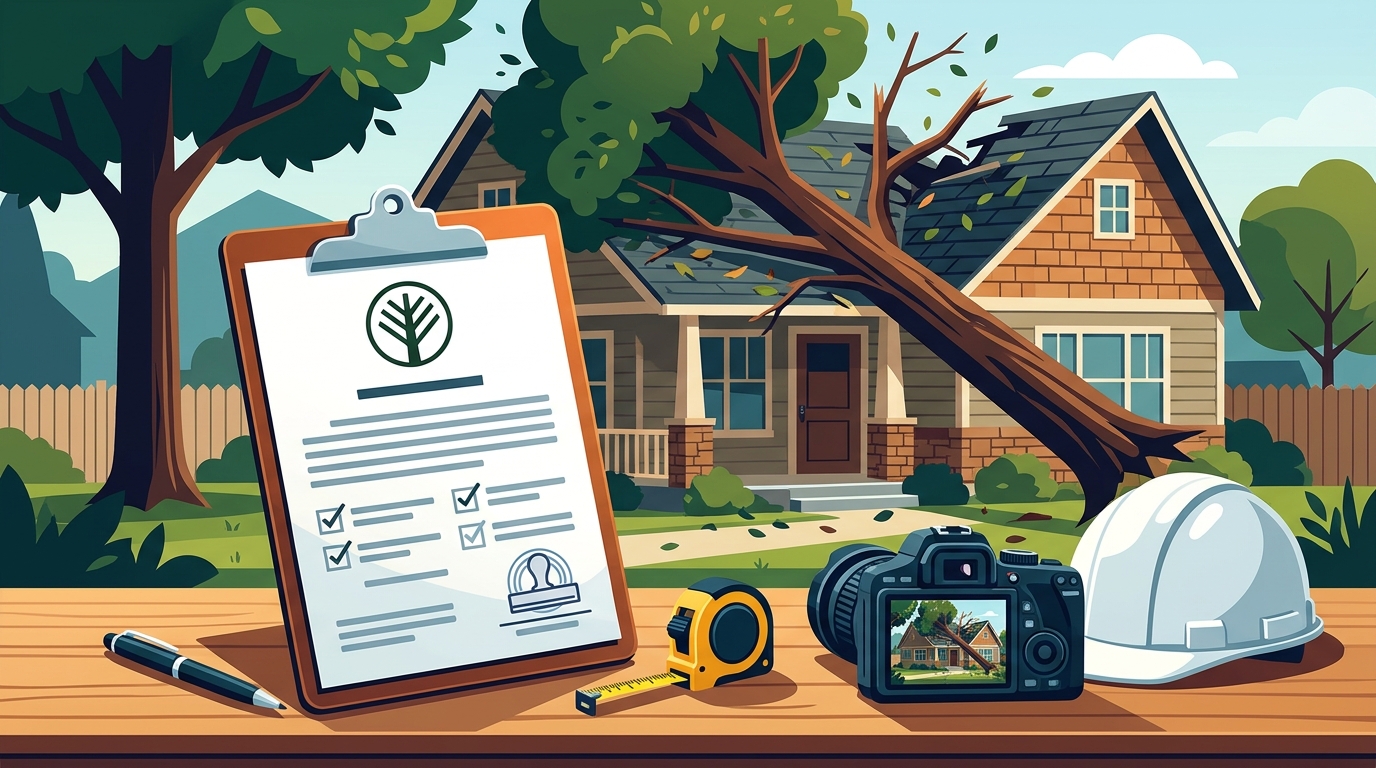
After a major storm, door-knocking crews often appear in affected neighborhoods. These crews may offer to remove the tree for cash, bypassing your insurance claim. This is a common scam. If you pay them directly without documentation, your insurance company may not reimburse you. Always use a licensed and insured contractor who works with your insurance provider. Verify their credentials and insurance before hiring. You can learn how to vet a contractor in our guide on how to hire a tree service.
Scammers often pressure homeowners to sign contracts quickly. Do not sign anything you do not understand. A legitimate contractor will provide a written, itemized proposal. They will also provide a certificate of insurance. If a crew refuses to provide these documents, walk away. Protecting your financial interests is just as important as repairing your roof. Stay informed and cautious during this stressful time.
Key Takeaways
- Insurance typically covers tree removal only if the tree strikes a covered structure like a house or garage.
- Document the damage with photos before moving the tree or calling a contractor.
- The debris removal limit in your policy is typically between $500 and $1,000 per tree.
- Always use a licensed and insured contractor who can provide an itemized estimate.
- Avoid paying unverified door-knocking crews in cash, as undocumented payments may not be reimbursed by insurance.
- Keep all receipts and documentation to ensure full reimbursement of your deductible.
Frequently Asked Questions
Does insurance cover the cost of removing a tree that fell in my yard?
Generally, standard homeowners insurance does not cover the removal of a tree that falls in your yard and hits nothing. Typically, the tree must strike a covered structure, such as your house, garage, or fence, to trigger coverage. If the tree is just lying on the lawn, the removal cost is usually your responsibility.
How much does insurance pay for tree removal?
Most policies have a debris removal limit, which is typically between $500 and $1,000 per tree. If the removal cost exceeds this limit, you must pay the difference out of pocket. The structure repair is covered under your dwelling coverage, subject to your deductible.
Who should I call first after a tree falls on my roof?
First, ensure everyone is safe and away from the tree. Check for gas leaks or downed power lines. If there is any danger, call 911. Once the area is safe, call your insurance company to report the claim. Do not hire a contractor until you have spoken with your insurer.
Can I choose my own tree service for the insurance claim?
Yes, you can usually choose your own tree service, provided they are licensed and insured. However, the insurance company may have a preferred vendor list. Using a preferred vendor can sometimes speed up the approval process. Always get a written, itemized estimate from the contractor you choose.
What if the tree was already dead before it fell?
If the tree was dead and you knew it, the insurance company may deny the claim. They may argue that you were negligent in maintaining your property. However, if the tree was healthy and fell due to a storm, the claim is more likely to be approved. An arborist's report can sometimes help establish the tree's health status.
How long does the insurance claim process take?
The timeline varies, but it typically takes a few weeks. The adjuster inspection is the most critical step. Once the estimate is approved, the payment is issued. The actual repair and removal work can take a few days to a week, depending on the contractor's schedule and the complexity of the job.
Next Steps for Homeowners
Navigating an insurance claim after a tree falls on your roof can be stressful, but understanding the process helps you protect your home and finances. Document the damage, verify your coverage, and work with a reputable contractor. TreeProfessionals.com is here to help you find the right local professionals and understand the costs involved. Visit our homepage for more plain-English answers to your tree care questions.