
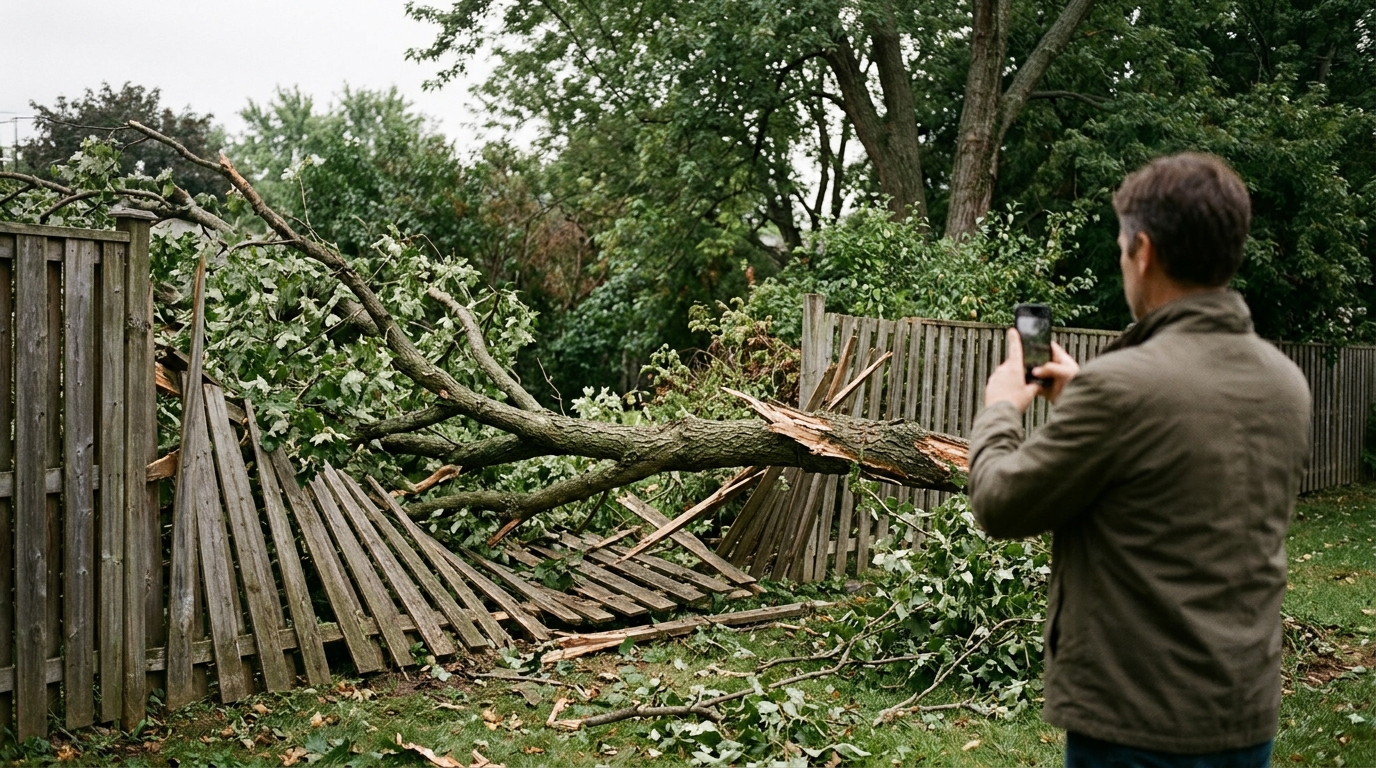
Photograph the tree base, trunk, and canopy from multiple angles before moving anything. Save timestamped images of the damage to your fence, roof, or car. Keep a written log of when you first noticed the tree's decline. These records establish the timeline and condition needed for insurance or legal claims.
Building the Documentation Timeline
Documentation is the chronological record of a tree's condition and the resulting damage. A strong timeline starts before the tree falls. If you saw dead branches, mushrooms at the base, or a sudden lean, take photos immediately. Note the date and time in your phone's metadata or a written journal. This proves the tree was in a failing state before the incident.
For example, if a neighbor's oak tree has been leaning toward your fence for three months, photos from January, March, and the day it falls create an undeniable pattern. This sequence helps distinguish between a sudden storm event and long-term neglect. Without this history, it is harder to argue that the neighbor knew or should have known the tree was hazardous.
Photo Standards for Claims
Photographic evidence is visual proof that captures the physical state of the property. Your photos must be clear, well-lit, and include scale. Use a ruler, a coin, or a person standing near the damage to show size. Take wide shots to show the context, such as the tree's position relative to your house, and close-ups to show specific cracks, rot, or impact points.
Do not move the tree or the debris until you have photographed everything. If the tree is on your roof, take pictures of the base of the tree, the trunk, and the roof damage before any crew arrives. Insurance adjusters and legal professionals rely on these images to verify the extent of the damage. Blurry or dark photos are often rejected as insufficient evidence.
Records and Communication Logs
Communication records are written or digital trails of interactions with your neighbor regarding the tree. Keep a log of every conversation, text message, or email. If you warned your neighbor about the tree's condition, save those messages. This is critical because liability often depends on whether the owner was notified and failed to act.
For instance, if you sent a text on May 1st saying, "Your maple tree has dead limbs hanging over my fence, please address it," and the tree falls in July, that text is powerful evidence. It shows you gave notice. If you have no written record, it becomes a he-said-she-said situation. Always follow up verbal warnings with a written summary to create a permanent record.
Professional Assessment and Reports
A professional assessment is a written evaluation of a tree's health and risk by a qualified arborist. While you can take photos, an arborist's report adds technical weight to your claim. They can identify specific diseases, structural defects, or root failures that a layperson might miss. This report can serve as expert testimony in a dispute.
TreeProfessionals.com provides a directory of local tree professionals who can perform these assessments. You can browse the Find a Pro directory to locate a certified arborist in your area. An independent assessment is often more credible than a report from a company that might be hired to do the removal work. It provides an unbiased view of the tree's condition prior to the incident.
Common Mistakes to Avoid
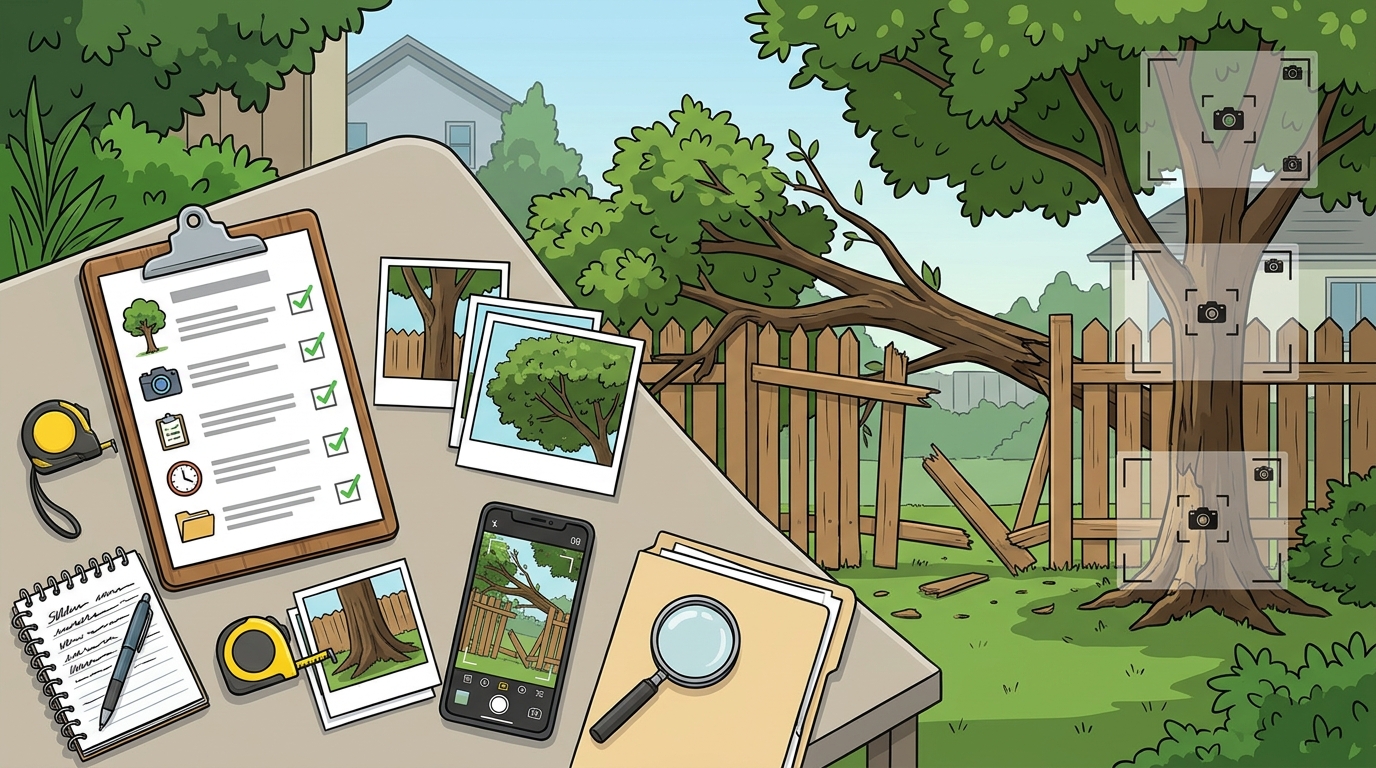
Many homeowners weaken their case by acting too quickly or carelessly. The most common mistake is removing the tree before documenting it. Once the tree is gone, you lose the primary evidence of its condition. Another mistake is failing to photograph the base of the tree. Rot and decay often start underground or at the root flare, and this is where the cause of failure is usually found.
Do not rely on memory. Human memory is unreliable, especially under stress. If you do not write it down or photograph it, it did not happen. Also, avoid editing photos. Crop them if necessary, but do not alter the lighting, color, or content. Adjusters and legal teams can detect digital manipulation, which destroys your credibility.
Key Takeaways
- Photograph the tree base, trunk, and canopy from multiple angles before moving anything.
- Include scale in your photos using a ruler, coin, or person.
- Keep a written log of when you first noticed the tree's decline.
- Save all text messages and emails where you warned your neighbor.
- Consider hiring an independent arborist for a written risk assessment.
- Do not remove the tree until all evidence is documented.
- Use the Find a Pro directory to locate local professionals for assessment or removal.
Frequently Asked Questions
Do I need to photograph the tree before it falls?
Yes, if you suspect the tree is in danger. Photos of dead branches, mushrooms, or a lean taken weeks before the fall prove the tree was hazardous. This helps establish that the owner should have known about the risk.
What if the tree falls at night?
Wait until it is safe and light enough to take clear photos. If it is an emergency, use your phone's flashlight, but prioritize safety. You can take photos the next morning, but do not let anyone remove the tree before you document the base and the damage.
Can I use videos instead of photos?
Yes, videos are excellent because they show the context and movement. Walk around the tree and the damage, narrating what you see. This provides a dynamic record that static photos cannot capture.
Who should I call first, the insurance or the arborist?
Call your insurance company first to report the claim. They may send an adjuster. You can also contact an arborist for an independent assessment. Do not let the insurance company's adjuster be the only person to document the tree's condition.
How long should I keep these records?
Keep all photos, logs, and reports for at least three to five years. Legal statutes of limitations vary by state, but keeping records for several years ensures you have evidence if a dispute arises later.
Does TreeProfessionals.com provide legal advice?
No, TreeProfessionals.com provides general tree care information and a directory of professionals. We do not provide legal, insurance, or financial advice. Consult a qualified attorney for advice about your specific circumstances.
Next Steps
Proving neighbor tree damage requires a methodical approach to evidence collection. Start by documenting the tree's condition and the resulting damage with clear, timestamped photos. Keep a written log of all communications with your neighbor. If the situation is complex, consider hiring an independent arborist for a professional assessment. TreeProfessionals.com is here to help you find the right local professionals to assist with the next steps. Visit our Find a Pro directory to connect with a tree care professional in your area.