
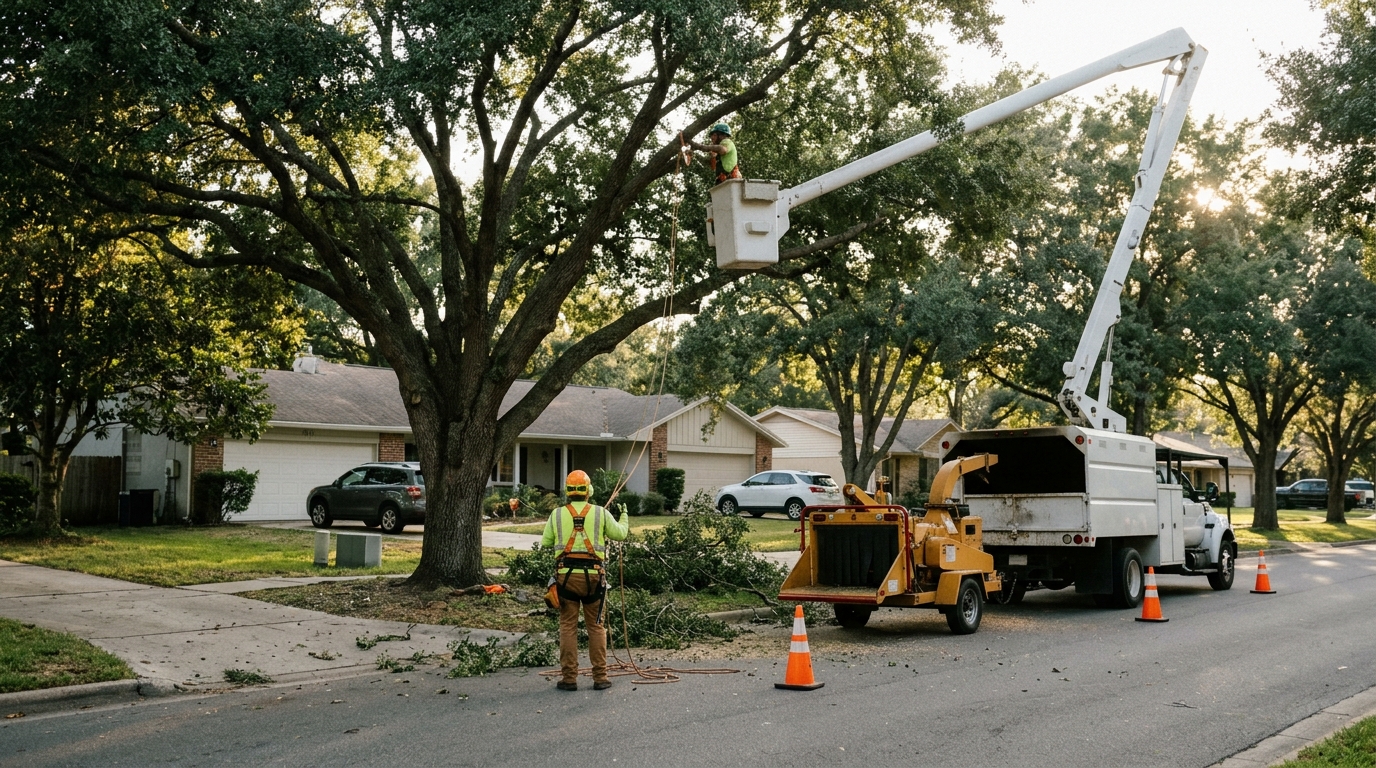
Arborists and tree service crews typically charge between $150 and $300 per hour for tree trimming in the United States. This rate covers the labor of a two or three-person crew, the use of specialized equipment like bucket trucks or chippers, and the insurance required for safe work. While hourly billing is common, most professionals prefer to quote a flat rate based on the specific job scope.
How do hourly rates compare to flat-rate quotes?
Hourly billing is often used for emergency work, storm cleanup, or jobs where the scope is unclear. For standard trimming, most companies prefer a flat-rate quote because it provides price certainty for the homeowner. An hourly rate of $150 to $300 reflects the cost of a full crew, not a single worker. If a job is estimated to take four hours, the total cost will be significantly higher than a single worker's wage would suggest.
The distinction matters because a flat-rate quote usually includes all labor, equipment, and cleanup for that specific task. If a crew works by the hour, the final bill depends on how long the job takes, which can be unpredictable if access is difficult or the tree is larger than expected. Homeowners should ask which billing method a company uses before scheduling work.
What factors influence the hourly cost of trimming?
Height is the primary driver of cost. Trimming a tree under 30 feet can often be done from the ground or a short ladder, keeping labor time low. Trees between 30 and 60 feet require a bucket truck or a climber, which increases the hourly value of the crew's time. Trees over 60 feet often require a full climbing crew and rigging, pushing the effective hourly rate toward the higher end of the spectrum.
Access and complexity also play a major role. A tree in an open yard is faster to work on than one surrounded by fences, pools, or power lines. If a crew must hand-carry equipment or work in tight spaces, the job takes longer, increasing the total cost even if the hourly rate remains the same. The type of tree matters as well; dense hardwoods like oak or hickory take longer to cut and chip than softer woods like pine or maple.
Do certified arborists charge more than standard crews?
An ISA Certified Arborist is a credentialed professional who has passed a national exam on tree biology and care. While a standard tree service crew focuses on cutting and hauling, an arborist provides diagnosis, risk assessment, and structural pruning advice. Consulting an arborist for a written report or risk assessment typically costs $150 to $500, which is separate from the hourly labor rate for the actual trimming work.
Many tree service companies employ arborists on staff, so the hourly rate for the crew may already include their expertise. However, if you hire an independent consulting arborist to evaluate a tree before hiring a removal or trimming company, you pay for their time as a consultant. This fee is often credited toward the work if you hire the same company, but independent consultants charge the full fee because they do not perform the labor.
How do emergency rates differ from standard trimming costs?
Emergency work, such as removing a limb that has fallen on a roof or blocking a driveway, often carries a surcharge. Emergency rates can be 1.5 to 2 times the standard hourly rate, reflecting the need for same-day service and the urgency of the situation. A single emergency call-out for a hazard limb might cost $250 to $750, regardless of how long the job takes.
Standard trimming is planned work, allowing companies to schedule crews efficiently. Emergency work disrupts that schedule, which is why the price is higher. If a tree is stable and has not hit a structure, it is usually cheaper to wait and schedule standard trimming during the dormant season rather than paying emergency rates.
How can homeowners get an accurate hourly estimate?
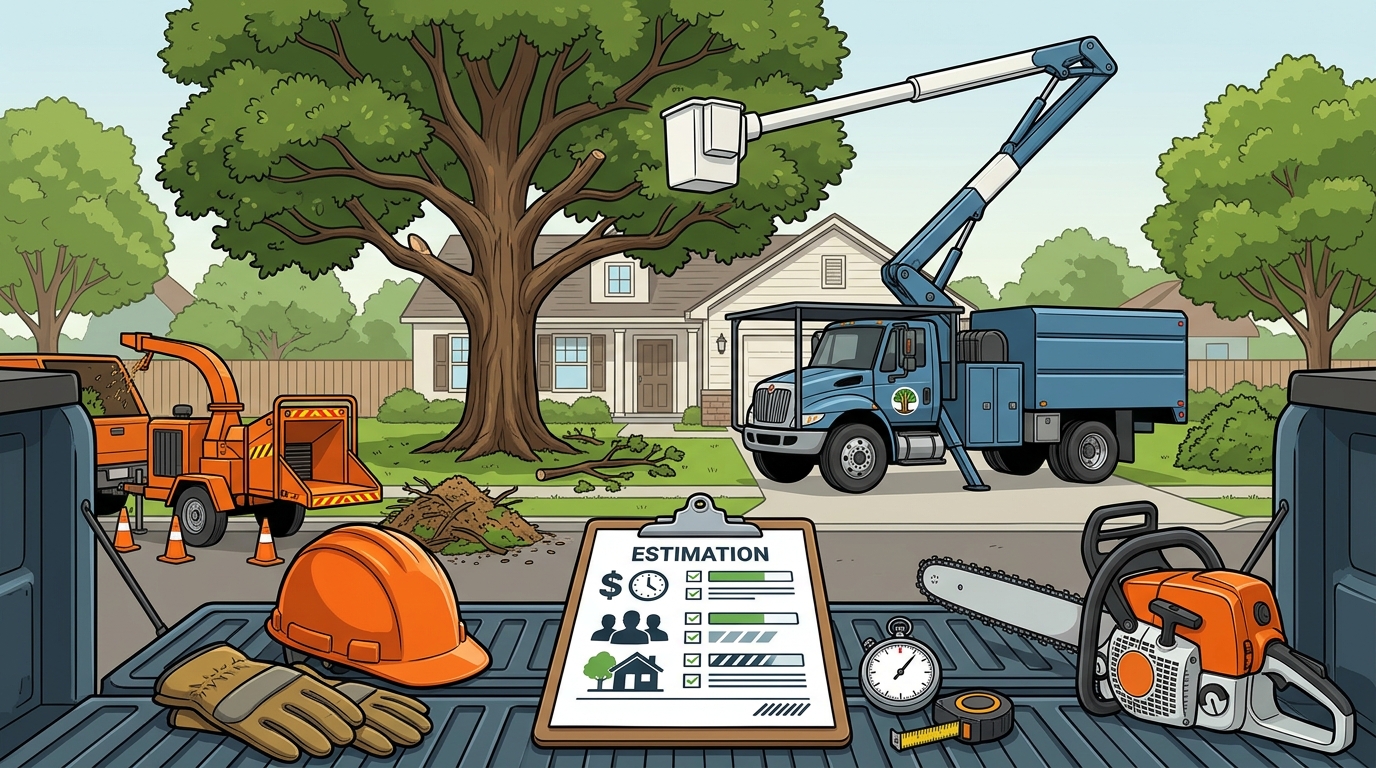
The best way to get an accurate estimate is to request an in-person assessment. A professional will look at the tree's height, lean, health, and surroundings to determine the method and time required. The quote should be written and itemized, listing the specific cuts, cleanup, and whether the price is hourly or flat. If a company quotes by the hour, ask for an estimated range of hours based on their experience with similar trees.
Homeowners can also compare quotes from multiple companies to see how pricing varies in their area. Local prices depend on regional labor costs and competition. By understanding the typical $150 to $300 hourly range, homeowners can identify quotes that are significantly lower, which may indicate a lack of insurance or experience, or quotes that are excessively high without justification.
Key Takeaways
- Typical hourly rates for tree trimming crews range from $150 to $300.
- Flat-rate quotes are common for standard trimming, while hourly billing is often used for emergencies.
- Height, access, and tree species are the main factors that drive up the cost.
- ISA Certified Arborists may charge separate consulting fees for diagnosis and risk assessment.
- Emergency work often costs 1.5 to 2 times the standard rate due to urgency.
- Always request a written, itemized quote to understand what is included in the price.
Frequently Asked Questions
Is it cheaper to trim a tree in winter?
Yes, late winter is the dormant season for most trees, making it the best time to see the structure and plan cuts. It is also often the cheapest time to book work because demand is lower than in spring or summer. Pruning during dormancy reduces stress on the tree and allows for cleaner cuts.
Do tree services charge by the hour or by the job?
What is included in the hourly rate?
The hourly rate covers the labor of the crew, the use of equipment like trucks and chippers, and the company's insurance. It does not typically include the cost of materials like mulch or fertilizer, nor does it cover stump grinding, which is usually a separate charge.