
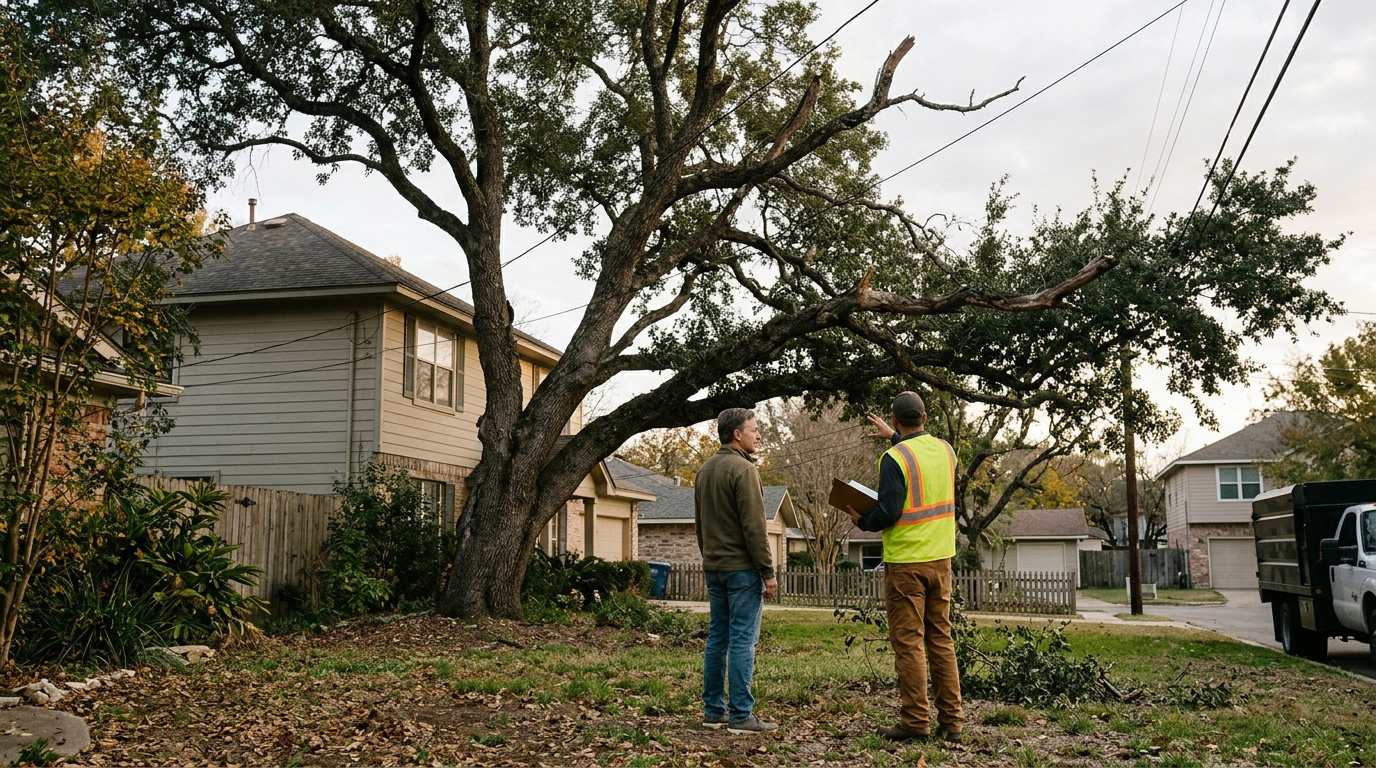
Choosing between a permitted removal and a cheaper, unpermitted crew depends on your local rules and risk tolerance. Paying for a permit suits homeowners in regulated cities or HOAs who want to avoid fines. Skipping it suits those in unregulated rural areas where no local ordinance applies. The right choice protects your property and your wallet.
Option 1: Hire a Crew That Handles the Permit
This approach involves hiring a professional tree service that includes the permit process in their quote. A tree removal permit is a local government authorization that allows you to cut down a tree on your property. Many cities require this for trunks over a certain diameter. The crew manages the application, pays the fee, and ensures the work meets local standards. This option is strongest for homeowners in urban or suburban areas with strict tree ordinances. It limits your personal liability and ensures the removal is legally documented. It suits readers who value compliance and want a single point of contact for the entire job.
Option 2: Hire a Cheaper Crew That Skips It
This approach involves hiring a lower-cost crew that does not file a permit. They may claim the tree is dead, hazardous, or exempt from local rules. This option is strongest for homeowners in rural areas or jurisdictions with no specific tree removal ordinances. It limits your upfront cost by avoiding permit fees and application time. However, it carries the risk of fines if your city or HOA enforces tree protection rules. It suits readers who have verified that no local permit is required for their specific tree and location. You must be certain that no ordinance applies before choosing this path.
Option 3: File the Permit Yourself
This approach involves you handling the permit application while hiring a crew for the physical removal. You research local requirements, fill out the forms, and pay the fee directly. This option is strongest for homeowners who are comfortable with administrative tasks and want to save on the crew's service markup. It limits your total cost by separating the administrative work from the labor. However, it requires time and accuracy in your application. It suits readers who have the time to navigate local government portals and want to control the process directly.
Comparison Table
| Option | Upfront Cost | Time to Start | Legal Risk | Best For |
|---|---|---|---|---|
| Hire Crew With Permit | Higher | 1-2 Weeks | Low | Regulated cities, HOAs |
| Hire Crew Without Permit | Lower | Days | Medium to High | Unregulated rural areas |
| File Permit Yourself | Medium | 1-2 Weeks | Low | DIY admins, cost savers |
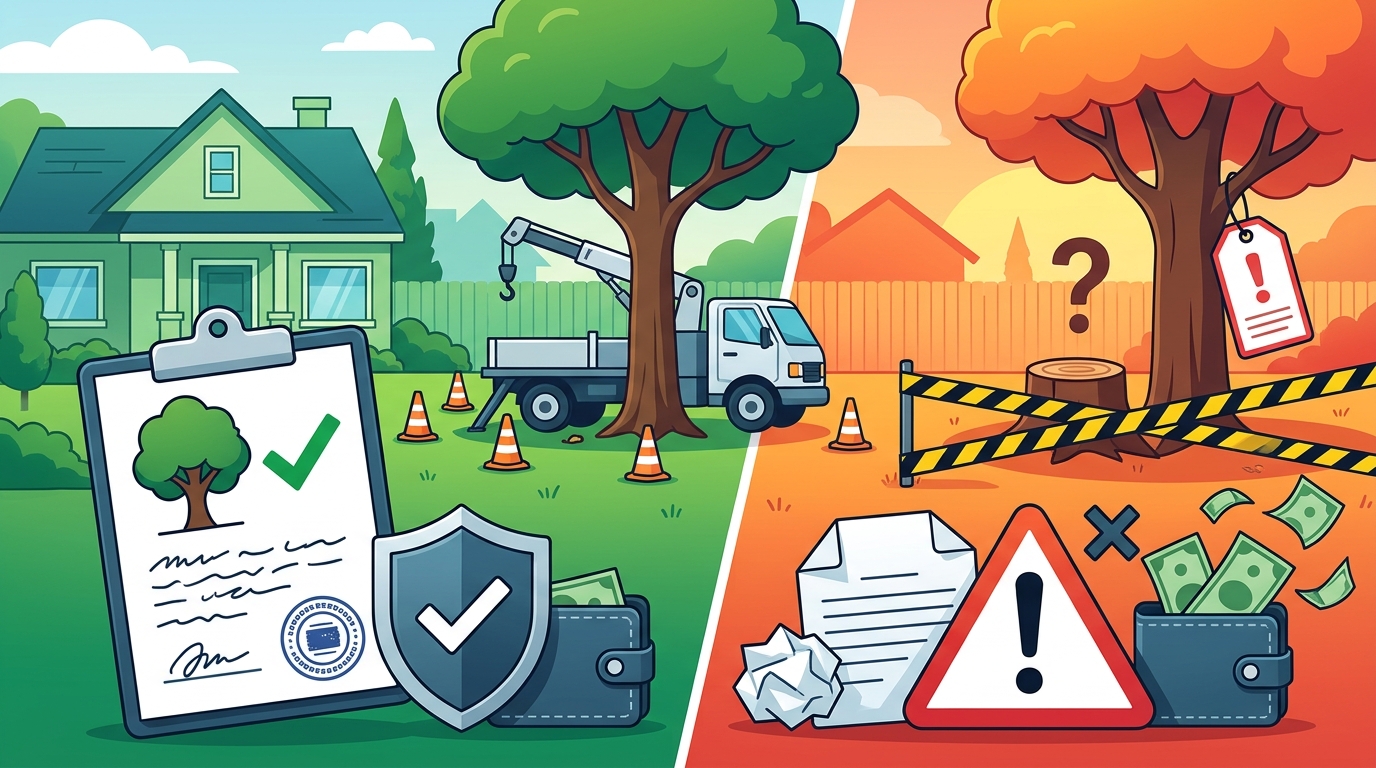
Decision Guide
Choose the crew that handles the permit if you live in a city with tree ordinances or an HOA with strict rules. Choose the cheaper crew that skips it only if you have confirmed no local permit is required. Choose to file the permit yourself if you want to save money and have the time to manage the paperwork. Your decision should be based on your local regulations, not just the price quote.
Frequently Asked Questions
Can I be fined for removing a tree without a permit?
Yes, if your local jurisdiction requires a permit for the tree you are removing. Fines vary by city and county. Check your local municipal code before starting any work to avoid penalties.
Does a permit guarantee the tree can be removed?
No, a permit is an authorization to proceed, not a guarantee of approval. The local government reviews the application and may deny it if the tree is protected or if the removal does not meet safety standards.
How long does a tree removal permit take?
Processing times vary by municipality. Some cities process applications in a few days, while others may take several weeks. Factor this into your timeline when scheduling the removal.
Can I switch from an unpermitted crew to a permitted one?
Yes, you can hire a different crew that handles the permit. You may need to file the permit before the new crew starts work. Coordinate with the new crew to ensure the permit is in place before they begin. Learn more: About TreeProfessionals com TreeProfessionals.