
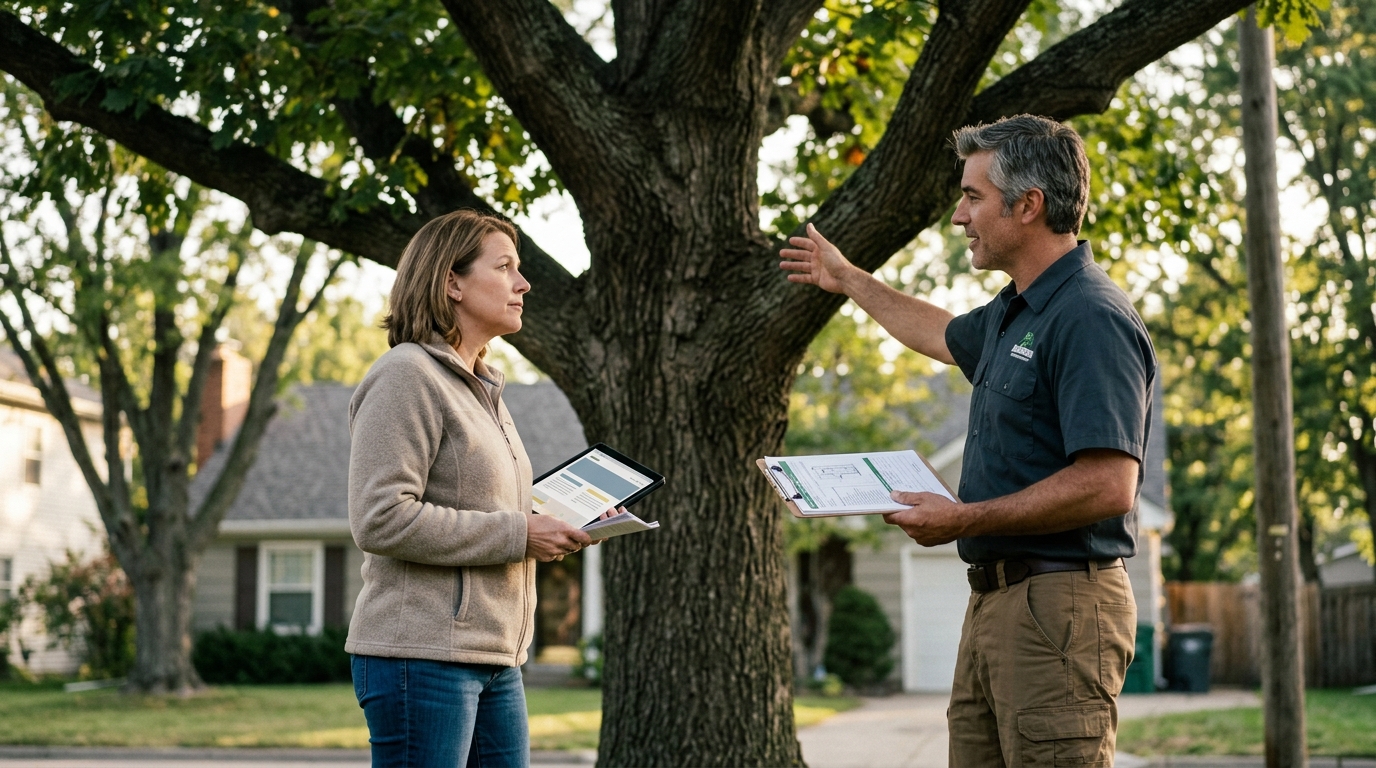
Removing a tree typically costs between $200 and $2,000 in the United States, with the final price driven primarily by the tree's height and how easily a crew can access it. This guide breaks down the exact cost ranges for different tree sizes, explains the hidden factors that inflate quotes, and clarifies when you need a permit or stump grinding. TreeProfessionals provides these plain-English answers to help you budget accurately before you hire a contractor.
Tree Size Categories and Base Costs
Tree removal cost is the price paid to cut a tree down and haul away the debris, usually in sections, by an insured crew. Height is the single biggest factor because it dictates how the crew must work. A short tree can often be felled in one piece, while a tall tree requires a climber to dismantle it from the top down. This process takes more people, more equipment, and more hours.
The following table outlines typical national cost ranges based on tree height. These figures represent the base cost for the removal job itself and do not include stump grinding or special hauling fees. according to Category A Tree
| Tree Size Category | Typical Height | Estimated Cost Range | Common Species |
|---|---|---|---|
| Small | Under 30 ft | $200 - $500 | Dogwood, Crabapple, Young Maple |
| Medium | 30 - 60 ft | $500 - $1,000 | Mature Fruit Trees, Ornamentals, Small Pines |
| Tall | 60 - 80 ft | $800 - $1,500 | Mature Oak, Maple, Pine, Ash |
| Very Large / Hazardous | 80 ft+ or Dead | $1,500 - $3,000+ | Storm-damaged, Overhanging Structures |
Small trees under 30 feet are the most affordable because they can often be cut at the base and dropped. A crew of one or two workers can usually handle this in half a day. Medium trees between 30 and 60 feet typically require a bucket truck or a climber, and the branches are usually chipped on site. This is the most common category for homeowners with established shade trees.
Cost Factors: Accessibility and Equipment
While height sets the baseline, accessibility determines the final price. A tree in an open field is cheap to remove. A tree in a tight backyard surrounded by fences, power lines, and a house is expensive. You are paying for the complexity of the job, not just the wood.
Proximity to Structures
If a tree is leaning toward a house, garage, or fence, the crew cannot simply cut it down. They must rig the tree with ropes and lower each section safely. This rigging process adds labor and equipment costs. Expect to pay a premium for any tree that is close to a structure you want to protect.
Equipment Requirements
Standard removals use a bucket truck and a chipper. However, difficult access may require a crane. Crane work is significantly more expensive because it requires a large operator and specialized equipment. If a tree is over a house or in a very tight space, a crane might be the only safe option. This can push the cost well above the standard ranges listed in the table.
Disposal and Hauling
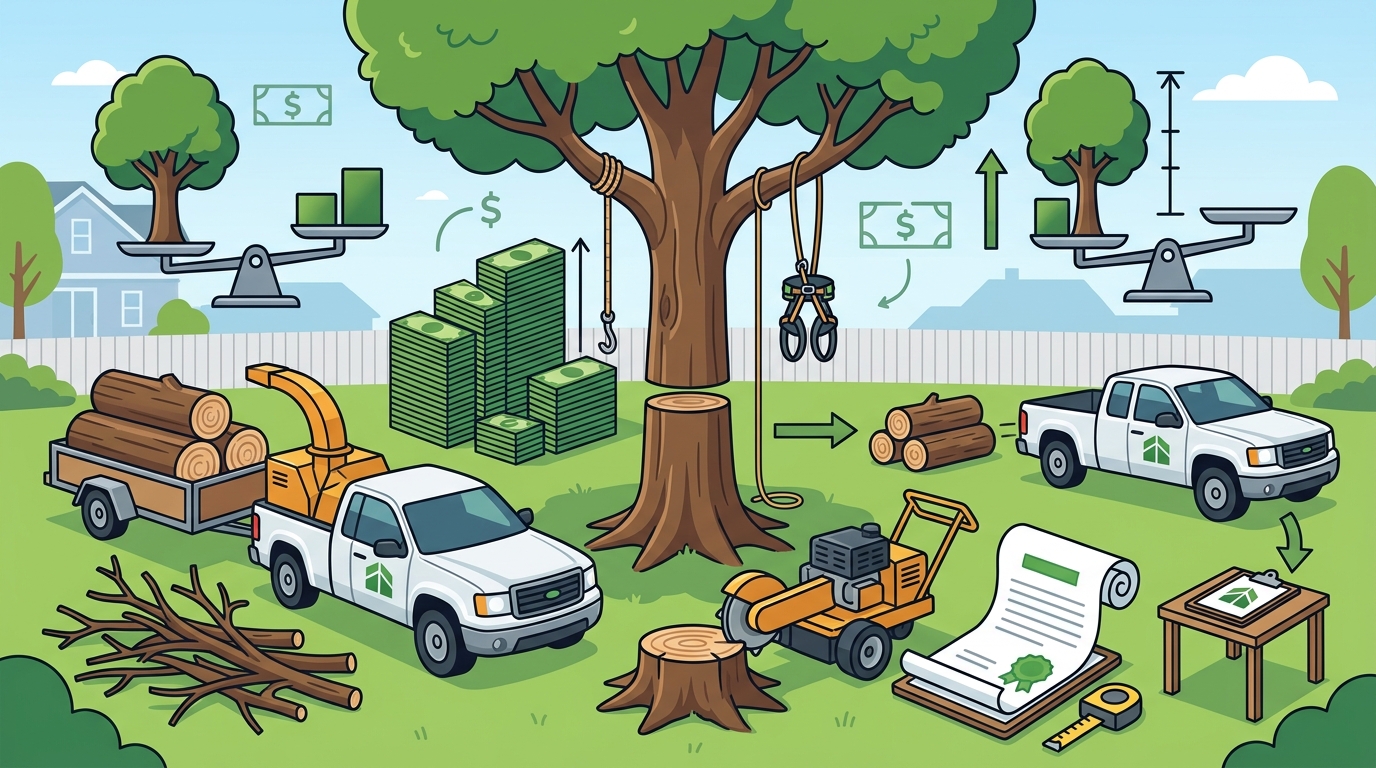
Most quotes include cutting, chipping, and hauling away the debris. However, some companies charge extra for hauling. Always confirm in writing whether the quote includes disposal. If you want to keep the wood for firewood, you may need to pay a separate fee for the crew to cut and split the logs. Stump grinding is almost never included in the base removal price and is billed separately.
Hazards and Risk Premiums
Tree work is one of the more dangerous trades in the country. Insurance premiums for legitimate companies are steep because of the high risk of injury. A quote that seems too cheap often means the company is skipping insurance, which becomes your problem if something goes wrong on your property.
Dead or dying trees command a higher price because they are unpredictable. A dead branch can snap without warning, making the job more dangerous for the crew. If a tree has already fallen on a structure, emergency removal rates apply. Emergency work often happens at night or on weekends, which adds overtime costs. A tree that has fallen on a house typically costs between $1,500 and $5,000 to remove, depending on the complexity of the rigging required to get it off the roof.
Homeowners insurance typically covers tree removal only if the tree fell on a covered structure, such as a house or garage. It does not cover removing a standing tree or a fallen tree that hit nothing. If your tree is dead but still standing, you are responsible for the full cost of removal. Understanding this distinction is critical for budgeting. You cannot rely on insurance to pay for preventative removal of a hazardous tree.
Permits and Local Regulations
Many cities and counties require a permit to remove a tree, especially if the tree is large or located in a protected area. A permit is a legal authorization from a local government agency that allows you to cut down a tree. Requirements vary widely by jurisdiction. Some cities require permits for any tree with a trunk diameter over 6 or 12 inches. Others only regulate trees in public rights-of-way or protected species.
Stump Removal and Grinding Pricing
Stump grinding is the process of chipping a stump down to 6 to 12 inches below ground level. The roots are left in the ground to rot. This is the most common and affordable option for most homeowners. Stump grinding costs between $100 and $400 per stump in the US. Most professionals charge $2 to $5 per inch of stump diameter, with a minimum charge of $100 to $150.
Full stump removal involves digging out the entire stump and root ball. This is a much more labor-intensive process and costs between $300 and $1,000 or more. It leaves a large hole in the ground that must be filled with soil. Most homeowners choose grinding because it is cheaper and leaves a flatter surface for replanting or landscaping. If you have multiple stumps, the cost per stump usually decreases because the crew is already on site with the equipment.
Key Takeaways
- Tree removal costs typically range from $200 for small trees to over $3,000 for large or hazardous trees.
- Height is the primary cost driver, but accessibility and proximity to structures can significantly increase the price.
- Stump grinding is a separate service that costs $100 to $400 per stump and is rarely included in the base removal quote.
- Homeowners insurance generally only covers removal if the tree fell on a structure; it does not cover standing dead trees.
- Permits may be required in many jurisdictions, and cutting without one can result in fines.
- Always request a written, itemized quote that specifies what is included, such as hauling and disposal.
- Verify that the contractor carries general liability and workers' compensation insurance before they start work.
Frequently Asked Questions
How much does it cost to remove a small tree?
Removing a small tree under 30 feet typically costs between $200 and $500. This price usually includes cutting the tree down, chipping the branches, and hauling away the debris. Stump grinding is an additional cost of $100 to $400.
Does the price include hauling away the tree?
Most professional quotes include cutting, chipping, and hauling the debris. However, some companies charge a separate fee for hauling or for leaving the wood in log lengths. You should confirm this in writing before the work begins.
How much extra does a tree near a house cost?
A tree near a house or power lines costs more because it requires rigging and careful dismantling. You can expect to pay a premium over the standard height-based price. The exact amount depends on how close the tree is to the structure and the complexity of the rigging required.
Do I need a permit to remove a tree?
It depends on your local regulations. Many cities require permits for trees with a trunk diameter over a certain size, such as 6 or 12 inches. Check with your local municipal office to see if a permit is required in your area.
How much does stump grinding cost?
Stump grinding typically costs between $100 and $400 per stump. Most companies charge based on the diameter of the stump, with a minimum fee. Full stump removal with root digging costs significantly more, usually between $300 and $1,000.
Will my homeowners insurance cover tree removal?
Homeowners insurance usually covers tree removal only if the tree fell on a covered structure, like your house or garage. It does not cover removing a standing tree or a fallen tree that did not hit anything. You are responsible for the cost of removing a dead or hazardous tree that is still standing.
Conclusion
Understanding the factors that drive tree removal costs helps you budget accurately and avoid surprises. Height, accessibility, and hazards are the main variables, while permits and stump grinding are additional considerations. By knowing the typical ranges and asking the right questions, you can make an informed decision. For more detailed answers on specific tree care questions, visit TreeProfessionals.com to find local professionals and read plain-English guides.