
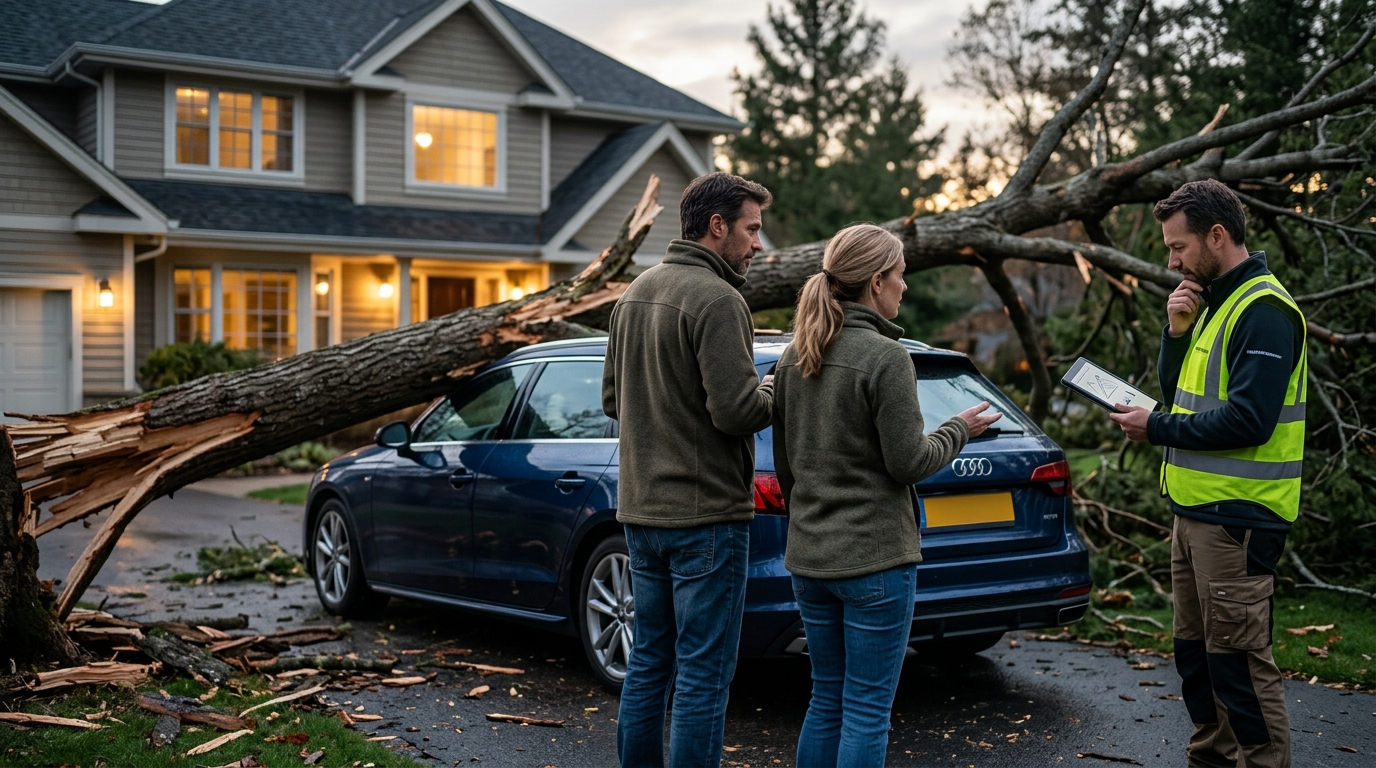
Homeowners insurance typically covers tree removal only if the tree falls on a covered structure, such as a house, garage, or fence, or blocks a driveway. It does not cover removing a standing dead tree or a fallen tree that hits nothing. This guide explains the specific triggers for coverage, the financial limits on debris removal, and the exclusions that prevent you from using your policy for routine maintenance.
Insurance Coverage Triggers
Homeowners insurance is designed to repair sudden, accidental damage to your property. It is not a maintenance fund for your yard. The distinction between a covered event and an uncovered one often comes down to where the tree lands and what it hits. Understanding these triggers helps you avoid filing a claim that will be denied.
Structural Damage
The most common trigger for coverage is a tree falling on a covered structure. This includes your main dwelling, an attached garage, a detached garage, a deck, or a fence. If a storm causes a tree to crash through your roof or crush your fence, the policy typically covers the repair of the structure and the cost to remove the tree. The removal is covered because it is necessary to repair the damaged structure.
Access and Driveways
Many policies cover tree removal if the tree blocks a driveway or a wheelchair ramp. The logic is that the tree is obstructing access to the home. However, the specific wording in your policy matters. Some insurers require the driveway to be fully blocked, while others may cover partial blockages. If a tree falls in the middle of your driveway and prevents you from getting to your car, this is a strong candidate for a claim.
What Is Not Covered
If a tree falls in your yard and hits nothing, it is not covered. This is the most common misunderstanding among homeowners. A tree lying in the grass is a mess, but it is not an insurance event. Similarly, if a tree falls on your car, your homeowners policy does not pay for it. You must file a claim under your auto insurance comprehensive coverage. The auto deductible applies, not the homeowners deductible.
| Situation | Typical Coverage Status | Reason |
|---|---|---|
| Tree falls on house or garage | Covered | Damage to a covered structure |
| Tree falls on fence or deck | Covered | Damage to a covered structure |
| Tree blocks driveway | Often Covered | Obstruction of access |
| Tree falls in yard, hits nothing | Not Covered | No damage to covered property |
| Tree falls on car | Not Covered (Auto Policy) | Requires comprehensive auto coverage |
| Standing dead tree removal | Not Covered | Considered maintenance |
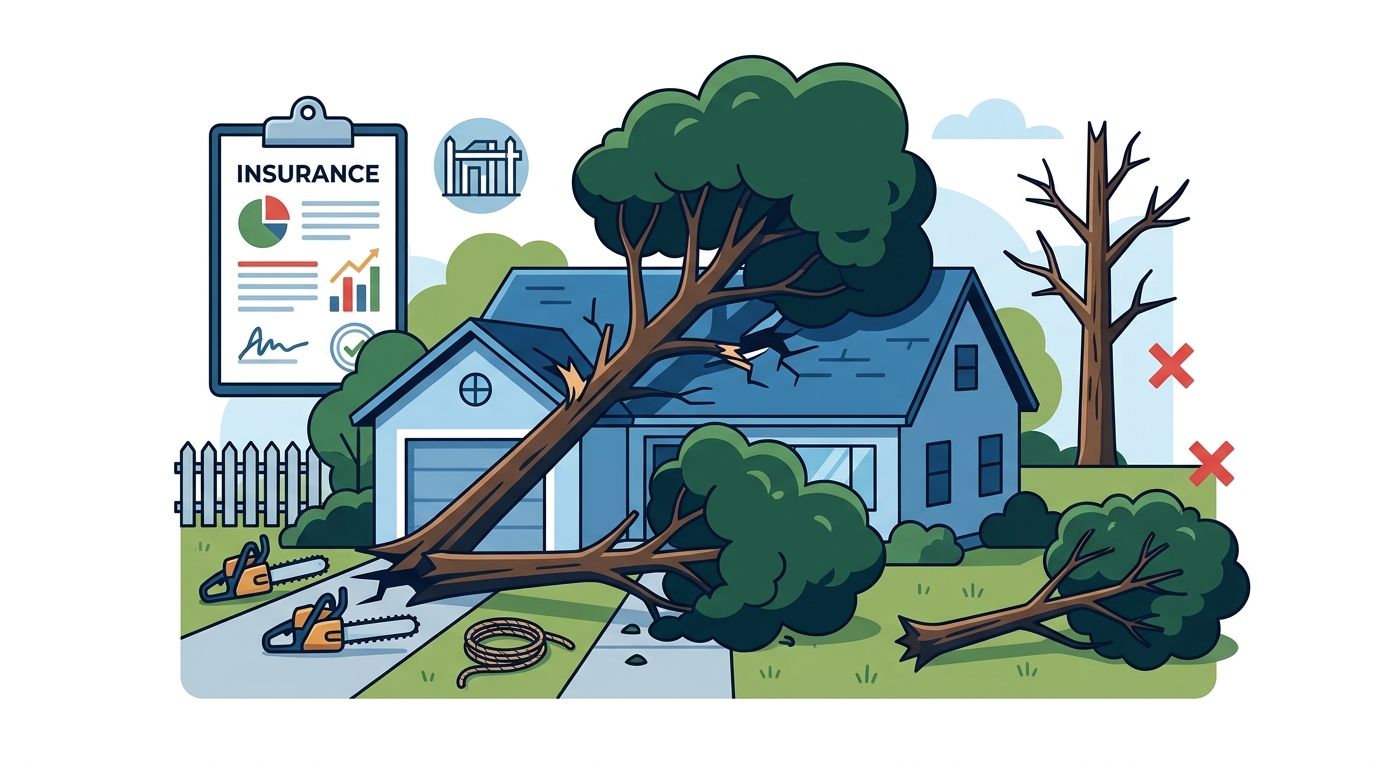
Debris Removal Limits and Deductibles
Even when a tree removal is covered, your insurance policy does not pay for everything. There are specific financial caps on how much the insurer will pay for the tree itself, and you are responsible for your deductible. Understanding these numbers helps you budget for the out-of-pocket costs.
Per-Tree Caps
Most standard homeowners policies cap tree and debris removal at a specific amount per tree. A common limit is $500 to $1,000 per tree. If the cost to remove the tree exceeds this cap, you pay the difference. For example, if a large oak falls on your roof and the removal costs $2,500, but your policy cap is $1,000, the insurer pays $1,000 and you pay $1,500. This cap applies to the tree removal, not the roof repair. The roof repair is covered under your dwelling coverage, which has a much higher limit.
The Deductible
Stump Grinding
Stump grinding is often a separate line item. Some policies include stump grinding in the debris removal cap, while others exclude it entirely. If your policy excludes stump grinding, you must pay for it out of pocket. Stump grinding typically costs $100 to $400 per stump. Always check your policy to see if stump work is included in the debris removal limit.
Preventive Removal Exclusions
Homeowners insurance does not cover the removal of a standing tree, even if it is dead or leaning dangerously. This is because preventive removal is considered maintenance. Maintenance is the homeowner's responsibility. This exclusion is one of the most significant financial risks for homeowners who ignore tree health.
Maintenance vs. Sudden Damage
Insurance covers sudden, accidental events. It does not cover gradual deterioration. A tree that dies over several years due to disease or drought is a maintenance issue. If you knew the tree was dead and left it standing, your insurer may deny a later claim if it falls. This is known as the "known hazard" exclusion. By ignoring a dead tree, you are accepting the risk of it falling. If it does fall, the insurer can argue that you were negligent in maintaining your property.
Liability Risks
If a dead tree on your property falls onto your neighbor's house or car, you can be held liable for the damage. Your liability coverage may pay for the neighbor's repairs, but it will not pay for the removal of the tree from your property. Furthermore, if you are found to be negligent in maintaining the tree, your liability coverage may be reduced or denied. This makes preventive removal a critical financial decision, not just a cosmetic one.
When to Call a Professional
If you have a tree that is dead, leaning, or showing signs of disease, you should have it assessed by a professional. An assessment can help you determine if the tree is a hazard. If it is, you should remove it before it falls. The cost of preventive removal is typically $200 to $2,000, depending on the size of the tree. This is a small price to pay compared to the cost of a denied insurance claim or a liability lawsuit.
Key Takeaways
- Homeowners insurance covers tree removal only if the tree falls on a covered structure or blocks a driveway.
- A tree that falls in the yard and hits nothing is not covered by homeowners insurance.
- Most policies cap tree removal at $500 to $1,000 per tree, after your deductible.
- Stump grinding may be excluded from coverage, so check your policy for specific wording.
- Preventive removal of a standing dead tree is considered maintenance and is not covered.
- Ignoring a dead tree can lead to denied claims and liability for damage to neighbors.
- Auto insurance covers trees that fall on cars, not homeowners insurance.
- Always document damage with photos before any work begins to support your claim.
Frequently Asked Questions
Does homeowners insurance cover a tree that fell in my yard?
No. If the tree did not hit a covered structure or block a driveway, removal is your cost. Insurance covers sudden damage to property, not yard maintenance.
How much will insurance pay for tree removal?
Most policies cap tree removal at $500 to $1,000 per tree. You are responsible for your deductible and any amount above the cap.
Is stump grinding covered by insurance?
It depends on your policy. Some include stump grinding in the debris removal cap, while others exclude it. Check your policy for specific wording.
Can I use insurance to remove a dead tree before it falls?
No. Preventive removal is considered maintenance and is not covered by homeowners insurance. You must pay for it out of pocket.
What if a tree falls on my car?
Your homeowners policy does not cover this. You must file a claim under your auto insurance comprehensive coverage. The auto deductible applies.
Will my insurance rates go up if I file a tree claim?
It depends on your insurer and your claim history. Some insurers increase rates after any claim, while others only increase rates for certain types of claims. Check with your agent.
Do I need a permit to remove a tree?
Permits vary by city, county, and HOA. Many jurisdictions require a permit for trees over a certain size. Check with your local municipality before cutting.
Next Steps for Homeowners
Understanding how your insurance policy handles tree damage is the first step in protecting your home and your wallet. If you have a tree that has fallen on a structure, document the damage, call your insurer, and hire an insured crew for removal. If you have a standing tree that is dead or hazardous, remember that insurance will not cover its removal. You must pay for it yourself to avoid liability and denied claims. For more detailed guidance on costs, permits, and how to vet a contractor, visit TreeProfessionals.com to find plain-English answers and local professionals.