
Tree Removal Cost Guide 2026: Size, Hazards, Permits & Stump Pricing
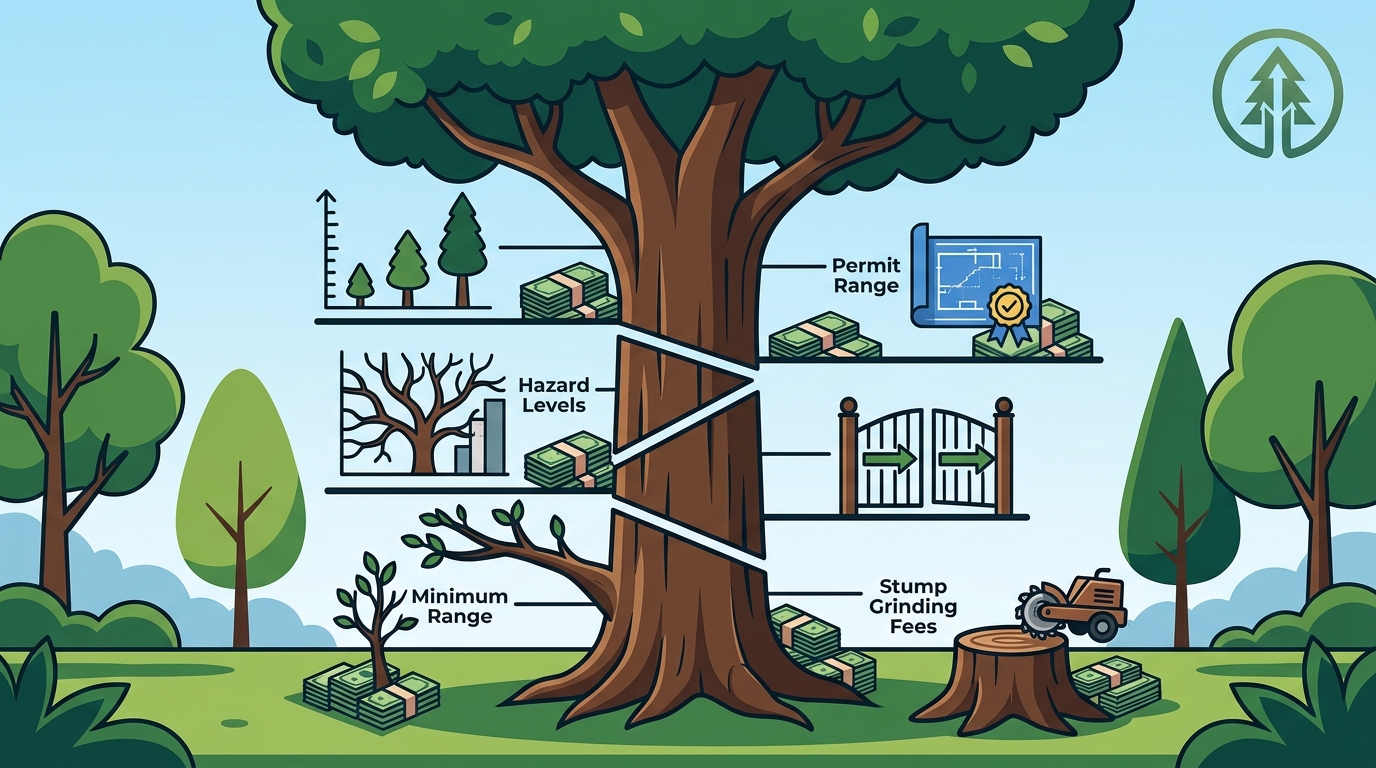
Tree removal costs between $200 and $2,000 in the US, depending mostly on height and access. This guide breaks down the five factors that drive your final bill: tree size categories, yard accessibility, hazard levels, local permit requirements, and stump grinding fees. TreeProfessionals.com provides these plain-English answers so you can budget accurately before hiring a crew.
Tree Size Categories
Tree size is the single biggest driver of removal cost. Height determines how the crew must work, which dictates labor hours and equipment needs. A short tree can often be felled in one piece, while a tall tree requires sectional dismantling from the top down.
Small Trees (Under 30 Feet)
Small trees, such as dogwoods, crabapples, or young maples, typically cost between $200 and $500 to remove. These jobs usually require one or two workers and take less than half a day. The low height allows for a simple base cut and drop, minimizing equipment requirements.
Medium Trees (30 to 60 Feet)
Medium trees, including mature fruit trees and small pines, generally range from $500 to $1,000. These often require a climber or bucket truck to safely access the upper canopy. Branches are typically chipped on site, and the trunk is sectioned before being lowered.
Tall and Very Large Trees (60 Feet and Up)
Tall trees, such as mature oaks or pines, cost between $800 and $1,500. Very large or hazardous trees exceeding 80 feet can cost $1,500 to $3,000 or more. These jobs often require specialty rigging, cranes, and larger crews to manage the significant weight and height safely.
| Tree Size Category | Typical Height | Estimated Cost Range | Primary Cost Drivers |
|---|---|---|---|
| Small | Under 30 ft | $200 - $500 | Simple felling, minimal equipment |
| Medium | 30 - 60 ft | $500 - $1,000 | Climber or bucket truck, on-site chipping |
| Tall | 60 - 80 ft | $800 - $1,500 | Sectional dismantle, rigging, full crew |
| Very Large/Hazardous | 80 ft+ | $1,500 - $3,000+ | Crane, specialty rigging, high insurance risk |
Cost Factors and Accessibility
While size sets the baseline, accessibility determines the complexity of the job. A tree in an open field is cheaper to remove than the same tree in a crowded backyard. You are paying for the difficulty of moving equipment and debris.
Proximity to Structures
Trees located near houses, driveways, or power lines command a premium. If a tree is close to a structure, the crew cannot simply drop it. They must climb, cut sections, and rig them down carefully. This process takes more time and requires higher skill levels, increasing the hourly rate impact.
Yard Access and Equipment
Easy access allows a crew to bring in a chipper and dump truck directly to the tree. Difficult access, such as steep slopes, narrow paths, or heavy landscaping, may require manual hauling of debris. This labor-intensive process significantly raises the final bill. Always confirm in writing whether the quote includes hauling away all debris or if you must pay extra for log removal.
Hazards and Risk Premiums
Hazardous conditions increase the risk of injury and property damage, which is reflected in the price. Tree work is one of the more dangerous trades in the country, and insurance premiums for legitimate companies are steep. A quote that seems too cheap often means the company is skipping insurance, which becomes your problem if something goes wrong.
Dead or Dying Trees
Dead trees are brittle and unpredictable. Branches may snap without warning, and the trunk may split. Removing a dead tree requires extra caution and often more equipment to control the fall. If a tree is leaning toward your house or showing signs of decay, such as mushrooms at the base or peeling bark, it is considered hazardous.
Storm Damage and Emergency Work
Emergency removals, such as a tree that has fallen on a house, cost significantly more than scheduled work. Emergency removal with a crane can run $1,500 to $5,000. These jobs often happen at night or in bad weather, requiring overtime pay and rapid mobilization. Homeowners insurance typically covers removal if the tree hit a covered structure, but you should verify your policy details with your insurer.
Permits and Local Regulations
Many cities and counties require a permit to remove a tree, especially if the trunk is over a certain diameter. Permit requirements vary by jurisdiction, so you must check local rules before cutting. Some areas protect specific species, such as oaks or heritage trees, regardless of size.
Who Files the Permit?
It is crucial to clarify who is responsible for filing the permit. Some tree service companies include permit fees and filing in their quote, while others expect the homeowner to handle it. If you are unsure, ask for a written itemized proposal that specifies whether permits are included. Failure to obtain a required permit can result in fines or orders to replant.
HOA and Neighborhood Rules
If you live in a Homeowners Association (HOA), there may be additional rules about tree removal. Some HOAs require approval before removing any tree, or they may have specific guidelines for pruning. Always check your HOA bylaws before hiring a crew to avoid disputes with neighbors or the association.
Stump Removal Pricing
Stump work is almost never included in the base tree removal price. You must decide between grinding and full removal, as they have different costs and outcomes. Stump grinding chips the stump down to 6 to 12 inches below ground, while full removal digs out the stump and root ball.
Stump Grinding Costs
Stump grinding typically costs $100 to $400 per stump. Most professionals charge $2 to $5 per inch of stump diameter, with a minimum fee of $100 to $150. A 20-inch stump might cost $100 to $150, while a 40-inch stump could cost $150 to $250. Grinding leaves the roots in the ground to rot, which is usually sufficient for most homeowners.
Full Stump Removal
Full stump removal, which involves digging out the entire root ball, costs $300 to $1,000 or more. This method leaves a large hole that must be filled with soil. It is more expensive and labor-intensive but is sometimes required if you plan to plant a new tree in the exact same spot. Most homeowners choose grinding because it is cheaper and less disruptive to the yard.
Key Takeaways
- Tree removal costs range from $200 to $2,000, with height being the primary cost driver.
- Small trees under 30 feet cost $200 to $500, while tall trees over 60 feet cost $800 to $1,500.
- Accessibility and proximity to structures significantly increase labor time and equipment needs.
- Hazardous conditions, such as dead trees or storm damage, add a risk premium to the price.
- Permits are required in many jurisdictions, and you should confirm who is responsible for filing them.
- Stump grinding costs $100 to $400 and is usually separate from the tree removal quote.
- Always get a written, itemized quote that specifies what is included, such as hauling and stump work.
- Verify that the tree company carries general liability and workers' compensation insurance.
Frequently Asked Questions
How much does it cost to remove a small tree?
Removing a small tree under 30 feet typically costs between $200 and $500. This price usually includes cutting the tree down and hauling away the debris, but you should confirm if stump grinding is included.
Is stump grinding included in the tree removal price?
No, stump grinding is almost always a separate charge. It typically costs $100 to $400 per stump. Most quotes leave the stump unless you specifically ask for it to be ground out.
Why is tree removal so expensive?
You are paying for a trained crew, specialized equipment like bucket trucks and chippers, and insurance. Tree work is dangerous, and legitimate companies carry high insurance premiums, which are reflected in their hourly rates.
Do I need a permit to remove a tree?
It depends on your local city or county rules. Many areas require a permit for trees with trunks over 6 to 12 inches in diameter. Check with your local government or ask the tree service company to clarify their permit process.
How much does emergency tree removal cost?
Emergency removal, such as a tree on a house, can cost $1,500 to $5,000. These jobs require rapid mobilization and often involve cranes or specialty rigging, which increases the cost significantly.
Does homeowners insurance cover tree removal?
Homeowners insurance typically covers tree removal only if the tree fell on a covered structure, like your house or garage. It does not cover removing a standing tree or a fallen tree that hit nothing. Always verify your specific policy details with your insurer.
Conclusion
Understanding the factors that drive tree removal costs helps you budget accurately and avoid surprises. Size, accessibility, hazards, permits, and stump work all play a role in your final bill. By getting a written, itemized quote from a vetted professional, you can ensure you are paying for the right services with proper insurance coverage. For more detailed answers on costs, permits, and storm damage, visit TreeProfessionals.com to find local tree care professionals and learn more about what to expect.