
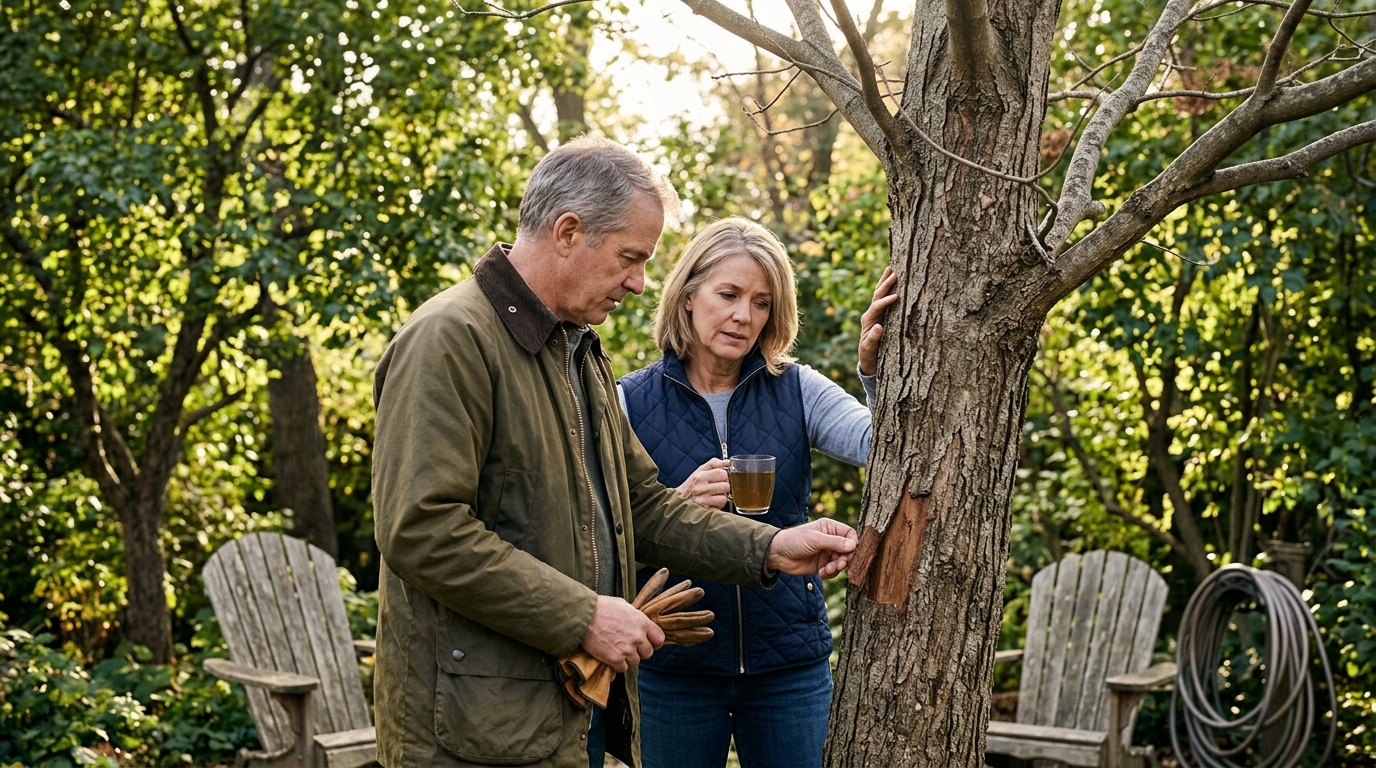
TreeProfessionals.com provides plain-English answers to help you determine if a tree is dead or dying. A tree is dead if the scratch test shows brown, dry tissue under the bark and no leaves appear in summer. This guide covers six key diagnostic signs, from the scratch test to structural hazards, and explains when to call a certified arborist for a professional assessment.
The Scratch Test: The First Diagnostic Step
The scratch test is the most reliable initial method for determining tree vitality. It involves using a thumbnail or a pocket knife to gently scratch the bark of a pencil-thin twig. The tissue underneath reveals the tree's status. Green and moist tissue indicates the branch is alive. Brown, dry, and brittle tissue indicates the branch is dead.
How to Perform the Scratch Test Correctly
Do not rely on a single twig. Test five or six twigs from different sides of the tree and at different heights you can safely reach. If all tested twigs show brown, dry tissue, the tree is likely dead. If some are green and some are brown, the tree is dying or stressed. A tree with no leaves in late spring or summer, combined with a failed scratch test, is a strong indicator of death.
Interpreting Mixed Results
Trees often die unevenly. You might find green tissue on the lower branches but brown tissue on the upper canopy. This suggests the tree is dying from the top down, possibly due to root damage or disease. In these cases, the tree is not fully dead yet, but it is in decline. A mixed result is a clear signal to seek a professional assessment before the tree becomes a hazard.
Dead Branches and Canopy Loss
Canopy health is a primary indicator of tree vitality. A healthy tree has a full, even canopy of leaves. A dying tree shows thinning, browning, or complete leaf loss. Look for branches that are bare while surrounding branches still have leaves. This pattern often points to specific issues like root rot or vascular disease.
Seasonal Context Matters
Timing is critical when assessing leaf loss. In winter, deciduous trees naturally lose their leaves. A tree with no leaves in January is normal. However, a tree with no leaves in July is in serious trouble. Additionally, some species, like oaks, leaf out later than others. A healthy oak might still be bare in early spring while maples are full. Always compare the tree to other healthy specimens of the same species in your neighborhood.
Brittle Branches and Shedding
Pay attention to how branches behave in calm weather. A healthy tree holds its branches firmly. A dying tree sheds small dead branches frequently, even without wind. If you see a pile of small, broken twigs under the tree after a calm day, the tree is shedding weight it can no longer support. This is a sign of internal weakness and potential structural failure.
Bark Damage and Peeling
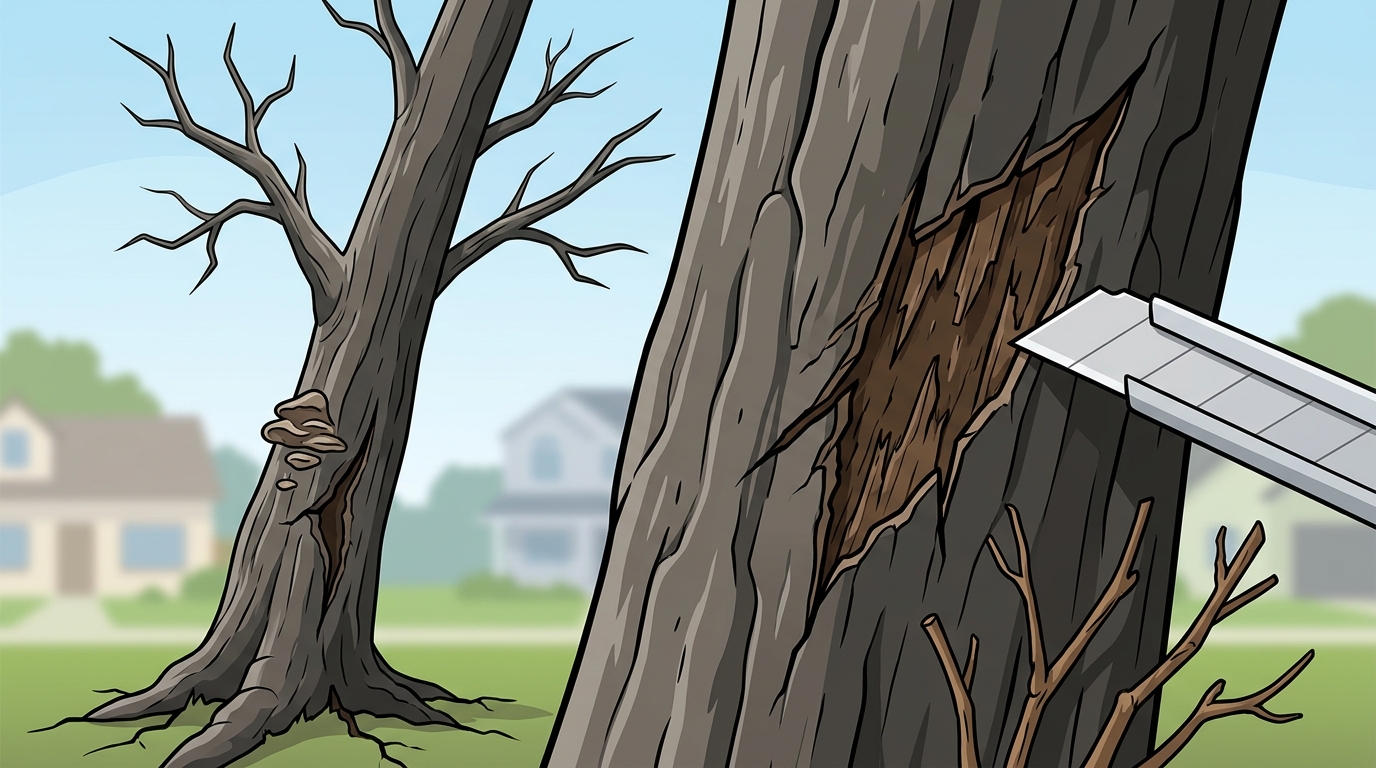
Bark is the tree's protective skin. Damage to the bark can expose the inner wood to decay and pests. Look for bark that is peeling off in sheets, revealing bare, smooth wood underneath. This is a sign that the cambium layer, which transports nutrients, has died. If you see large areas of bare wood, that section of the trunk is dead.
Cracks and Cavities
Deep vertical cracks in the trunk are a major red flag. These cracks often form as the tree dries out and shrinks. They compromise the structural integrity of the trunk. Cavities, or holes in the trunk, are also concerning. While a tree can sometimes live with a small cavity, a large one indicates significant internal decay. The larger the cavity, the weaker the trunk becomes.
Signs of Borer Infestation
Look for sawdust-like material, called frass, at the base of the tree or in the bark. This is a sign of borer or beetle infestation. These pests bore into the wood, creating tunnels that weaken the tree. If you see many small holes in the bark and frass, the tree may already be dying from the inside out. Borer infestations are often fatal, especially in stressed or older trees.
Fungal Growth and Decay
Fungal growth is a direct indicator of internal decay. Mushrooms growing at the base of the tree or on the trunk are a sign that the wood inside is rotting. The fungus is breaking down the dead wood. While the tree might still have green leaves, the structural core is compromised. Shelf fungus, which looks like wooden shelves growing out of the trunk, is particularly concerning as it indicates advanced decay. according to Dead or Damaged
Why Fungal Growth Matters
A tree with mushrooms at the base is a hazard, especially if it is near a house, driveway, or walkway. The decay weakens the roots and the lower trunk. This makes the tree more likely to fall, even in moderate winds. You cannot see the extent of the decay from the outside. A tree that looks healthy on the surface might be hollow and weak inside. Fungal growth is the visible tip of the iceberg. according to Idaho Panhandle National
Common Types of Decay Fungi
Not all fungi are the same, but for a homeowner, the presence of any fruiting body is a warning sign. Some fungi target specific species, while others are generalists. The type of fungus can help an arborist identify the specific type of decay. However, for the purpose of safety, any visible fungal growth warrants a professional inspection. Do not ignore mushrooms at the base of a large tree.
Structural Hazards and Leaning
Structural hazards are the most immediate safety concerns. A tree that has always leaned is usually fine. It grew that way and is stable. However, a tree that started leaning recently is an emergency. Sudden lean indicates root failure. The roots on one side have given way, and the tree is tipping over.
Identifying Root Failure
Look for lifted soil or exposed roots on one side of the tree. If the ground on one side is higher than the other, or if you can see roots that were previously underground, the tree is shifting. This is a sign that the root system is failing. A tree with a sudden lean and lifted roots is at high risk of falling. It should be assessed for removal immediately.
Proximity to Structures
The location of the tree matters as much as its health. A dead tree in the middle of a large, open field is a lower risk than a dead tree leaning over a house. If a dying tree is close to a structure, vehicle, or power line, the risk is amplified. Even a small fall can cause significant damage. The closer the tree is to something valuable, the more urgent the need for removal becomes.
Certified Arborist Inspection
When in doubt, call a certified arborist. An arborist is a trained professional who understands tree biology, risk assessment, and safety. They can diagnose issues that are not visible to the untrained eye. A basic arborist visit costs $75 to $150, while a written risk assessment report costs $150 to $500. This investment is often worth it to avoid a costly mistake or a safety hazard.
What an Arborist Looks For
An arborist will perform a thorough inspection, including the scratch test, bark examination, and structural assessment. They will look for signs of decay, disease, and pest infestation. They will also assess the risk of failure based on the tree's location and the condition of its roots. They can tell you if the tree can be saved with treatment or if it needs to be removed.
When to Call a Professional
Call an arborist if you see mushrooms at the base, a sudden lean, or if the scratch test results are mixed. You should also call if the tree is large and close to a structure. Do not attempt to climb a tree to inspect the upper canopy. This is dangerous and should be left to professionals with the right equipment and training. A professional assessment gives you peace of mind and a clear action plan.
Key Takeaways
- The scratch test is the most reliable initial diagnostic tool; green tissue means alive, brown means dead.
- Test multiple twigs from different sides and heights to get an accurate picture of the tree's health.
- Leaf loss in summer, combined with a failed scratch test, is a strong indicator of a dead tree.
- Bark peeling, deep cracks, and cavities are signs of structural weakness and internal decay.
- Mushrooms or shelf fungus at the base of the tree indicate advanced internal decay and a high risk of failure.
- A sudden lean, especially with lifted soil or exposed roots, is an emergency and requires immediate professional assessment.
- Proximity to structures, vehicles, or power lines increases the urgency of removal for any dying tree.
- A certified arborist can provide a professional risk assessment and determine if the tree can be saved or must be removed.
Frequently Asked Questions
How do I know if a tree is dead or dying?
Perform the scratch test on several twigs. If the tissue under the bark is brown and dry, and the tree has no leaves in summer, it is likely dead or dying. Look for other signs like bark peeling, fungal growth, or sudden lean. according to Dead or Damaged
Can a tree with no leaves still be alive?
In winter, yes. Deciduous trees lose their leaves seasonally. However, in late spring or summer, a tree with no leaves is in serious trouble. Check the scratch test to confirm if the branches are alive.
What does it cost to have an arborist inspect a tree?
A basic site visit typically costs $75 to $150. A written report or basic risk assessment costs $150 to $500. Formal risk assessments for legal or insurance purposes can cost $300 to $1,000 or more.
Is it safe to leave a dead tree standing?
No. A dead tree is a hazard. It can fall at any time, especially in wind or rain. If it is near a structure or walkway, it should be removed. Leaving it standing can also make you liable if it falls on a neighbor's property.
Do I need a permit to remove a dead tree?
Permit requirements vary by city, county, and HOA. Many jurisdictions require a permit for removing trees over a certain size, even if they are dead. Check with your local municipality before scheduling removal.
Can pruning save a dying tree?
Pruning can remove dead wood and reduce weight, but it cannot fix root rot or advanced decay. If the tree is dying from the inside out, pruning will not save it. An arborist can determine if treatment is an option.
Who is responsible if a dead tree falls on my neighbor's house?
Generally, the owner of the tree is responsible if they knew or should have known the tree was hazardous. If you ignored obvious signs of decay or death, you may be liable for the damage. This is a legal issue, so consult an attorney if a dispute arises.
How much does it cost to remove a dead tree?
Tree removal costs $200 to $2,000 in the US, depending on size and access. A small tree under 30 feet costs $200 to $500. A large tree over 80 feet or one in a hazardous location can cost $1,500 to $3,000 or more. Stump grinding is an additional $100 to $400.
Conclusion
Identifying a dead or dying tree requires a combination of visual inspection and simple tests. The scratch test, canopy assessment, and check for fungal growth are your primary tools. If you see signs of decay, sudden lean, or mixed vitality, do not guess. A certified arborist can provide a professional risk assessment and guide you on the next steps. For more information on tree health and removal costs, visit our guide on dead tree signs or browse our directory of local tree professionals. according to Idaho Panhandle National