
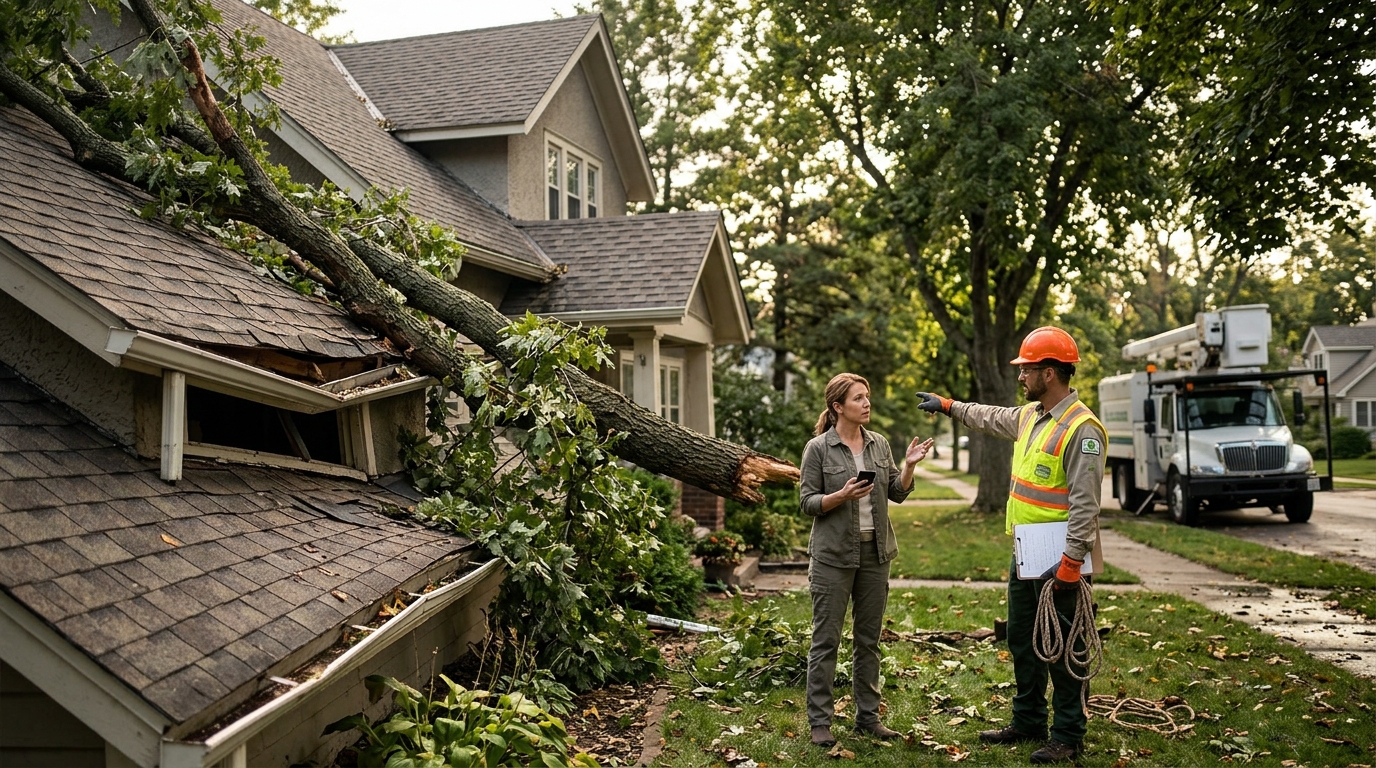
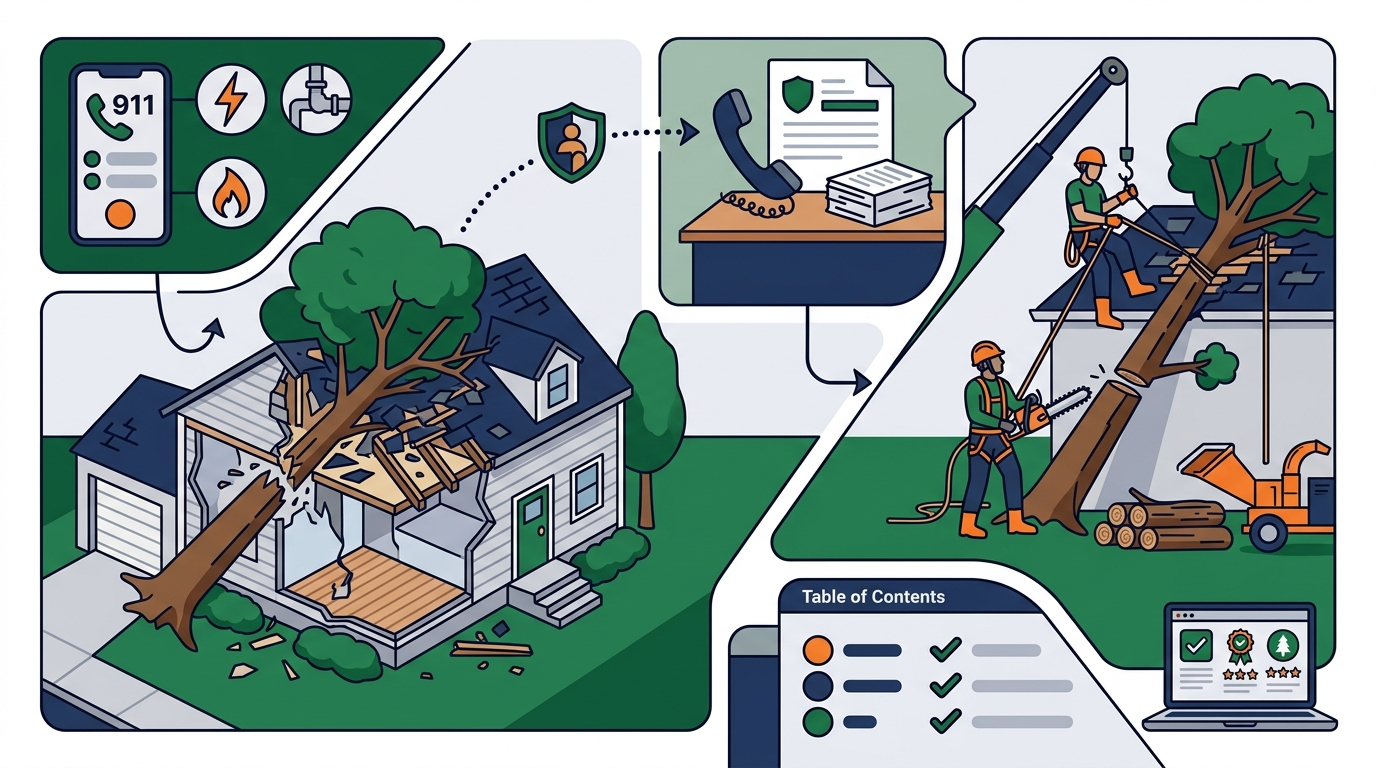
Call 911 if anyone is hurt, gas is leaking, or power lines are down. Otherwise, call your homeowners insurance agent first, then hire an insured tree service for removal. This guide explains the exact order of operations, how insurance typically handles roof damage, and how to find a qualified professional safely.
Emergency Safety Protocols
A tree on a roof is a structural hazard, not just a mess. The immediate goal is to secure the property and prevent secondary damage. Tree removal is a dangerous trade, and attempting to cut a tree off a roof without proper rigging equipment can cause the trunk to roll or the roof to collapse entirely. Homeowners should never attempt to climb onto a compromised roof to move branches.
Step 1: Evacuate and Assess from Outside
Get everyone, including pets, out of the house and away from the tree. A tree that has landed on a roof is rarely done moving. Branches settle, the trunk rolls, and a roof that held the initial impact can give way an hour later. Leave through a door on the side away from the tree. From a safe distance, look for three specific hazards: a gas smell, downed power lines, or a bowing ceiling or wall. If you smell gas, do not re-enter. Call 911 or your gas utility from outside.
Step 2: Handle Power Lines
If any wire is down, touching the tree, or pulled off the house, stay at least 10 feet away. Removal of tree limbs anywhere near power lines is never for the homeowner to do themselves. Call your local utility company immediately. They will secure the line. Do not let a tree service crew start working until the utility confirms the line is dead and secured. This is a legal and safety requirement in most jurisdictions.
Step 3: Document Before Touching
Before any crew arrives, photograph everything. Take wide shots of the tree on the house, close-ups of the roof damage, and specifically photograph the base of the tree. The condition of the base (rot vs. healthy wood) often determines liability and insurance coverage. If the tree was already dead and rotting before the storm, your insurer may deny the claim. If it was healthy and blown over by wind, coverage is more likely. These photos are your evidence.
Insurance Claims Process
Homeowners insurance is designed to repair sudden damage to your property, not to maintain your yard. The rule to remember is "only if it hit something." If the tree fell on the roof, the removal is typically covered. If it fell in the yard and hit nothing, it is your cost. Understanding this distinction prevents denied claims and out-of-pocket surprises.
What is Typically Covered
Under a standard US homeowners policy (HO-3 form), tree removal is covered if the tree fell on a covered structure like your house, garage, or fence. The policy typically covers the cost of removing the tree, often up to a specific limit per tree (commonly $500 to $1,000, though this varies by carrier). The repair of the roof itself is covered under your dwelling coverage, subject to your deductible. If the tree blocked your driveway, some policies cover removal, but check your specific "debris removal" clause.
What is Typically Not Covered
Insurance does not cover removing a standing dead tree before it falls. That is considered maintenance. If you knew a tree was dead and left it standing, your insurer may deny a later claim for the damage it causes. Additionally, if the tree fell due to flood or earthquake, it is excluded unless you carry separate flood or earthquake coverage. Always read your policy's exclusions section before filing a claim.
The Claim Workflow
1. Call your insurer to report the damage. Do not hire a crew until you have spoken to your adjuster, unless the roof is actively leaking and needs immediate tarping.
2. Get the roof tarped. This is usually reimbursed as damage prevention. It stops water from entering the home while you wait for the tree removal.
3. Get a written quote from an insured tree service. The quote should itemize felling, chipping, haul-away, and stump grinding separately.
4. Submit the quote and receipts to your insurer for reimbursement or direct payment, depending on your policy terms.
Hiring the Right Crew
After a storm, door-knockers appear offering to "fix it for cash." These are often scams or uninsured crews. A legitimate tree service can show a current certificate of insurance, a physical address, and a written itemized quote. In most states, there is no specific license to look up for tree work, so insurance is the real test of legitimacy.
Verify Insurance Directly
Ask for a certificate of insurance (COI) and ask that the company's insurance agent send it to you directly by email. This defeats the most common trick: a photocopied certificate from a policy that lapsed last year. Look for two lines: general liability (commonly $1,000,000 per occurrence) and workers' compensation. If the crew is hurt on your property and the company has no workers' comp, you could be liable. If they damage your fence and have no general liability, you are out of pocket.
Red Flags to Avoid
Walk away from any company that asks for cash only, refuses to provide a written quote, or pressures you to sign immediately. A reputable company will provide a written proposal from an in-person visit. They will list every line item: felling, chipping, haul-away, stump grinding, and cleanup. If a quote seems too cheap, it often means the company is skipping insurance or using untrained labor. Tree work is one of the more dangerous trades in the country, and insurance premiums for a legitimate company are steep.
Understanding Emergency Costs
Emergency tree removal costs more than routine work because of the urgency, the equipment required, and the risk. A tree on a house usually needs a crane, which adds to the cost. An emergency crew works outside normal hours, which also increases the price. However, if the tree hit a structure, your insurance should cover most of this cost after your deductible.
| Situation | Who Pays | Typical Cost Range |
|---|---|---|
| Tree on house/garage | Homeowners Insurance | $1,500–$5,000 (Insurance pays up to limit) |
| Tree in yard, hit nothing | Homeowner | $200–$500 for medium tree |
| Tree on power lines | Utility Company | Utility clears line; you pay for remains |
| Neighbor's tree on your property | Your Insurer (usually) | Deductible applies |
These are typical US ranges. Local prices vary by region, season, and access. Always get a written, itemized quote from a vetted company for your specific tree. Stump grinding is usually a separate charge of $100–$400 and is often not included in the initial removal quote.
Key Takeaways
- Call 911 if gas is leaking or power lines are down; otherwise, call your insurer first.
- Photograph the tree base and roof damage before anyone touches the tree.
- Insurance typically covers removal only if the tree hit a covered structure.
- Verify the tree service's insurance by having the agent send the certificate directly to you.
- Emergency removal costs more due to crane use and after-hours work.
- Never let a crew start work near power lines until the utility confirms the line is dead.
- Get a written, itemized quote that separates felling, chipping, and haul-away.
Frequently Asked Questions
Do I need to call 911 for a tree on my roof?
Call 911 if anyone is hurt, you smell gas, a power line is down, or part of the house has collapsed. If the tree is sitting on an intact roof, nobody is hurt, and there is no gas or line involved, you do not need 911. Call your utility if the service wire was pulled loose, then call your insurer.
Will my insurance cover the tree removal?
Generally, yes, if the tree fell on a covered structure like your house or garage. Most standard policies cover removal up to a specific limit per tree, after your deductible. If the tree fell in the yard and hit nothing, it is typically not covered.
How much does emergency tree removal cost?
Emergency removal off a house typically runs $1,500 to $5,000. This higher cost reflects the need for a crane, specialized rigging, and after-hours labor. If insurance covers it, you pay your deductible plus any amount above the policy limit.
Who removes a tree on power lines?
The utility company removes the tree from the power lines. You must stay at least 10 feet away. Once the utility clears the line, you can hire a tree service to remove the remaining wood from your property.
How do I know if a tree service is legit?
Ask for a certificate of insurance sent directly by the agent, a physical address, and a written itemized quote. In most states, there is no specific license to check, so insurance is the primary indicator of a legitimate business.
Should I leave the tree on the roof overnight?
If the roof is intact and not leaking, you can wait until morning to line up a vetted company. Emergency work costs roughly 1.5x to 2x the normal price. If the roof is leaking, get it tarped immediately to prevent interior damage, then schedule removal for the next day.