
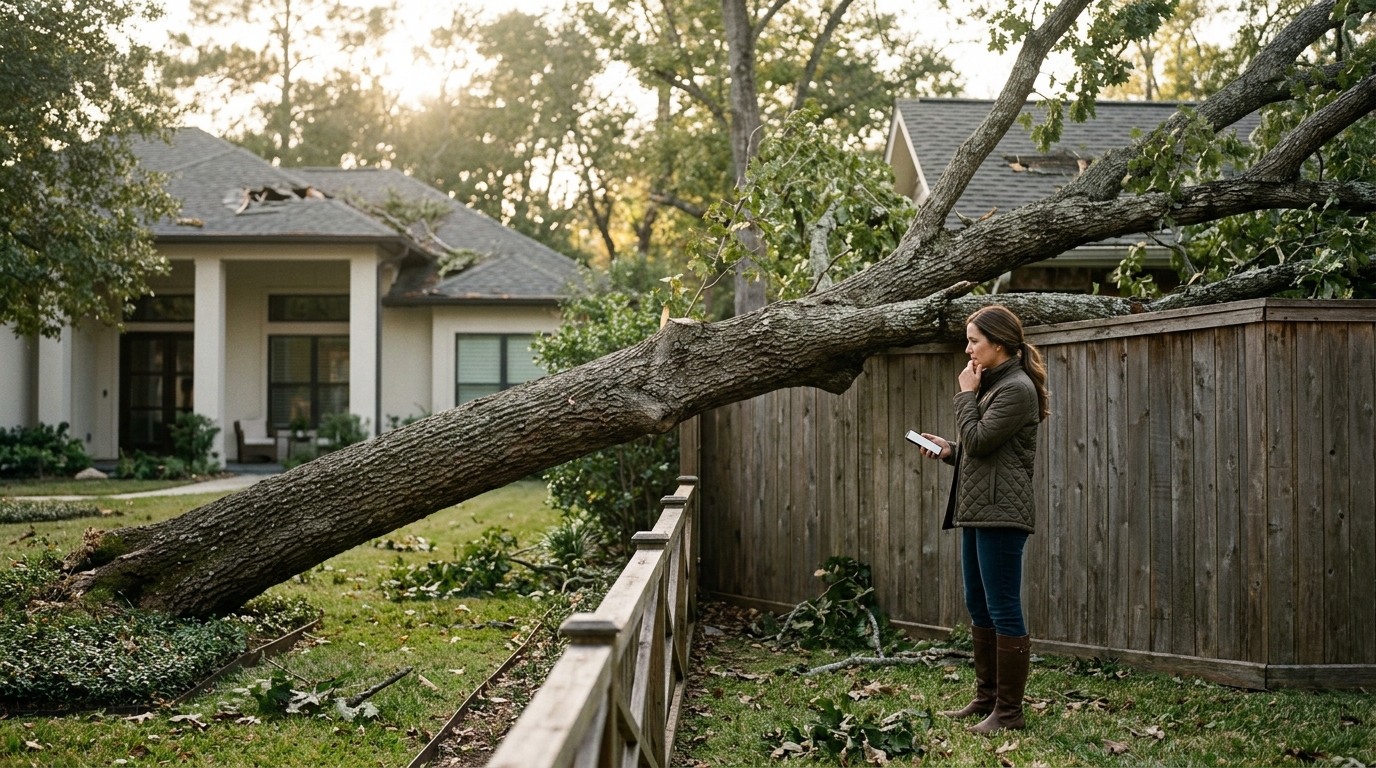
If a neighbor's tree falls on your property, the neighbor is generally not liable unless they knew the tree was hazardous and failed to act. Your homeowners insurance typically covers the damage to your structures and the cost of removal, subject to your deductible. This guide explains how liability works, how to document the incident, and how subrogation claims function.
Liability Basics: Negligence vs. Acts of God
Tree liability is a legal concept that determines who pays for damage caused by a falling tree. In most US jurisdictions, the rule is simple: a tree owner is not responsible for damage caused by a tree unless they were negligent. Negligence in this context means the owner knew or should have known the tree was dead, diseased, or structurally unsound and failed to take reasonable steps to address it.
When a healthy tree falls due to a storm, lightning, or high winds, it is considered an "act of God." In these cases, the neighbor is not liable, and the damage is treated as an unfortunate event rather than a tort. However, if the tree was visibly dead, leaning dangerously, or had obvious signs of decay that the neighbor ignored, a court might find them negligent. This distinction is critical because it determines whether you can sue the neighbor or if you must rely on your own insurance.
Signs of Negligence
Proving negligence requires evidence that the tree was in a hazardous state before it fell. Common indicators include a tree that has lost all its leaves in summer, bark peeling off in sheets, or large cracks in the trunk. If you can show that the neighbor was aware of these conditions and did nothing, you have a stronger case for liability. Conversely, if the tree looked healthy until the storm hit, the neighbor is likely off the hook.
Homeowners Insurance Coverage
Homeowners insurance is the primary financial safety net when a neighbor's tree falls on your property. Most standard HO-3 policies cover damage to your dwelling, garage, and other structures if a tree falls on them. The policy also typically covers the cost of removing the tree, but only if it caused damage to a covered structure or blocked access to your home.
It is important to understand the limits of this coverage. Insurance does not cover the removal of a tree that falls in your yard and hits nothing. If the tree lands on your lawn, the removal cost is your responsibility. Additionally, most policies have a cap on debris removal, often ranging from $500 to $1,000 per tree. If the removal cost exceeds this cap, you pay the difference. Your deductible also applies to the total claim, including both the structure repair and the removal cost.
What is Covered vs. What is Not
Understanding the boundaries of your policy prevents surprises during the claims process. The table below summarizes typical coverage scenarios for a neighbor's tree falling on your property.
| Situation | Structure Damage | Tree Removal | Who Pays |
|---|---|---|---|
| Tree falls on house/garage | Covered | Covered (up to cap) | Your Insurance |
| Tree falls on fence | Covered | Covered (up to cap) | Your Insurance |
| Tree falls in yard (hits nothing) | N/A | Not Covered | You |
| Tree blocks driveway | N/A | Often Covered | Your Insurance |
Always review your specific policy documents, as terms can vary by insurer. If you are unsure about your coverage, contact your insurance agent before hiring a removal crew. You can also browse local tree professionals to get quotes for removal, which you can then submit to your insurer for reimbursement.
Documentation and Evidence
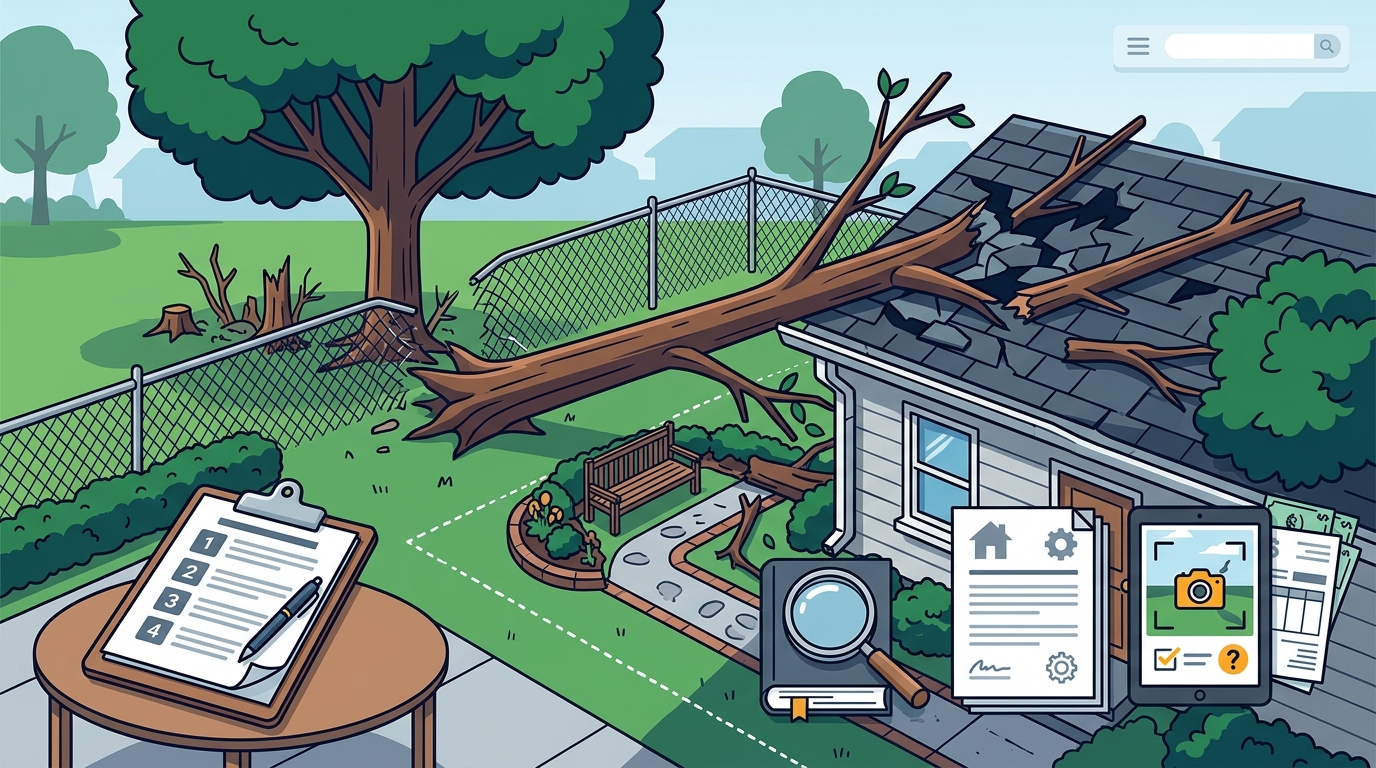
Documentation is the backbone of any insurance claim or liability dispute. When a tree falls, your first step is to secure the scene and gather evidence. This process helps establish the timeline, the condition of the tree, and the extent of the damage. Proper documentation protects you from disputes with your insurer or the neighbor.
Step-by-Step Evidence Collection
Start by photographing the tree and the damage from multiple angles. Include wide shots that show the tree's position relative to your house, fence, or driveway. Take close-up photos of the base of the tree, the trunk, and any broken branches. If the tree is still standing or partially standing, photograph the lean and any visible cracks or decay. These images serve as visual proof of the tree's condition before and after the fall.
Next, document the weather conditions. Check local weather reports for the date and time of the incident. If a storm was reported, note the wind speeds and any official warnings. This information supports the "act of God" defense if the neighbor claims you are liable, or it supports your claim if you are arguing the tree was already compromised. Finally, keep all receipts for emergency repairs, such as tarping the roof or boarding up windows. These costs are often reimbursable under your policy as damage prevention.
Subrogation Claims
Subrogation is the legal process by which your insurance company seeks to recover the costs it paid on your behalf from a third party who is liable for the damage. If your insurer determines that the neighbor was negligent, they may file a subrogation claim against the neighbor's homeowner's insurance. This process allows your insurer to recoup the money they paid for your repairs and removal.
As the policyholder, you typically do not need to pursue the neighbor directly if your insurer is handling the subrogation claim. However, you must cooperate with your insurer by providing all documentation and not admitting fault or making statements that could waive your rights. If the neighbor's insurer denies the claim, your insurer may still cover your loss, but they will pursue the neighbor through other legal means. This process can take months or even years, so patience is key.
How Subrogation Works in Practice
The subrogation process begins after your claim is settled. Your insurer's legal team reviews the evidence to determine if the neighbor was negligent. If they find negligence, they send a demand letter to the neighbor's insurer. The neighbor's insurer then investigates the claim and may accept or deny liability. If they accept, they pay your insurer, and the matter is closed. If they deny, your insurer may file a lawsuit. Throughout this process, your relationship with the neighbor may become strained, but it is best to let the insurers handle the legal back-and-forth.
Key Takeaways
- Neighbors are generally not liable for tree damage unless they were negligent in maintaining a hazardous tree.
- Your homeowners insurance typically covers structure damage and tree removal if the tree hit a covered structure.
- Removal of a tree that falls in the yard and hits nothing is usually not covered by insurance.
- Most policies cap debris removal at $500 to $1,000 per tree, so you may pay the difference.
- Document the scene with photos, weather reports, and receipts immediately after the incident.
- Subrogation allows your insurer to recover costs from the neighbor's insurer if negligence is proven.
- Do not admit fault or sign releases without consulting your insurance agent.
- Hire an insured tree service for removal to ensure safety and proper documentation.
Frequently Asked Questions
Is my neighbor legally responsible if their tree falls on my house?
Your neighbor is only legally responsible if they were negligent, meaning they knew the tree was dead or hazardous and failed to act. If the tree was healthy and fell due to a storm, they are not liable, and your insurance covers the damage.
Does homeowners insurance cover tree removal if it hits nothing?
No, most homeowners insurance policies do not cover the removal of a tree that falls in your yard and does not damage a covered structure or block access. You are responsible for the removal cost in this case.
How much does insurance pay for tree removal?
Most policies cap tree and debris removal at $500 to $1,000 per tree. If the removal cost exceeds this cap, you pay the difference. Your deductible also applies to the total claim.
What should I do first if a neighbor's tree falls on my property?
Ensure everyone is safe, check for hazards like downed power lines, and call 911 if necessary. Then, photograph the scene, call your insurance agent, and contact a licensed tree service for an assessment.
Can I sue my neighbor for the cost of removing the tree?
You can sue if you can prove negligence, but it is often more practical to file a claim with your own insurance. Your insurer may then pursue subrogation against the neighbor's insurer to recover the costs.
What is subrogation in the context of tree damage?
Subrogation is the process where your insurance company seeks to recover the costs it paid for your claim from the party responsible for the damage, such as your neighbor's insurance company.
Do I need a permit to remove a fallen tree?
Permit requirements vary by city and county. Some jurisdictions require a permit for tree removal, especially if the tree is large or protected. Check with your local municipal office or consult a local tree professional to determine if a permit is needed.
Conclusion
When a neighbor's tree falls on your property, the path forward is clear: document the incident, file a claim with your insurance, and hire a professional for removal. While the neighbor may not be liable, your homeowners insurance is designed to handle these unexpected events. By understanding the basics of liability, coverage, and subrogation, you can navigate the process with confidence. For more detailed answers on tree care, costs, and hiring professionals, visit TreeProfessionals.com to find local experts and learn more about managing your trees.