
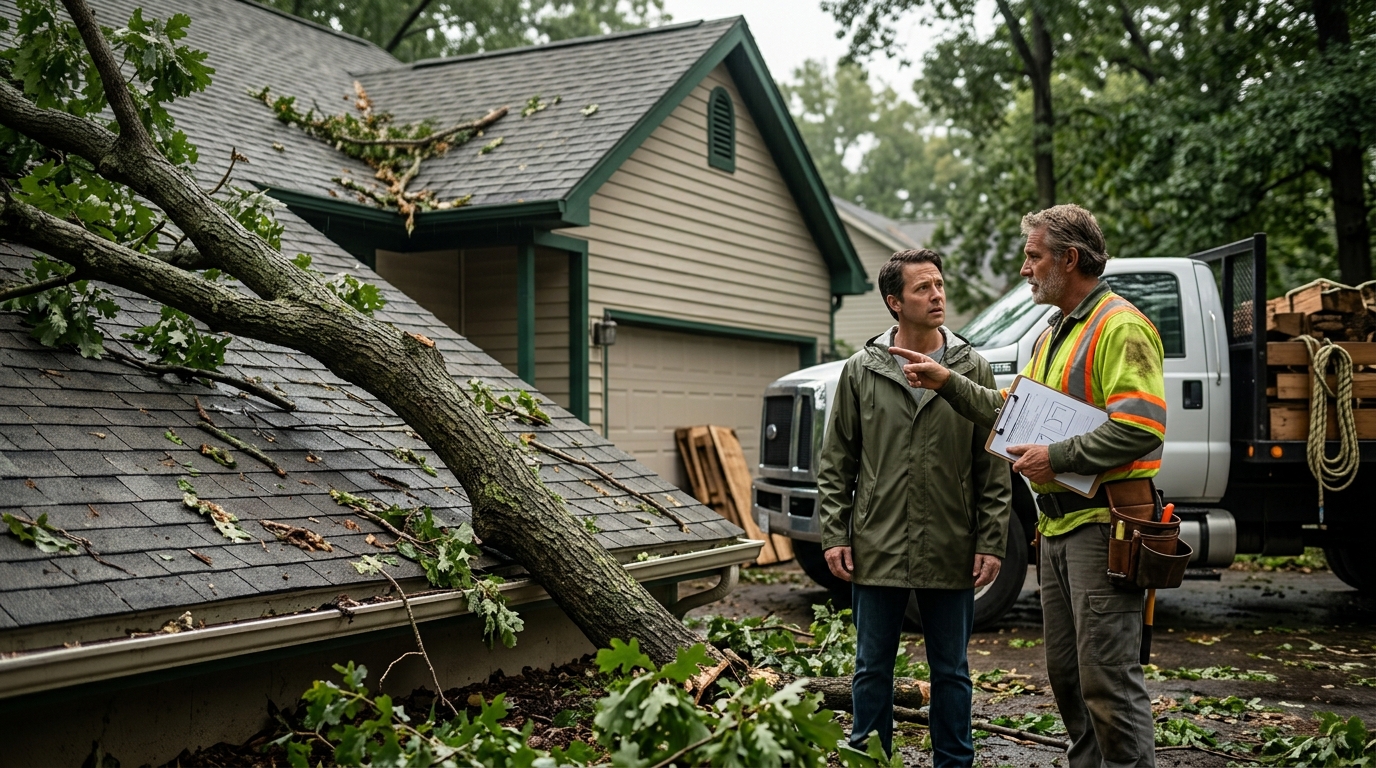
Call 911 immediately if a tree is on power lines, blocking a road, or if you suspect gas leaks. For a tree on your roof with no immediate life-safety hazards, call your homeowners insurance provider first, then hire a licensed, insured tree service. This guide explains the exact order of calls, how to handle the insurance claim, and how to safely hire a professional for emergency removal.
Emergency Safety Protocols
When a storm knocks a tree onto your roof, the first hour determines whether the situation remains a property repair or becomes a life-threatening emergency. Emergency tree removal is the rapid clearing of hazardous vegetation to protect life and property. Your primary goal is to secure the scene before any work begins.
Identify Immediate Life-Safety Hazards
Before you step outside, assess the situation from a safe distance. If the tree is touching or hanging over power lines, do not approach it. Electricity can travel through wet wood and ground, creating a lethal hazard. In this scenario, call 911 and your local utility company immediately. The utility company is responsible for clearing lines, not you and not a private tree service. Stay at least 35 feet away from any downed line that is sparking or arcing.
Check for Structural and Utility Damage
If the tree is on your roof but not touching lines, check for gas leaks. A distinct sulfur smell or hissing sound near the impact zone means you must evacuate and call your gas utility from outside. Also, look for water entering the home. If the roof is compromised, water damage can escalate rapidly. Photograph the damage from multiple angles before anyone touches the tree. These images are critical for your insurance claim and for the tree crew to plan a safe removal strategy.
Secure the Perimeter
Keep family members, pets, and neighbors away from the tree. A tree on a roof is unstable; it can shift or fall further if the wind picks up or if the structure beneath it gives way. Do not attempt to cut the tree yourself. Improper cutting can cause the tree to fall in an uncontrolled direction, potentially causing severe injury or further structural damage. Wait for a professional crew with the proper equipment, such as cranes or rigging gear, to handle the job.
Insurance Claims Process
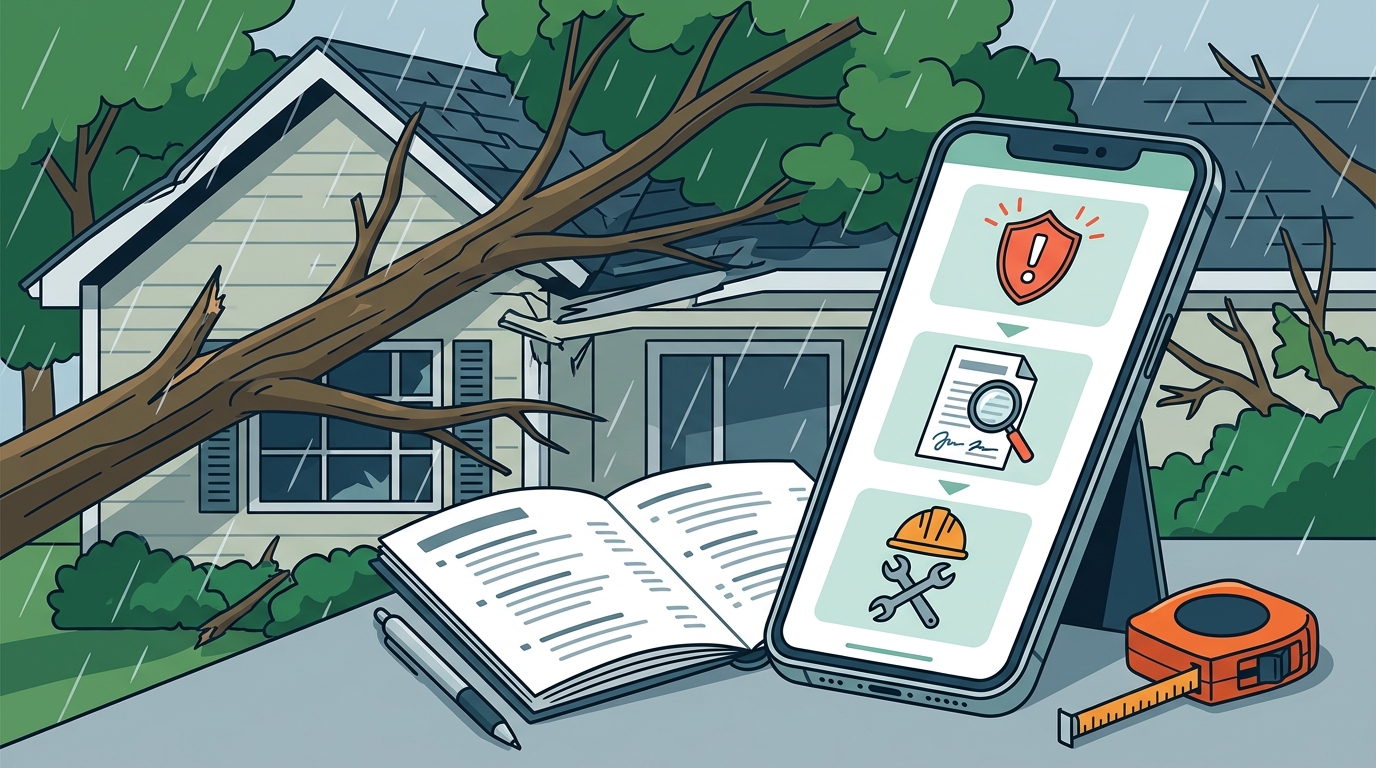
Understanding how your policy works is the second most important step after ensuring safety. Homeowners insurance is a contract that provides financial protection against specified risks, including wind and storm damage. Most standard policies cover tree removal if the tree has fallen on a covered structure, such as your house, garage, or fence.
File the Claim Promptly
Contact your insurance agent or adjuster as soon as it is safe to do so. Provide them with the photos you took, a description of the storm, and the extent of the damage. Be clear that the tree has fallen on a structure. This distinction is vital because many policies only cover removal costs when the tree has caused damage to a covered item. If the tree is simply lying in your yard and hit nothing, removal is typically not covered.
Understand Deductibles and Coverage Limits
Your policy will have a deductible, which is the amount you pay out of pocket before insurance kicks in. Additionally, most policies have a sub-limit for tree removal, often ranging from $500 to $1,000 per tree. If the removal cost exceeds this limit, you will be responsible for the difference. It is important to get a written estimate from the tree service to submit to your adjuster. Do not sign a contract with a tree company until you understand how much your insurance will cover and what your out-of-pocket costs will be.
Coordinate with the Adjuster
Your insurance adjuster may need to inspect the damage before approving the claim. They will assess the structural damage to your roof and the cost of tree removal. Keep all receipts and communication logs. If you have questions about what is covered, refer to your policy document or consult with your agent. TreeProfessionals.com provides general guidance on how insurance typically handles tree removal, but your specific policy terms always take precedence.
Hiring the Right Emergency Crew
Once safety is secured and your claim is filed, you need to hire a professional tree service. Tree service is a business that provides specialized labor and equipment for tree care, removal, and storm cleanup. Emergency work often comes with a premium price, so it is crucial to vet the company before hiring.
Verify Insurance and Licensing
Before any work begins, ask the company for a certificate of insurance. This document should show general liability coverage and workers' compensation. If a worker is injured on your property and the company lacks workers' comp, you could be held liable. Also, check if the company is licensed in your state. In many areas, tree work does not require a specific license, but some jurisdictions do. offers a guide on how to vet a tree service, including what questions to ask and what red flags to watch for.
Get a Written Estimate
Never agree to a price over the phone or via text. A reputable company will send an arborist or estimator to your property to assess the situation. The estimate should be written and itemized, breaking down costs for felling, rigging, crane use, debris removal, and stump grinding. Be wary of companies that offer a flat, low price without an on-site visit. This is a common tactic used by storm chasers who arrive after a major storm and inflate prices once they see the scope of the work.
Ask About Equipment and Methods
For a tree on a roof, standard chainsaw work is often insufficient. You may need a crane to lift the tree off the roof or rigging to lower it safely. Ask the company what equipment they will use and why. A crew that relies solely on ground-based methods may not be able to handle a complex roof removal safely. Ensure they have the right tools for the job to prevent further damage to your home.
Cost Expectations and Coverage
Emergency tree removal is more expensive than routine work due to the urgency, specialized equipment, and potential for structural damage. Understanding the cost structure helps you budget and negotiate with your insurance provider.
| Service Type | Typical Cost Range | Notes |
|---|---|---|
| Emergency Tree Removal (Medium Tree) | $1,500 - $5,000 | Includes crane or rigging if on a roof |
| Stump Grinding | $100 - $400 | Usually separate from removal cost |
| Debris Hauling | $200 - $500 | May be included in removal quote |
| Emergency Surcharge | 1.5x - 2x normal rate | Applied for after-hours or urgent work |
These figures are national averages and can vary significantly based on your location, the size of the tree, and the complexity of the removal. maintains a cost guide that helps you understand typical price ranges for various tree services. Always get multiple quotes if the situation allows, but in a true emergency, prioritize safety and insurance verification over finding the absolute lowest price.
Key Takeaways
- Call 911 first if the tree is on power lines, blocking a road, or if you suspect gas leaks.
- Photograph the damage from multiple angles before anyone touches the tree.
- Contact your insurance provider immediately after ensuring safety to file a claim.
- Verify the tree company's insurance and licensing before hiring.
- Get a written, itemized estimate from an on-site visit, not a phone quote.
- Understand your policy's sub-limits for tree removal to avoid surprise out-of-pocket costs.
- Do not attempt to remove the tree yourself, especially if it is on a roof or near structures.
- Keep all receipts and communication logs for your insurance claim and tax purposes.
Frequently Asked Questions
Who is responsible for removing a tree that fell on my roof?
You are responsible for hiring a tree service to remove the tree, but your homeowners insurance may cover the cost if the tree fell on a covered structure. The utility company is only responsible if the tree is on power lines.
How much does emergency tree removal cost?
Emergency tree removal typically costs between $1,500 and $5,000, depending on the size of the tree and whether a crane is needed. Emergency work often carries a surcharge of 1.5x to 2x the normal rate.
Will my insurance cover tree removal if it hit my roof?
Most homeowners insurance policies cover tree removal if the tree has fallen on a covered structure, such as your house or garage. Check your policy for specific sub-limits and deductibles.
Can I remove the tree myself to save money?
No, you should not attempt to remove a tree yourself, especially if it is on a roof. Improper removal can cause severe injury or further structural damage. Always hire a licensed and insured professional.
What should I do if the tree is on power lines?
Stay at least 35 feet away and call 911 and your local utility company. Do not attempt to touch or move the tree. The utility company will de-energize the lines and clear the area.
How do I find a reputable tree service in an emergency?
Use a directory like Find a Pro to locate local companies. Verify their insurance and licensing, and get a written estimate before agreeing to work.
Do I need a permit to remove a tree on my property?
Permit requirements vary by city, county, and HOA. In many areas, you do not need a permit to remove a dead or storm-damaged tree on your own property, but you should check local regulations to be sure.
What if the tree company asks for a large deposit?
Be cautious. Reputable companies typically ask for a small deposit, not more than 50% of the total cost. If a company demands full payment upfront, it is a red flag. Pay the balance only after the work is completed to your satisfaction.