
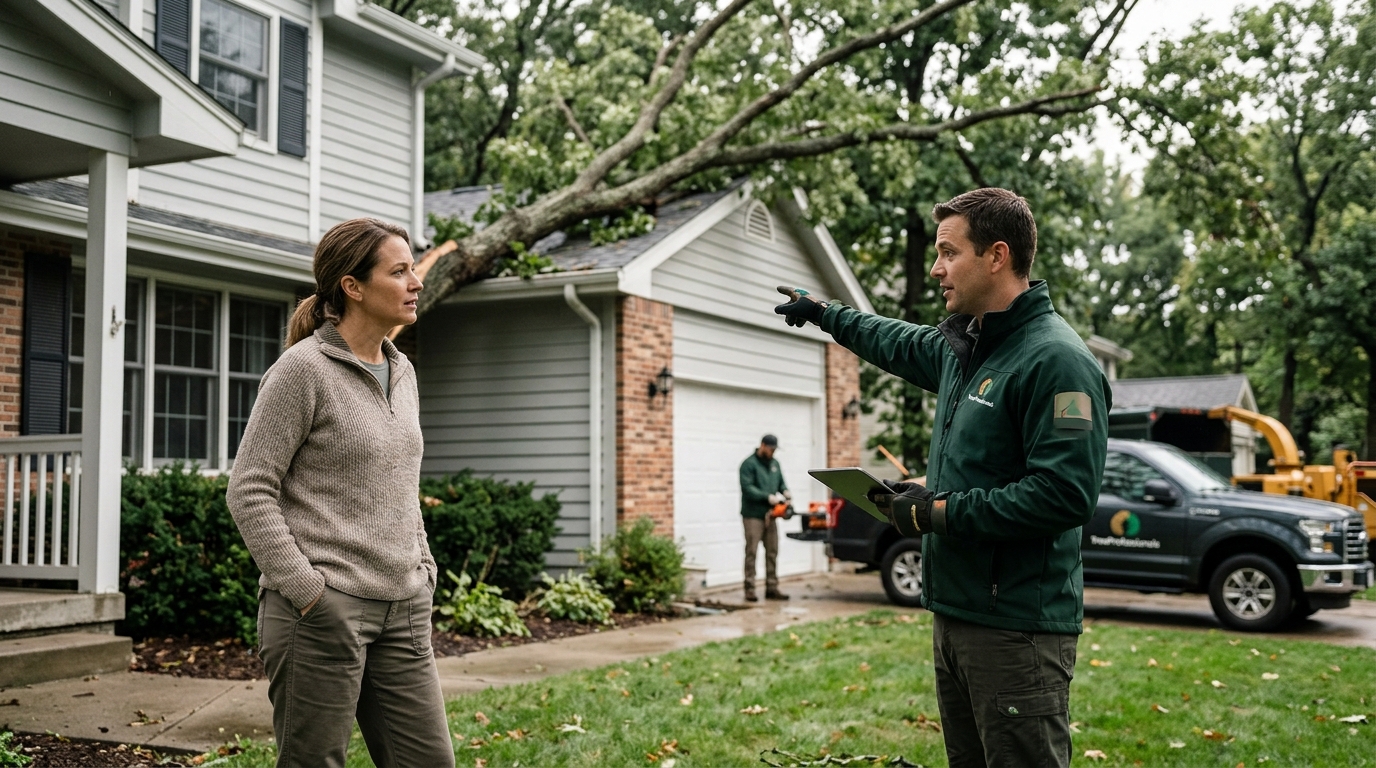
Homeowners insurance typically covers tree removal only if the tree falls on a covered structure, such as your house, garage, or fence, or blocks your driveway. It does not cover removing a standing tree, a dead tree, or a fallen tree that hit nothing. This guide explains the specific triggers for coverage, the financial limits on debris removal, and why preventive maintenance is excluded from your policy.
Coverage Triggers
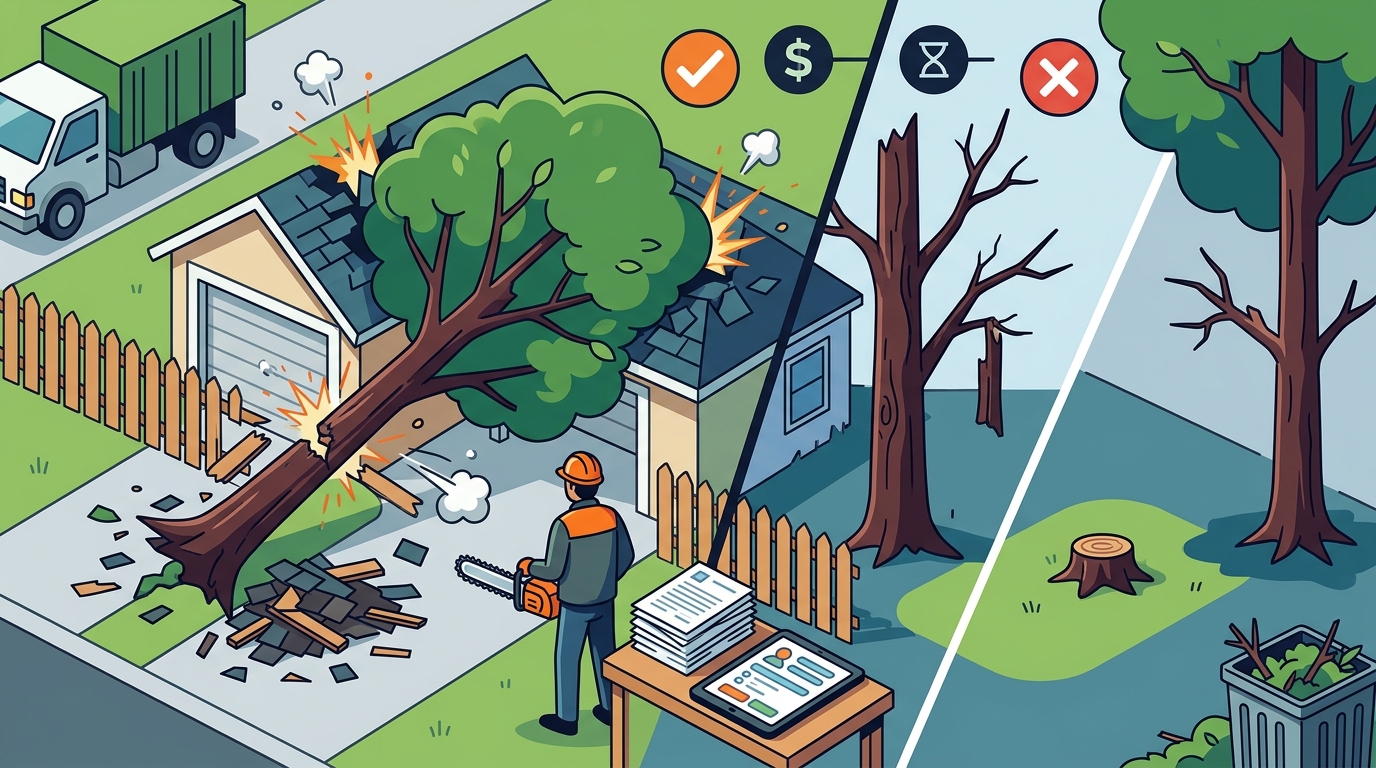
Homeowners insurance is designed to repair sudden, accidental damage to your property, not to maintain your yard. The rule to remember is "only if it hit something." The same tree can be covered or not covered depending entirely on where it landed. If a tree falls on your roof, the removal is covered. If it falls six feet to the left onto the lawn, it is not.
Structural Damage
Most standard policies, such as the HO-3 form used by many US homeowners, cover removal if the tree damages a covered structure. This includes your house, attached garage, detached garage, deck, or fence. The damage must be caused by a covered peril, such as wind, lightning, or ice. If the tree is dead and falls due to neglect, the claim may be denied even if it hits the house.
Access Blockage
Some policies cover removal if the tree blocks access to your home. This usually applies to driveways or wheelchair ramps. Insurers often require the driveway to be fully blocked to qualify. If the tree is leaning against the driveway but you can still drive past it, coverage is less likely. Check the "debris removal" section of your specific policy for exact wording.
What Is Not Covered
A tree that falls in the yard and hits nothing is your cost. A standing dead tree you want removed is considered maintenance. A tree that falls on your car is covered under your auto policy, not homeowners. A tree that falls due to flood or earthquake is excluded unless you carry separate coverage for those perils.
Debris Removal Limits
Even when coverage is triggered, your policy does not pay for the entire cost of removal. Most standard policies cap tree and debris removal at a specific amount per tree. This limit is separate from the limit for repairing the structure itself.
Typical Per-Tree Caps
Most US homeowners policies cap tree and debris removal at $500 to $1,000 per tree. There is often a total cap per storm, such as $1,000 or $2,000 for all trees affected in a single event. If the removal costs more than the cap, you pay the difference out of pocket. For example, if a large oak falls on your roof and removal costs $2,500, but your cap is $1,000, you pay $1,500.
Deductibles and Out-of-Pocket Costs
Your deductible applies to the entire claim, including the removal. If your deductible is $1,000 and the removal is $1,500, you pay the first $1,000, and the insurer pays the remaining $500 (up to the cap). If the removal is $800, you pay the full $800 because it is below your deductible. The structure repair is a separate line item with its own deductible application.
Stump Grinding and Hauling
Debris removal limits usually cover cutting the tree down and hauling away the branches and trunk. Stump grinding is often a separate charge and may not be covered, or it may be covered only up to the per-tree cap. Always ask the tree service for an itemized quote that separates felling, chipping, hauling, and stump grinding. This helps you see exactly what falls under the insurance cap and what you must pay.
Preventive Removal Exclusions
Preventive removal is the act of taking down a tree before it falls. This is considered maintenance, and maintenance is the homeowner's responsibility. Insurance does not cover maintenance. If you know a tree is dead and leave it standing, your insurer may deny a later claim for the damage it causes. This is a critical distinction that many homeowners miss.
Why Maintenance Is Excluded
Insurance is meant for sudden, unexpected events. A tree that is visibly dead, leaning, or diseased is a known risk. Leaving it standing is a choice. If it falls on your house, the insurer can argue that you were negligent in maintaining your property. This can void the claim entirely. Paying to remove a dead tree now is expensive, but it is much cheaper than a denied claim later.
Liability to Neighbors
If a dead tree on your property falls on your neighbor's house, you can be held liable for the damage. This is because you knew or should have known the tree was a hazard. Your liability insurance may cover this, but it is a separate process from homeowners insurance. It is always safer to remove a hazardous tree before it falls, even if it costs you money.
How to Assess Risk
If you are unsure whether a tree is dead or dying, consult a professional. A trained arborist can assess the tree's health and risk. They can tell you if the tree is a hazard that needs removal or if it is just stressed and can recover. This assessment is a maintenance cost, not an insurance claim. It is the best way to protect your property and your wallet.
Key Takeaways
- Homeowners insurance covers tree removal only if the tree falls on a covered structure or blocks access.
- A tree that falls in the yard and hits nothing is not covered; you pay the full cost.
- Most policies cap debris removal at $500 to $1,000 per tree, with a total cap per storm.
- Your deductible applies to the removal cost, not just the structure repair.
- Preventive removal of a dead or hazardous tree is considered maintenance and is not covered.
- Leaving a known hazardous tree standing can void a later claim and create liability to neighbors.
- Stump grinding is often a separate charge and may not be covered by the debris removal cap.
- Always get an itemized quote from a tree service to see what falls under the insurance cap.
Frequently Asked Questions
Does insurance cover removing a dead tree?
No. Preventive removal of a dead tree is considered maintenance. Insurance only covers removal if the tree falls on a covered structure or blocks access.
How much will insurance pay for tree removal?
Most policies cap tree and debris removal at $500 to $1,000 per tree. You pay the deductible and any amount above the cap.
Is stump grinding covered by insurance?
It depends on your policy. Stump grinding is often a separate charge. It may be covered up to the per-tree debris removal cap, or it may not be covered at all.
What if a neighbor's tree falls on my house?
Your homeowners insurance typically covers the removal and repair. Your insurer may pursue the neighbor only if they were negligent in maintaining the tree.
Does insurance cover a tree that falls on my car?
No. A tree that falls on your car is covered under your auto policy, specifically comprehensive coverage. You pay your auto deductible.
Can I claim insurance for a tree that is leaning but hasn't fallen?
No. A leaning tree is a maintenance issue. Insurance does not cover preventive removal. You must pay to remove it if you want it gone.
What if the tree falls due to a flood?
Flood damage is typically excluded from standard homeowners policies. You need separate flood insurance for coverage. Tree removal due to flood is not covered under a standard policy.
Conclusion
Understanding what your homeowners insurance covers for tree removal can save you significant money and stress. The key is to know the difference between sudden damage and maintenance. If a tree hits your house, call your insurer. If it is dead or leaning, it is your responsibility to address. For more detailed answers on tree care, costs, and hiring professionals, visit TreeProfessionals.com. Our guides provide plain-English answers to help you make informed decisions about your property.