
TreeProfessionals.com helps homeowners identify dead or dying trees by explaining the visual signs of decline and when professional removal is necessary. This guide covers the scratch test, branch dieback, bark damage, fungal growth, and structural hazards. You will learn how to assess your tree's health and determine if it poses a risk to your property. according to Why are my
The Scratch Test: Checking for Life
The scratch test is the most reliable method for determining if a tree is alive. It involves gently scraping the bark of a small twig to reveal the tissue underneath. If the tissue is green and moist, the tree is alive. If it is brown, dry, and brittle, that branch is dead.
How to Perform the Scratch Test
Use a pocket knife or your thumbnail to scratch a pencil-thin twig. Test several twigs from different sides of the tree and at different heights. One dead twig does not mean the whole tree is dead. However, if all twigs you test are brown and dry, the tree is likely dead.
Interpreting the Results
Green tissue indicates the tree is still alive, even if it looks stressed. Brown tissue indicates death. In winter, deciduous trees may look dead, but the scratch test will reveal green tissue under the bark. If you see green, the tree is dormant, not dead.
Dead Branches and Dieback
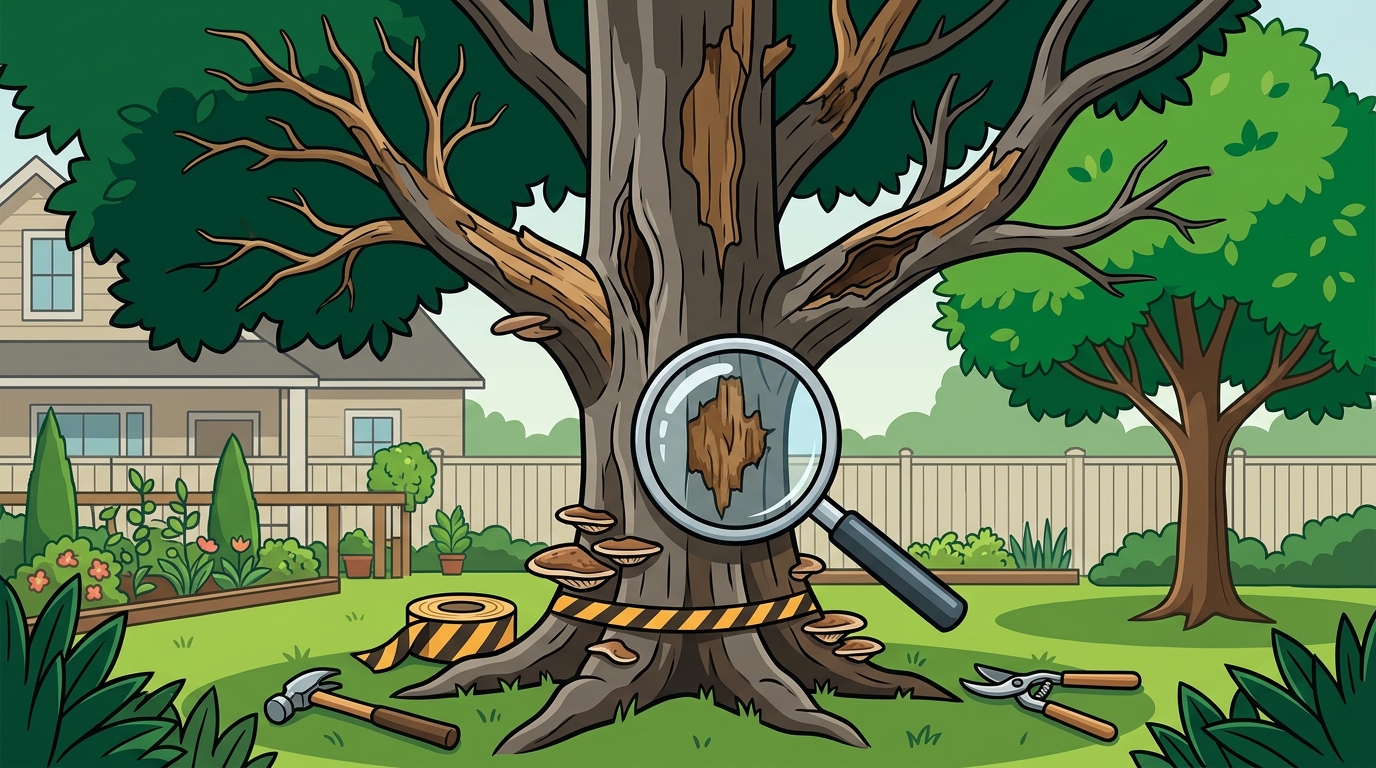
Dead branches are a common sign of a dying tree. A few dead branches are normal, especially in older trees. However, extensive dieback, where large sections of the canopy are bare, is a serious warning sign. Dead branches that are all on one side of a tree can be a symptom of root or trunk damage on the affected side, according to the University of Maryland Extension.
Canopy Dieback
Look at the overall shape of the tree. If the top of the tree is bare while the bottom is still leafy, the tree is dying from the top down. This is often caused by root rot or trunk decay. If the branches are brittle and snap easily, the tree is likely dead.
Leaf Drop and Color
Leaves that turn yellow or brown early in the season and drop off are a sign of stress. In some cases, the tree may drop its leaves entirely while still standing. This is a clear indication that the tree is dying or already dead.
Bark Damage and Decay
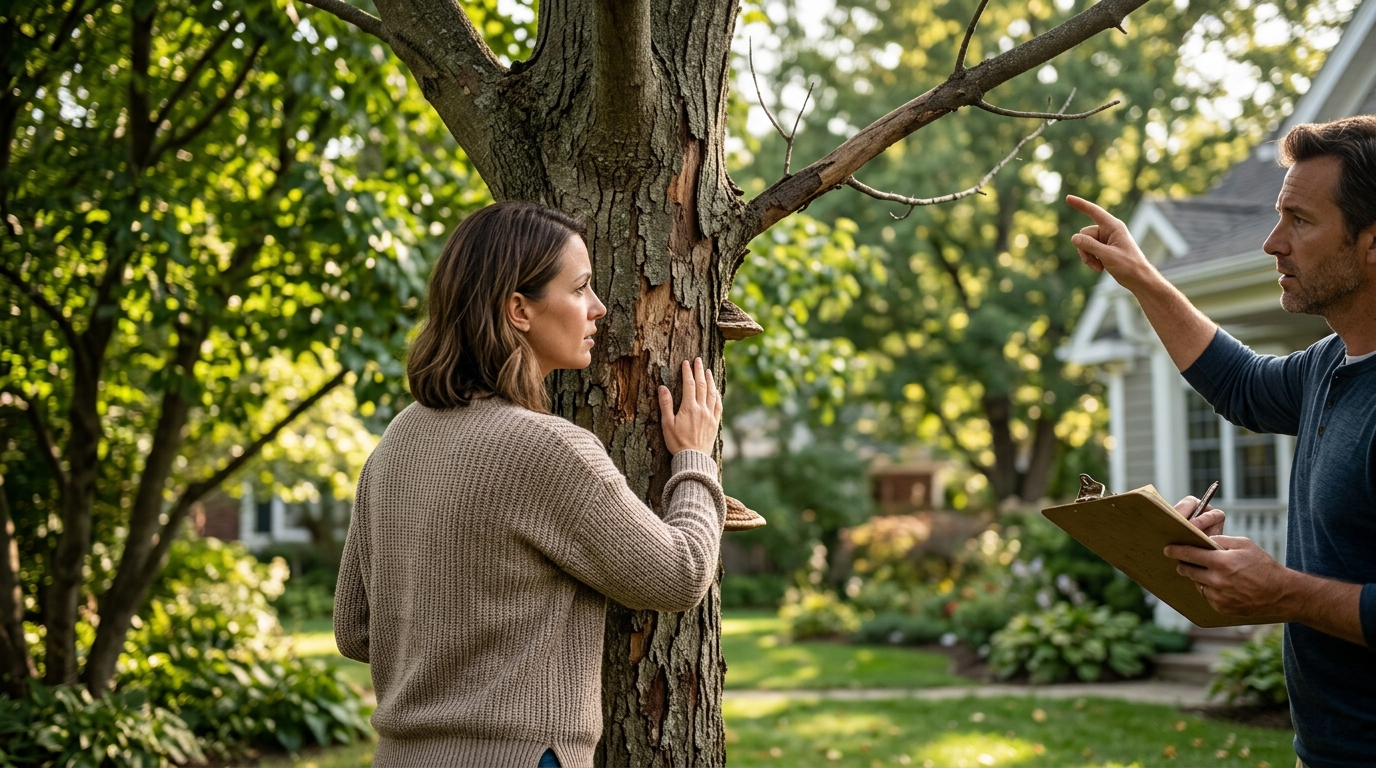
Bark damage is a major indicator of internal decay. Look for cracks, splits, or peeling bark. If the bark is peeling off in sheets, the wood underneath is likely dead. Deep vertical cracks in the trunk are a structural hazard and a sign of decay.
Signs of Internal Decay
Internal decay is not always visible from the outside. However, certain signs can point to it. Mushrooms growing at the base of the tree or on the trunk are a strong indicator of internal decay. The wood may be hollow inside, even if the bark looks intact.
Physical Damage
Damage from lawnmowers, string trimmers, or construction can create entry points for fungi and insects. If the bark is damaged, the tree is more vulnerable to disease and decay. This can lead to a dying tree over time.
Fungal Growth and Decay
Fungal growth is one of the most reliable signs of a dying tree. Mushrooms, shelf fungus, or conks growing at the base of the tree or on the trunk indicate internal decay. The fungus is feeding on the dead wood inside the tree. This means the tree is structurally weak and likely to fail. according to How Do You
Types of Fungal Growth
Shelf fungus, which looks like wooden shelves growing out of the trunk, is a common sign of decay. Mushrooms at the base of the tree indicate root rot. Both are serious signs that the tree is dying. You should not rely on the tree for support or shade if you see fungal growth.
Why Fungus Matters
Fungus does not kill the tree directly. Instead, it feeds on dead wood. The presence of fungus means that a significant portion of the tree is already dead. This weakens the tree and makes it more likely to fall. If you see fungus, the tree should be assessed for removal.
Structural Hazards and Lean
A tree that is leaning is a structural hazard. A slight lean is normal for many trees. However, a sudden or significant lean is a sign of root failure. If the soil is lifted on one side of the tree, the roots are failing. This is an emergency situation.
Root Failure
Root failure is often caused by soil compaction, waterlogging, or disease. When the roots fail, the tree loses its anchor. It may fall without warning. If you see a tree leaning toward your house, car, or power lines, it is a hazard. It should be removed immediately.
Cracks and Cavities
Deep cracks or cavities in the trunk are structural hazards. They weaken the tree and make it more likely to break. If the crack is deep and wide, the tree is at risk of splitting. This is especially dangerous if the tree is large and close to structures.
Certified Arborist Inspection
If you are unsure about the health of your tree, a certified arborist inspection is the best next step. An arborist is a trained professional who can diagnose tree problems. They can determine if the tree is dead, dying, or just stressed. They can also assess the risk of the tree falling.
Why Hire an Arborist
Tree work is dangerous and expensive. A professional can save you money by telling you if the tree can be saved or if it needs to be removed. They can also provide a written report, which is useful for insurance claims or legal disputes. You can find a local professional through the Find a Pro directory.
What to Expect
An arborist will inspect the tree from the ground and may climb it. They will look for signs of decay, disease, and structural weakness. They will give you a recommendation on whether to keep, treat, or remove the tree. This is a valuable service for homeowners who want to make an informed decision.
Key Takeaways
- The scratch test is the most reliable way to check if a tree is alive.
- Extensive dieback and dead branches are signs of a dying tree.
- Bark damage and peeling bark indicate internal decay.
- Fungal growth at the base or on the trunk is a major warning sign.
- A sudden lean or lifted soil indicates root failure and is an emergency.
- A certified arborist can provide a professional assessment and recommendation.
- Dead trees should be removed to prevent them from falling on structures.
- Always check for local permits before removing a tree.
Frequently Asked Questions
How do I know if a tree is dead?
Perform the scratch test on several twigs. If the tissue under the bark is brown and dry, the tree is dead. Also look for no leaves in summer, brittle branches, and fungal growth. according to Why are my
Can a dying tree be saved?
Sometimes, yes. If the tree is stressed but still has green tissue, it may recover with proper care. An arborist can determine if treatment is possible.
Is it dangerous to leave a dead tree standing?
Yes. Dead trees are structurally weak and can fall without warning. They pose a risk to people, property, and power lines.
Who is responsible for removing a dead tree?
The property owner is responsible for removing dead trees on their property. If the tree falls on a neighbor's property, the owner may be liable for damages.
Do I need a permit to remove a dead tree?
Permit requirements vary by city and county. Check with your local municipality before removing a tree, even if it is dead.
How much does it cost to remove a dead tree?
Costs vary based on the size of the tree and its location. A small tree may cost a few hundred dollars, while a large tree near a house can cost thousands. Get a written quote from a professional.
Conclusion
Identifying a dead or dying tree is a critical skill for every homeowner. By using the scratch test, observing branch dieback, checking for bark damage and fungal growth, and assessing structural hazards, you can make an informed decision about your tree's future. If you are unsure, consult a certified arborist through TreeProfessionals.com to ensure your property is safe.