
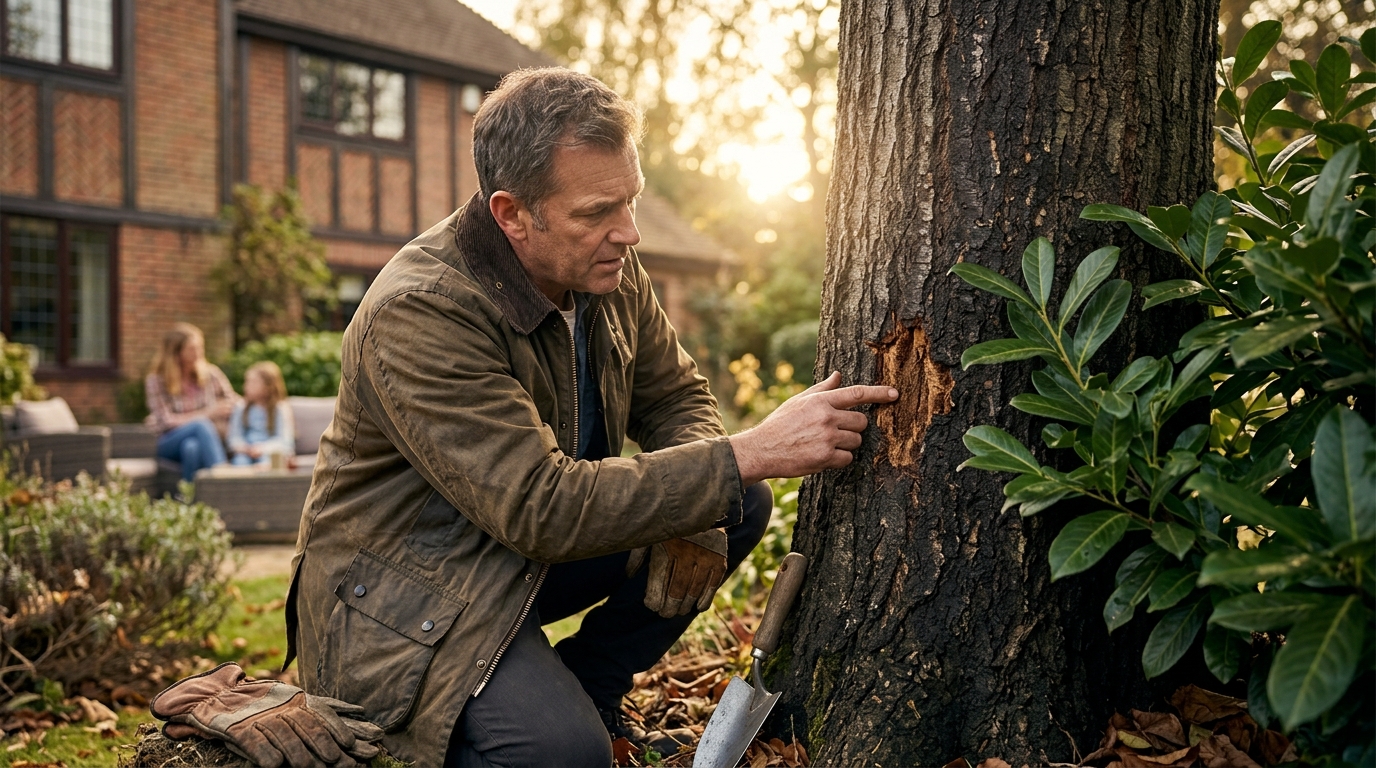
TreeProfessionals.com provides plain-English answers to help you determine if a tree is dead or dying. A tree is dead if the scratch test shows brown, dry tissue under the bark and no leaves appear in summer. This guide covers six critical diagnostic signs, from the scratch test to structural hazards, and explains when to call a certified arborist for a professional risk assessment.
The Scratch Test: The First Diagnostic Step
The scratch test is the most reliable initial method for determining if a tree is alive. It involves using a thumbnail or a pocket knife to gently scratch the bark of a pencil-thin twig. The goal is to expose the cambium layer, the thin layer of living tissue just beneath the bark.
Interpreting the Results
If the tissue underneath is bright green and moist, the branch is alive. If it is dull pale green, the tree may be stressed but still viable. If the tissue is brown, dry, and brittle, that specific branch is dead. It is crucial to test several twigs from different sides of the tree and at different heights. One dead twig indicates a dead branch, but if all tested twigs are dead, the tree is likely dead.
For large trees where you cannot reach the upper canopy, combine the scratch test with visual observations of the leaves and bark. A tree with no leaves in late spring or summer, combined with a scratch test showing brown tissue, is a strong indicator of death.
Dead Branches and Canopy Decline
Dead branches are a common sign of a dying tree, but context matters. A few dead branches on a large, healthy tree are normal and can be pruned away. However, widespread dead branches or a thinning canopy indicate a more serious problem.
Canopy Density and Leaf Quality
Observe the overall density of the leaves. A healthy tree has a full canopy. A dying tree often shows a thinning crown, with leaves that are smaller than normal, brown at the edges, or dropping early in the season. If the leaves are only present on one side of the tree or only on the lower half, it suggests root or trunk damage is preventing water and nutrient flow to the rest of the canopy.
Many small dead branches falling in calm weather is a sign that the tree is shedding what it cannot support. This is a defensive mechanism to conserve energy, but it indicates the tree is in advanced decline.
Bark Damage and Peeling
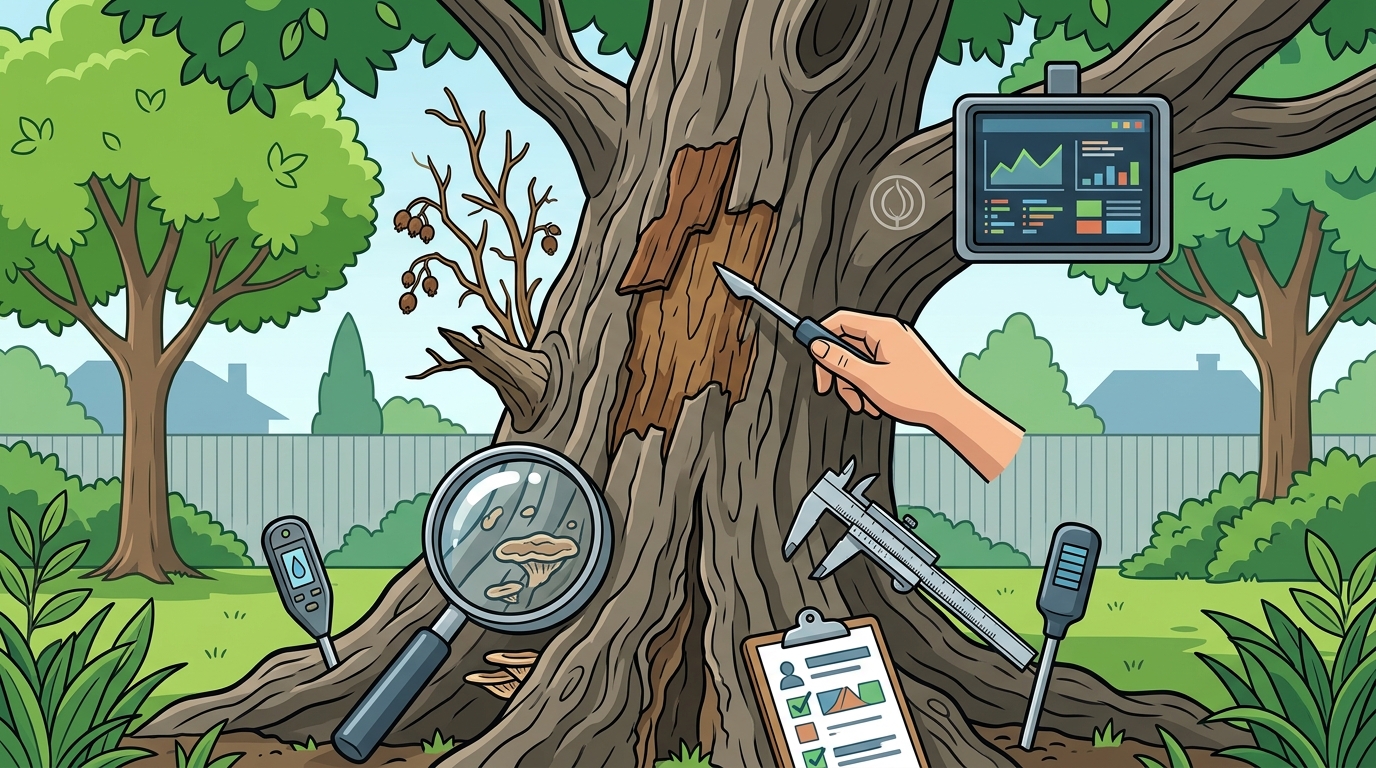
Bark is the tree's protective outer layer. When bark peels off in sheets, exposing bare, smooth wood underneath, that section of the trunk is dead. This is a significant warning sign, especially if it occurs on the main trunk or large limbs.
Cracks and Cavities
Deep vertical cracks or large cavities in the trunk indicate structural weakness. While a tree can sometimes live with a cavity, it compromises the trunk's ability to support the weight of the canopy. If the cavity is large or the bark is peeling around it, the tree is at high risk of failure. These signs often accompany internal decay, which weakens the wood from the inside out.
Fungal Growth and Internal Decay
Fungal growth, such as mushrooms or shelf fungus, at the base of the tree or on the trunk is a clear indicator of internal decay. Fungi feed on dead or decaying wood, so their presence means the wood inside the tree is rotting. This is particularly dangerous if the fungus is growing at the base, as it weakens the root system and the trunk's structural integrity. according to How Do You
Why Fungi Matter
According to the University of Maryland Extension, if one-third of the interior of the tree is hollow or rotten, it probably should be removed. Fungi are the primary agents of this decay. While some fungi are harmless, most that grow on trees are decomposers. Their presence means the tree is losing structural strength, making it a potential hazard, especially if it is near a house or other structures.
Structural Hazards and Leaning
A tree that has always leaned is usually stable. Trees lean toward light, away from larger neighbors, or downhill on slopes. However, a tree that started leaning recently, or has cracked soil or lifted roots on one side, is an emergency. This indicates root failure is in progress.
Assessing the Lean
Arborists get concerned when a tree leans more than 15 degrees from vertical, but the trend matters more than the angle. If you see soil heaving or cracking on the side away from the lean, the root plate is letting go. This is a critical hazard that requires immediate professional assessment. A tree in this state can fall without warning, especially in wind or rain.
When to Call a Certified Arborist
If you are unsure about the health of your tree, or if you see multiple warning signs, it is time to call a certified arborist. An arborist is a trained professional who can diagnose the cause of decline and assess the risk. A basic arborist visit costs $75 to $150, while a written report or risk assessment costs $150 to $500.
Why Professional Assessment Matters
Homeowners often cannot see the root system or the extent of internal decay. An arborist can use tools and expertise to determine if the tree can be saved or if it needs to be removed. If the tree is a hazard, the arborist can provide a written risk assessment, which is useful for insurance claims or neighbor disputes. You can find a local professional through the Find a Pro directory on TreeProfessionals.com.
Key Takeaways
- The scratch test is the first step: green and moist means alive, brown and dry means dead.
- Widespread dead branches or a thinning canopy indicate advanced decline.
- Bark peeling in sheets or deep cracks signal structural weakness.
- Fungal growth at the base or on the trunk indicates internal decay.
- A new lean or lifted roots is an emergency requiring immediate assessment.
- If one-third of the tree's interior is hollow or rotten, removal is likely necessary.
- Call a certified arborist for a professional diagnosis and risk assessment.
- Tree removal costs typically range from $200 to $2,000, depending on size and access.
Frequently Asked Questions
How do I know if my tree is dead or dying?
Scratch a small twig with your thumbnail. If the tissue underneath is green and moist, the tree is alive. If it is brown and dry, the branch is dead. Check several branches. If the tree has no leaves in summer, bark is falling off, and branches are brittle, it is likely dead or dying.
Can a tree with no leaves still be alive?
In winter, yes. Every deciduous tree looks dead from December to March. In late spring or summer, a tree with no leaves, or leaves on only one side, is in serious trouble. Pinch a bud: a live bud is plump and flexible, while a dead bud is dry and crumbly.
What does it cost to remove a dead tree?
Tree removal costs $200 to $2,000 in the US, depending on height and access. Small trees under 30 feet cost $200 to $500. Medium trees (30 to 60 feet) cost $500 to $1,000. Tall trees (60 to 80 feet) cost $800 to $1,500. Very large or hazardous trees cost $1,500 to $3,000 or more. Stump grinding adds $100 to $400.
Do I need a permit to remove a tree?
Many cities require a permit for trunks over 6 to 12 inches in diameter. Check with your local municipality before you cut. Some cities also protect certain species, so you may need a permit even if the tree is healthy.
Can I remove a tree myself?
Only if it is small and in open space. Removing a large tree or a tree near a house, power lines, or fence is dangerous and requires professional equipment and training. If you are not experienced, hire an insured crew.
Does homeowners insurance cover tree removal?
Homeowners insurance typically covers tree removal if the tree falls on a structure, like a house or garage. It usually does not cover removal of a dead tree that is still standing, even if it is a hazard. Check your policy for specific coverage limits and deductibles.
Conclusion
Determining if a tree is dead or dying requires a combination of visual inspection and simple tests like the scratch test. Look for signs of canopy decline, bark damage, fungal growth, and structural hazards. If you are unsure, or if the tree is a potential risk to your property, call a certified arborist for a professional assessment. You can find a local professional through the Find a Pro directory on TreeProfessionals.com, where you can browse listed companies and contact them directly.