
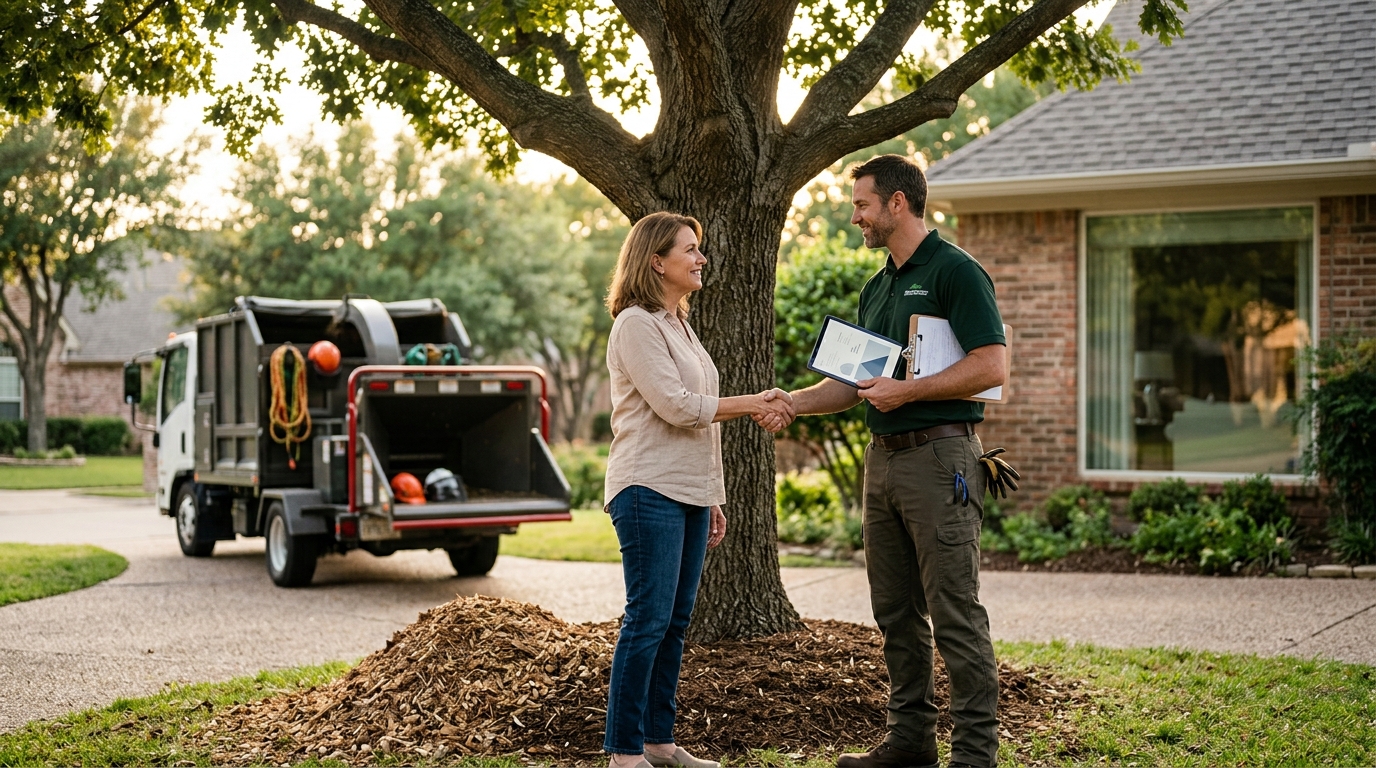
TreeProfessionals.com helps homeowners find trustworthy tree services by explaining how to verify insurance, check credentials, and spot red flags. This guide covers the seven critical steps to vet a contractor safely, ensuring you hire a professional who protects your property and your wallet.
The Danger of Cash-Only Demands
A cash-only demand is a refusal to provide a written receipt or process payment through a traceable financial institution. Legitimate tree service companies operate as registered businesses and accept checks, credit cards, or digital transfers. These methods create a paper trail that protects both the customer and the contractor. If a crew insists on cash, they are likely operating outside the law to avoid taxes or liability.
Why Traceability Matters
Traceable payments allow you to dispute charges if the work is not completed as agreed. They also confirm that the company is a legal entity. A trustworthy tree service will never pressure you to pay in cash to avoid a receipt. This behavior is a primary indicator of an unlicensed or uninsured operator.
Unusually Low Bids and Hidden Costs
An unusually low bid is a quote significantly below the national average for the same scope of work. Tree removal costs vary by height and access, but a bid that is half the price of competitors often signals hidden fees or dangerous shortcuts. These contractors may add charges for stump grinding, haul-away, or cleanup after the job starts. They may also use untrained labor to cut costs, increasing the risk of property damage.
Understanding the Price Floor
Tree work is expensive due to equipment, insurance, and skilled labor. A price that seems too good to be true usually is. Compare at least three written estimates to establish a realistic price range for your specific tree. If one bid is an outlier, ask the contractor to explain exactly what is included and what is excluded in their price.
Contractor Credentials and Licensing
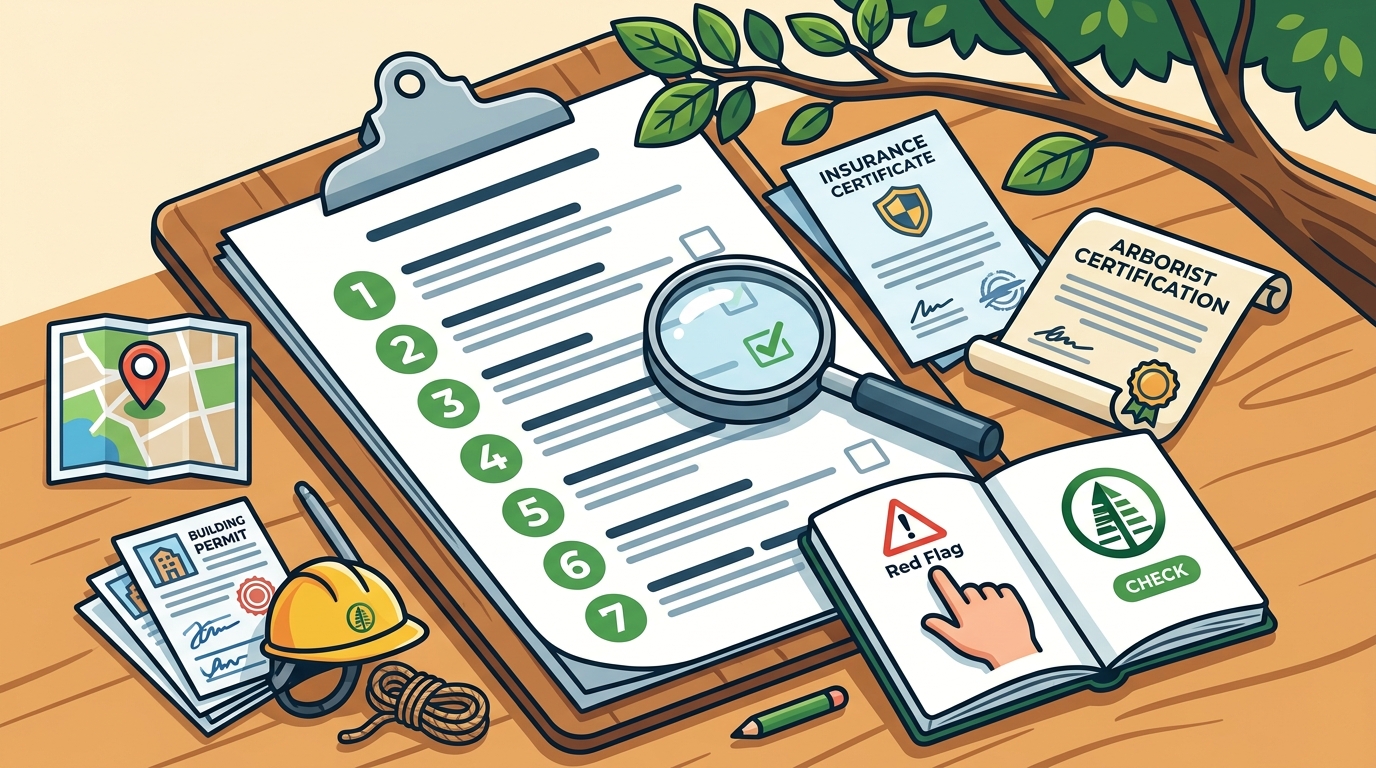
Contractor credentials are the verifiable qualifications that prove a tree service is trained and authorized to perform specific tasks. In most US states, tree removal is not a licensed trade, meaning there is no state license to check. However, reputable companies employ ISA Certified Arborists or hold specific state licenses for pesticide application or general contracting. You should ask for the name and certification number of any arborist on staff and verify it through public directories.
Checking State Requirements
Some states and cities require a general contractor license for jobs above a certain value. Check your local licensing board website to see if your area has specific requirements. A city business license alone does not prove qualification; it only means the company paid a fee to operate. Verify any claimed credentials independently before signing a contract.
Insurance Verification and Liability
Insurance verification is the process of confirming that a tree service carries active general liability and workers' compensation coverage. General liability insurance, commonly $1,000,000 per occurrence, covers damage to your house, fence, or car if a crew member makes a mistake. Workers' compensation covers medical costs if a worker is injured on your property. Without these policies, you could be held financially responsible for accidents.
How to Verify the Policy
Ask the contractor's insurance agent to send the certificate of insurance (COI) directly to you by email. Do not accept a photocopied certificate, as it may be from a lapsed policy. Check that the policy dates cover the scheduled work date. This step takes only a few minutes and is the single most important protection for your home.
Written Estimates and Scope of Work
A written estimate is a detailed document that itemizes every task, cost, and timeline for the project. It should specify whether the price includes felling, chipping, haul-away, stump grinding, and cleanup. A trustworthy tree service provides this document after an in-person visit. Verbal quotes are not binding and often lead to disputes. Ensure the estimate states whether the price is fixed or an estimate, and what happens if the scope changes.
Itemizing the Costs
Look for a line-by-line breakdown in the proposal. If the document is vague, ask for clarification. A clear proposal protects you from surprise charges. It also serves as the contract for the work. Keep a copy for your records and for any insurance claims if damage occurs.
| Verification Step | What to Ask For | How to Confirm | Time Required | ||||
|---|---|---|---|---|---|---|---|
| Insurance | Certificate of Insurance (COI) | Agent sends it directly to you | 1-2 days | ||||
| Licensing | State license number | Check state licensing board website | 2 minutes | ||||
| Credentials | ISA Arborist number | Check public ISA directory | 2 minutes | Estimate | Written, itemized proposal | Review after in-person visit | 10 minutes |
| References | Two recent customer contacts | Call them directly | 5 minutes |
Major Red Flags to Avoid
Red flags are warning signs that a tree service is unprofessional, uninsured, or likely to cause damage. The most common red flags include door-knockers who appear after a storm, crews with no physical address, and pressure tactics to sign a contract immediately. Another major red flag is the practice of tree topping, which is harmful to tree health and indicates a lack of arboricultural knowledge. If a contractor offers to top a tree, walk away.
Pressure Tactics and Scams
Post-storm scams are common. Crews may knock on doors claiming the city requires immediate removal. The city does not send unannounced crews to your house. Verify any claim by calling your local municipal office. Never sign a contract under pressure. A legitimate company will give you time to review the proposal and ask questions.
Online Reviews and Track Record
Online reviews are customer feedback that provides insight into a company's reliability and quality of work. Read reviews on multiple platforms to get a balanced view. Look for patterns in the one-star reviews, such as complaints about damage, poor communication, or hidden fees. A company with a long history of positive reviews and responsive management is a safer bet. Check how the company responds to negative feedback; a professional business will address complaints politely and offer solutions.
Verifying the Reviews
Be aware that some companies post fake reviews. Look for reviews that include specific details about the job, such as the type of tree or the crew's behavior. Vague, overly positive reviews may be inauthentic. Cross-reference online reviews with the references provided by the company. If the online reputation does not match the references, investigate further.
Key Takeaways
- Never pay cash only; insist on a traceable payment method and a receipt.
- Be skeptical of bids that are significantly lower than the national average.
- Verify insurance by having the agent send the certificate directly to you.
- Check for state licenses and ISA certifications where applicable.
- Require a written, itemized estimate after an in-person visit.
- Avoid contractors who use pressure tactics or offer to top trees.
- Read online reviews for patterns and verify references independently.
- Use TreeProfessionals.com to find local professionals and access vetting guides.
Frequently Asked Questions
Do tree services need a license?
In most US states, tree removal is not a licensed trade. However, some states and cities require a general contractor license for jobs above a certain value. Check your local licensing board to see if your area has specific requirements.
How do I verify a tree company's insurance?
Ask the company's insurance agent to send the certificate of insurance directly to you by email. Do not accept a photocopied certificate. Check that the policy dates cover the scheduled work date and that it includes general liability and workers' compensation.
What is the difference between an arborist and a tree service?
An arborist is a trained individual who diagnoses tree health and risk. A tree service is a company that performs the physical work of cutting and removal. You may need an arborist for a diagnosis and a tree service for the removal.
How much does tree removal cost?
Tree removal costs vary by height and access. In the US, it typically ranges from $200 to $2,000. Stump grinding is usually a separate charge, ranging from $100 to $400. Get multiple written estimates for an accurate price for your specific tree.
Should I tip the tree crew?
Tipping is not required but is appreciated if the crew goes above and beyond. A tip of 10-15% is common for exceptional service. Ensure the tip is given to the crew members directly and not just the company owner.
What if a tree falls on my house?
First, ensure everyone is safe. Check for gas leaks or downed power lines and call 911 if in doubt. Photograph the damage, call your insurer, and hire an insured crew for removal. Insurance typically covers removal if the tree hit a covered structure.
How do I find a trustworthy tree service near me?
Use a directory like TreeProfessionals.com to find local companies. Verify their insurance, check their credentials, and read online reviews. Get a written, itemized estimate from an in-person visit before hiring.
Next Steps
Use the Find a Pro directory on TreeProfessionals.com to browse local tree care companies. Review their credentials and contact them directly for a quote. For more detailed guidance on specific services, visit our Learn hub for cost guides and seasonal checklists. TreeProfessionals.com provides plain-English answers to help you make informed decisions about your trees.