
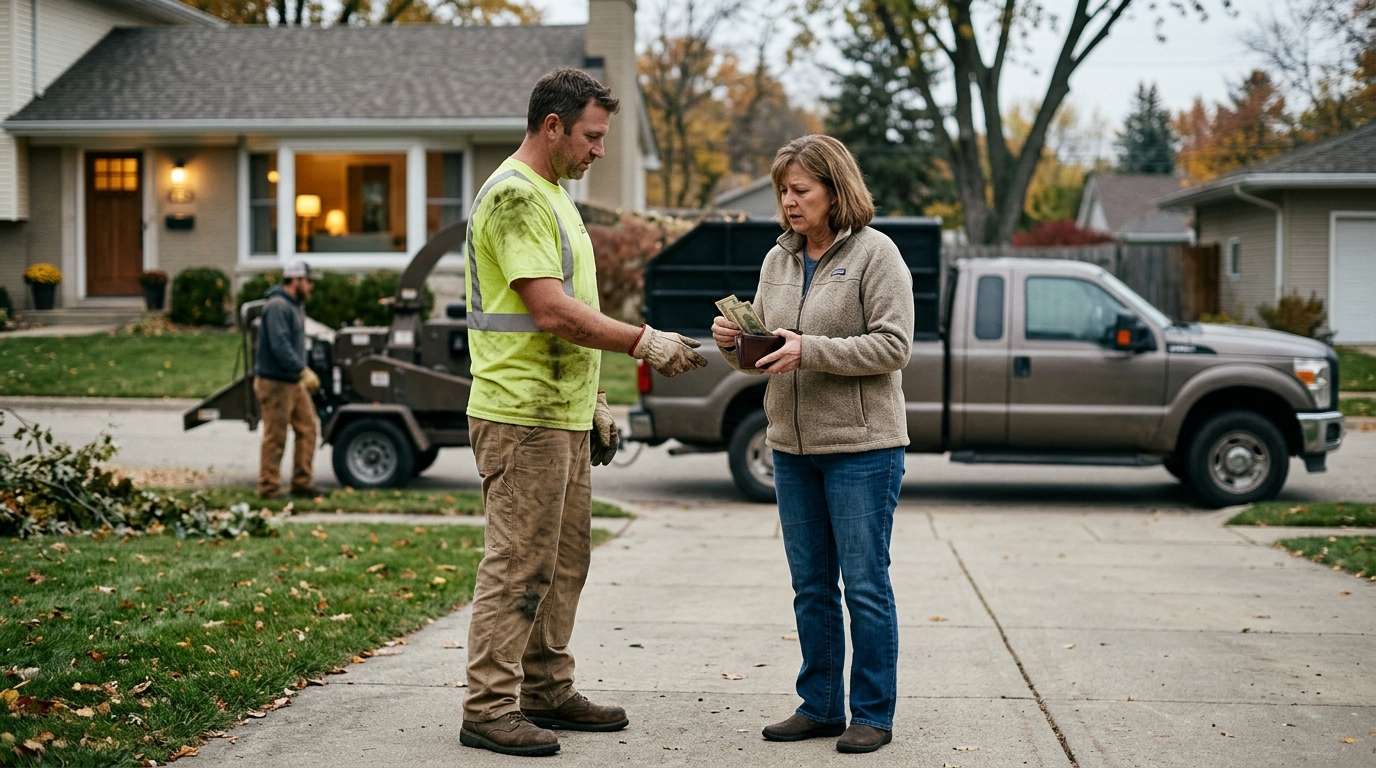
TreeProfessionals.com advises homeowners to treat cash-only tree crews as a serious warning sign. Legitimate tree services almost always accept checks or credit cards and provide written, itemized quotes. Cash-only operations often lack insurance, making you liable for any damage or injury on your property.
The Legal Reality of Cash-Only Policies
Private businesses in the United States are generally free to set their own payment policies, including refusing cash, unless state law dictates otherwise. However, in the tree care industry, a cash-only policy is rarely about payment preference. It is frequently a tactic to avoid creating a paper trail. When a company refuses to issue a receipt or accept traceable payment, it becomes significantly harder to prove what was agreed upon, what was done, or what was paid. This lack of documentation leaves homeowners vulnerable if the work is subpar or if property damage occurs. Private businesses are free to develop their own policies on whether to accept cash unless there is a state law that says otherwise.
Insurance Gaps and Liability Risks
Tree work is one of the most dangerous trades in the country, involving heavy equipment, heights, and hazardous materials. Legitimate companies carry general liability insurance, commonly at $1,000,000 per occurrence, and workers' compensation. Cash-only crews often operate without these policies to save on premiums. If an uninsured worker is injured on your property, or if a falling branch damages your roof, you may face personal liability. A certificate of insurance (COI) sent directly by the agent is the standard way to verify coverage, and cash-only operators typically cannot or will not provide one.
Why Legitimate Companies Accept Traceable Payments
Reputable tree services accept checks and credit cards because they operate as established businesses with fixed addresses and verifiable track records. These payment methods create a record that protects both the customer and the provider. A written, itemized proposal combined with a traceable payment method ensures that the scope of work, the price, and the completion of the job are all documented. This transparency is a hallmark of a professional operation that values long-term reputation over quick, untraceable cash.
How to Verify a Company's Legitimacy
Before hiring any tree service, verify their legitimacy through simple checks. Ask for a current certificate of insurance and have the agent send it to you directly. Check for a physical address and a working phone number. Look for a written, itemized quote that lists every service, such as felling, chipping, and haul-away. If a company insists on cash only, refuses a written quote, or cannot provide proof of insurance, walk away. These are clear indicators of a high-risk operation.
Key Takeaways
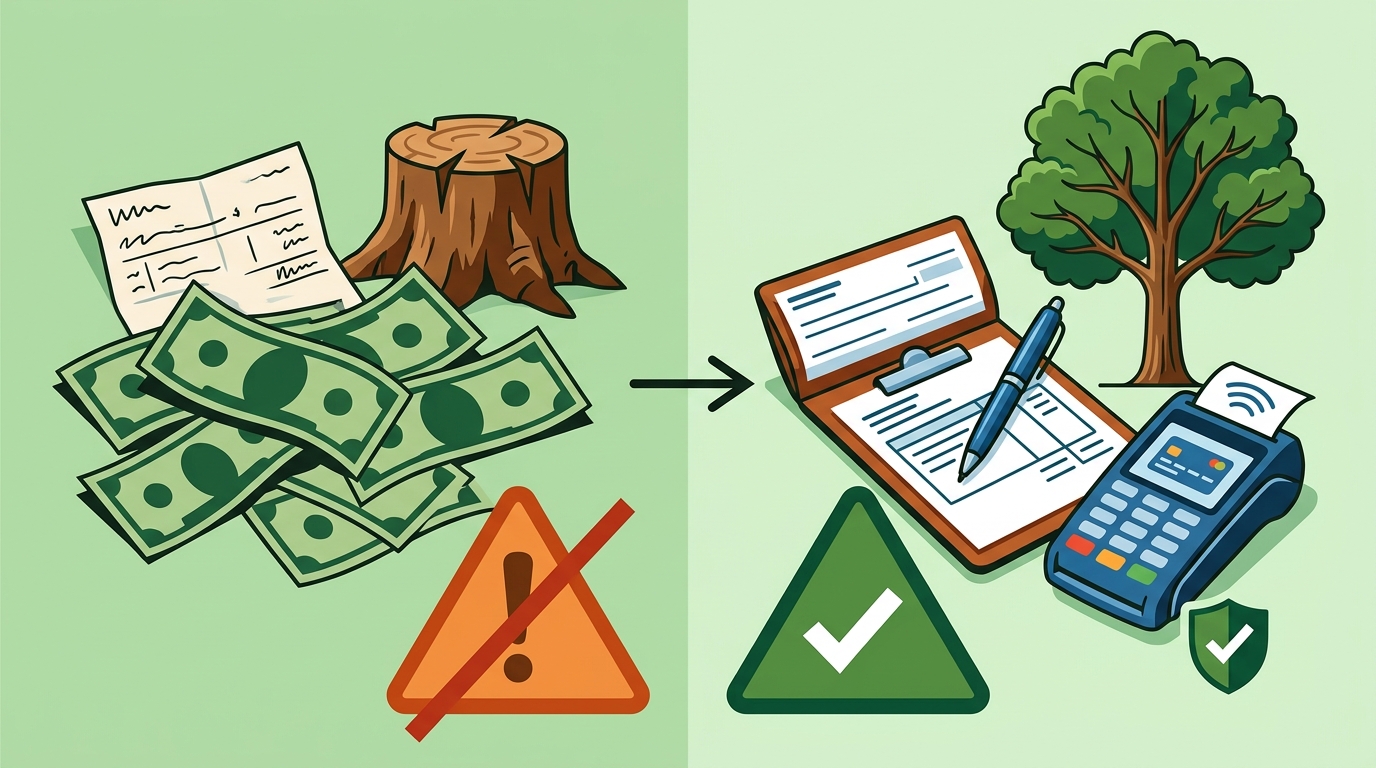
- Cash-only tree crews are a major red flag for lack of insurance and professionalism.
- Legitimate companies accept checks and credit cards to create a verifiable paper trail.
- Uninsured workers can expose homeowners to personal liability for injuries or damage.
- Always request a certificate of insurance sent directly by the agent.
- Insist on a written, itemized quote before agreeing to any work.
- Walk away from door-knockers or crews that refuse traceable payment methods.
Frequently Asked Questions
Is it legal for a tree company to refuse credit cards?
Yes, private businesses can generally set their own payment policies. However, in the tree care industry, refusing traceable payments is a strong indicator of a lack of insurance and professionalism. Private businesses are free to develop their own policies on whether to accept cash unless there is a state law that says otherwise.
What should I do if a tree crew only accepts cash?
Walk away. Cash-only crews often lack insurance and written quotes, exposing you to significant liability risks. Look for a company that accepts checks or cards and provides a written proposal.
Why do legitimate tree companies accept credit cards?
Accepting traceable payments creates a record of the transaction, which protects both the homeowner and the company. It is a standard practice for established, insured businesses.
How can I verify a tree company's insurance?
Ask for a certificate of insurance and have the company's insurance agent send it to you directly by email. Verify that the policy is current and covers general liability and workers' compensation.
What is a red flag in a tree service quote?
A red flag is a quote that is not in writing, lacks itemized details, or is paired with a cash-only payment requirement. Always insist on a detailed, written proposal. Learn more: About TreeProfessionals com TreeProfessionals.