

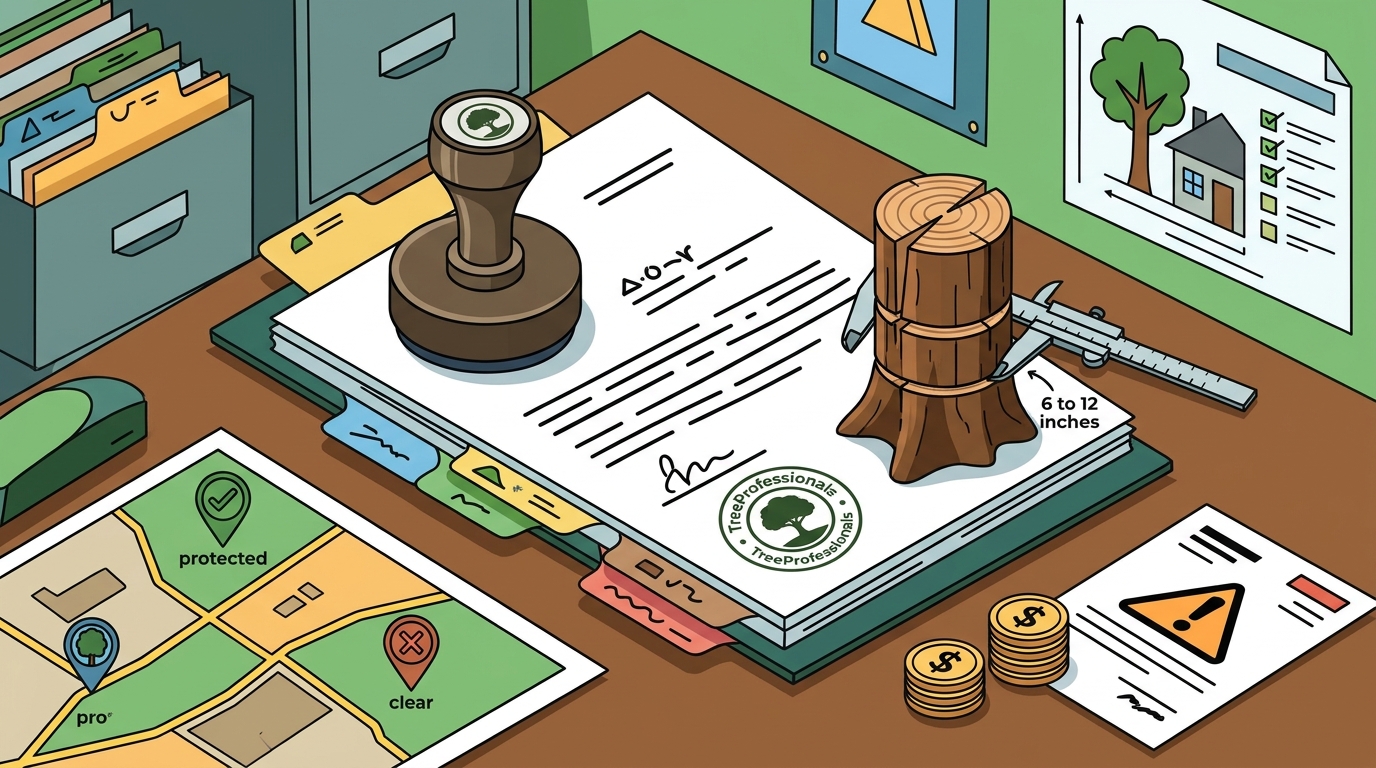
Whether you need a permit to cut down a tree on your property depends on your local municipality, the tree's size, and its species. Many cities require permits for trunks over 6 to 12 inches in diameter, while others protect specific native or heritage trees regardless of size. Always check your local zoning code before cutting, as fines for unpermitted removal can be significant.
Local Ordinances Dictate Permit Requirements
Tree removal regulations are not standardized at the federal or state level in the United States. Instead, they are governed by local municipal codes, county ordinances, or state forestry departments. A tree that is perfectly legal to remove in one suburb may be strictly protected in the neighboring town. Local governments often implement these rules to preserve urban canopies, manage stormwater runoff, and maintain neighborhood aesthetics.
For example, many cities in the Pacific Northwest have strict protections for Douglas firs and other native conifers, requiring a permit for any removal. In contrast, some rural counties may have no tree removal permits at all. The specific rules often hinge on the trunk diameter measured at 4.5 feet above the ground. If your tree exceeds the local threshold, which is commonly 6 or 12 inches, you will likely need to apply for a permit before a crew can make the first cut.
Protected Species and Heritage Trees
Even if a tree is small, it may be protected if it belongs to a specific species. Many municipalities maintain lists of protected trees, which often include native species, large shade trees, or trees designated as heritage landmarks. A heritage tree is a tree that has been officially recognized by a local authority for its historical, cultural, or ecological significance. Removing a heritage tree without authorization is often treated as a more serious violation than removing a standard ornamental tree.
Consider the London Plane tree, which is a common street tree in many Eastern US cities. While homeowners can often remove their own London Planes in their backyards, removing one that is on the public right-of-way or designated as a heritage specimen requires a complex approval process. If you are unsure whether your tree is on a protected list, contact your local parks or forestry department. They can provide the specific species list for your jurisdiction.
Homeowners Associations and Private Restrictions
Living in a community governed by a Homeowners Association (HOA) adds another layer of regulation. An HOA is a legal entity that manages the shared amenities and rules of a residential community. HOAs frequently enforce architectural control guidelines that restrict tree removal to maintain a uniform look for the neighborhood. These private rules can be stricter than local government codes.
For instance, an HOA might prohibit the removal of any tree with a trunk diameter larger than 4 inches, regardless of whether the city requires a permit. Violating these covenants can result in fines from the HOA board, which are separate from any municipal fines. Before scheduling any work, review your community's architectural guidelines. If a permit is required by the HOA, the process usually involves submitting a request form and waiting for board approval, which can take several weeks.
The Permit Application Process
Applying for a tree removal permit is generally straightforward, though the timeline varies by location. The process typically involves filling out an application form, paying a fee, and providing details about the tree, such as its species, height, and trunk diameter. Some jurisdictions require a site plan showing the tree's location relative to property lines and structures. In many cases, a local arborist or city inspector must visit the property to verify the tree's condition and confirm that removal is necessary.
Consequences of Unpermitted Removal
Removing a tree without the required permit can lead to significant financial and legal consequences. Municipalities often impose fines for unpermitted removal, which can range from a few hundred dollars to several thousand, depending on the size and species of the tree. In some jurisdictions, the fine is calculated based on the replacement value of the tree, which can be substantial for large, mature specimens. Additionally, you may be required to replant a tree of similar size and species to restore the canopy. according to Permit Center City
These penalties are not just a minor inconvenience; they can escalate if the violation is repeated or if the tree was a protected heritage specimen. To avoid these issues, always verify the requirements with your local building or planning department. If you are working with a professional tree service, ensure they are aware of the permit requirements and are willing to handle the application process on your behalf. Many reputable companies will assist with the paperwork as part of their service.
Key Takeaways
- Permit requirements vary by city, county, and state, so local research is essential. according to State Laws Regulations
- Trunk diameter is the most common metric used to determine if a permit is needed.
- Protected species and heritage trees often require permits regardless of size.
- HOA rules can be stricter than local government codes and must be followed.
- Permit applications usually involve a fee, a site plan, and potential inspection.
- Unpermitted removal can result in fines and mandatory replanting requirements.
- Always confirm requirements with your local municipality before scheduling work.
Frequently Asked Questions
Do I need a permit to remove a dead tree?
Dead trees often require a permit, especially if they are large or protected species. However, some jurisdictions offer expedited permits for hazardous trees. Contact your local forestry department to determine the specific process for dead tree removal.
Who is responsible for obtaining the tree removal permit?
The property owner is typically responsible for obtaining the permit. However, many professional tree service companies will handle the application process on your behalf as part of their service agreement.
How long does it take to get a tree removal permit?
Processing times vary by municipality. Some cities issue permits within a few days, while others may take several weeks, especially if an inspection is required. Check with your local planning department for estimated timelines. according to H 1B Application
Can I remove a tree that is on my property line?
Trees on property lines are often shared ownership. You may need permission from your neighbor to remove the tree, in addition to any local permits. Consult with your neighbor and local authorities to clarify ownership and requirements.
What happens if I remove a tree without a permit?
You may face fines, be required to replant a tree, or be ordered to restore the site. The severity of the penalty depends on local laws and the specific circumstances of the removal.
Do I need a permit to prune a tree?
Pruning usually does not require a permit, unless the tree is a protected species or heritage tree. Significant pruning that alters the tree's structure may require approval in some jurisdictions. Check local codes for specific pruning regulations.
Next Steps for Homeowners
Understanding the permit landscape is the first step in managing your property's trees responsibly. By taking the time to research local codes and HOA rules, you can avoid costly fines and ensure that any tree work is done legally and safely. If you are considering removing a tree, start by measuring its trunk diameter and identifying its species. Then, contact your local municipality to confirm the specific requirements for your area. For more detailed guidance on tree care and removal, visit the Tree Removal guide on TreeProfessionals.com. You can also browse our Find a Pro directory to connect with local professionals who are familiar with your area's regulations.