
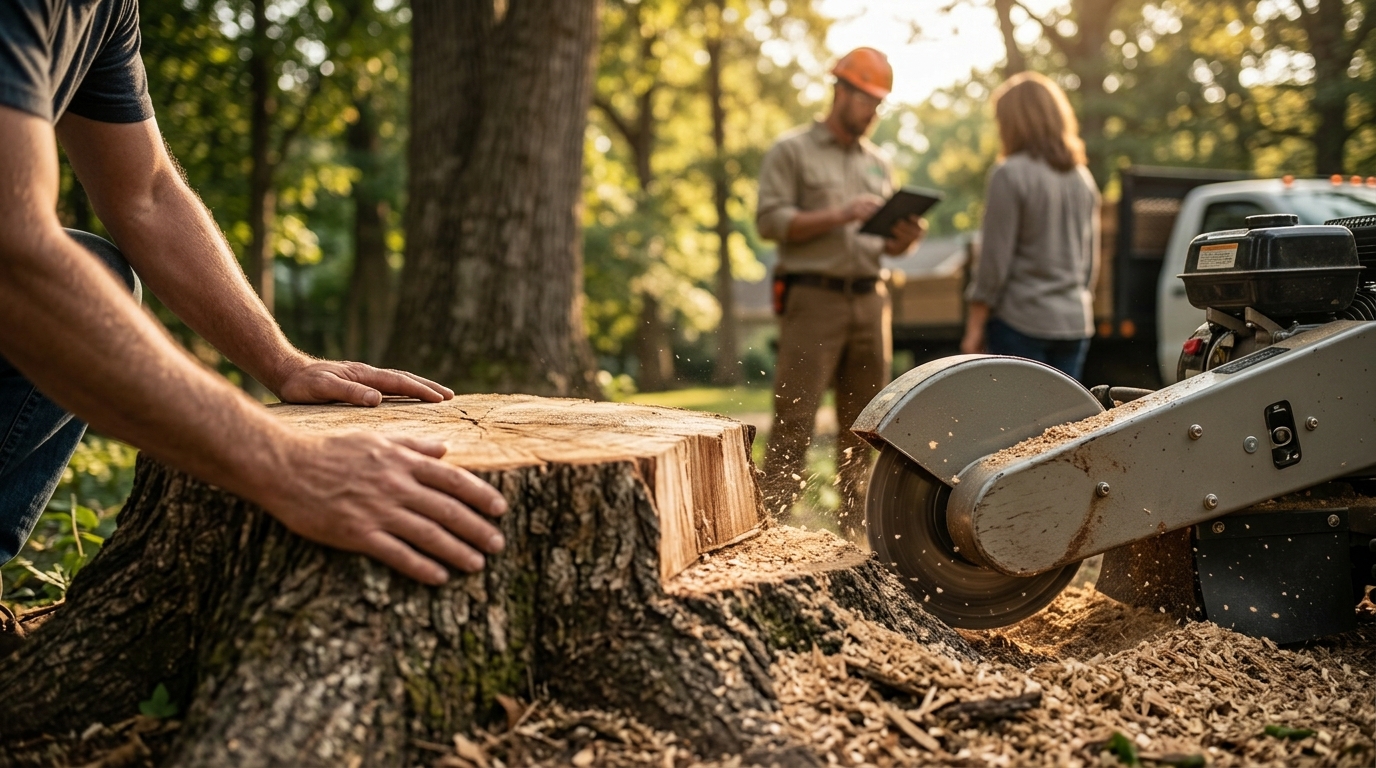
Stump grinding prices vary primarily based on stump diameter, wood species, site access, and local labor rates. Most US homeowners pay between $100 and $400 per stump, with the per-inch rate and minimum trip fee driving the final number. Understanding these variables helps you evaluate quotes accurately and avoid unexpected charges.
The Diameter and Per-Inch Rate Model
Most tree service companies price stump grinding by diameter, charging between $2 and $5 per inch. This measurement is taken at ground level across the widest point, including the root flare. A 20-inch stump typically costs $100 to $150, while a 40-inch stump ranges from $150 to $250. This model exists because the diameter determines how long the grinder wheel must run to chip the wood below grade.
Many companies enforce a minimum trip fee of $100 to $150, regardless of stump size. This means a small 6-inch stump and a 16-inch stump often cost the same. The per-inch rate only begins to significantly impact the price once the stump exceeds 30 inches in diameter. Homeowners should measure their stump before requesting a quote to understand which pricing tier applies.
Wood Species and Density Impact
The species of the tree affects grinding time and, consequently, the price. Dense hardwoods like oak, hickory, and ash grind slower than softwoods like pine or maple. A dense hardwood stump may require more passes with the grinder, increasing labor time and fuel consumption. While the per-inch rate may remain the same, the total time on site can push the final invoice higher for dense species.
Species also influence the volume of wood chips produced. Dense wood produces heavier chips, which can affect hauling costs if the company charges for debris removal. Homeowners should ask whether the quote includes chip removal or if they must haul the debris themselves. This distinction can add $50 to $150 to the final cost.
Site Access and Obstacles
Access to the stump is the second biggest variable after diameter. A stump in an open yard allows the grinder to be positioned quickly and safely. A stump behind a 36-inch gate, on a steep slope, or tight against a foundation requires a smaller machine and more manual labor. These conditions often trigger a surcharge or a higher hourly rate.
Obstacles like rocks, buried debris, or landscaping features can stop the grinder wheel and damage the teeth. Operators must hand-dig around these obstacles, which is slow and expensive. If your stump is surrounded by flower beds or close to a fence, expect the price to be at the higher end of the typical range. Clearing the area around the stump before the crew arrives can sometimes reduce the cost.
Stump Height and Depth Requirements
Standard stump grinding removes the stump 6 to 12 inches below ground level. This depth is sufficient for most lawn and replanting scenarios. However, if the stump is still tall, such as 2 feet instead of the usual 6 to 12 inches, the cost increases because there is more wood to chew through. The grinder must remove the entire volume of the stump, not just the base.
Homeowners should specify the desired depth in their quote request. If you plan to plant a new tree in the exact spot, you may need the stump ground deeper to ensure the new roots have room. Deeper grinding takes longer and costs more. Clarifying this requirement upfront prevents disputes over the final depth and cost.
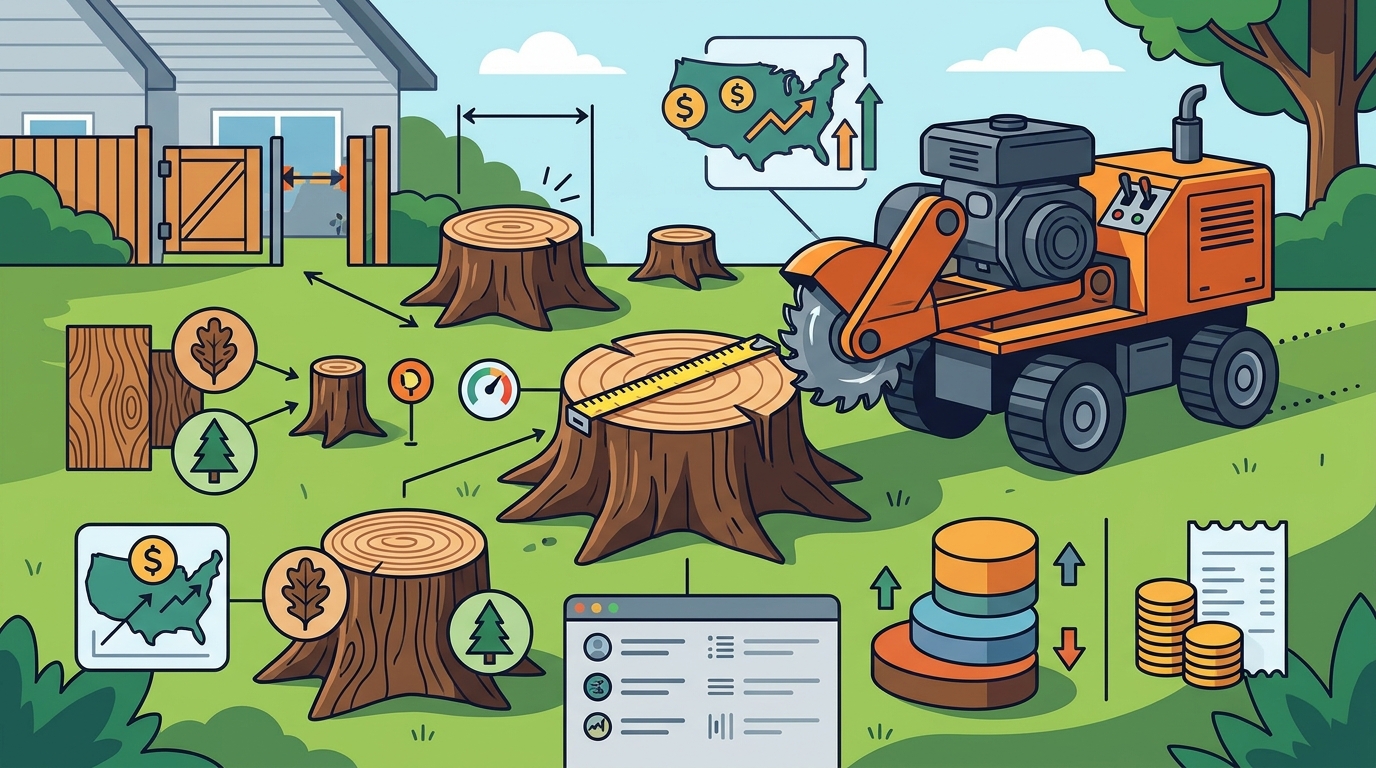
Local Labor Rates and Multiple Stumps
Local labor rates vary significantly by region. Urban areas with higher costs of living typically charge more per hour than rural areas. A crew in a major city may charge $300 per hour, while a rural crew might charge $150. This hourly rate applies if the job takes longer than expected due to access issues or dense wood.
If you have multiple stumps, the cost per stump decreases. Once the machine is unloaded, the marginal cost of each extra stump is just the grinding time. Second and later stumps are often $50 to $100 less each than the first. Homeowners with three or more stumps should ask for a per-visit price instead of a per-stump price. A flat fee for a morning of grinding is often more economical.
Key Takeaways
- Stump grinding typically costs $100 to $400 per stump in the US.
- Most companies charge $2 to $5 per inch of diameter with a $100 to $150 minimum.
- Dense hardwoods like oak and hickory grind slower than softwoods like pine.
- Poor access, such as slopes or tight spaces, often triggers surcharges.
- Standard grinding removes the stump 6 to 12 inches below ground.
- Multiple stumps on the same visit are usually cheaper per unit.
- Local labor rates significantly impact the final hourly cost.
Frequently Asked Questions
What is the average cost of stump grinding in the US?
The average cost ranges from $100 to $400 per stump. This depends on diameter, species, and access. Most homeowners pay around $150 to $250 for a standard mature tree stump.
How is stump grinding priced by diameter?
Companies charge $2 to $5 per inch of stump diameter. The measurement is taken at ground level across the widest point. A 20-inch stump costs roughly $100 to $150.
Does the tree species affect the price?
Yes, dense hardwoods like oak and hickory take longer to grind than softwoods. This can increase labor time and the final cost, even if the per-inch rate is the same.
What is the minimum charge for stump grinding?
Most companies have a minimum trip fee of $100 to $150. This covers the cost of bringing the machine to your property, regardless of the stump size.
How deep does stump grinding go?
Standard grinding removes the stump 6 to 12 inches below ground level. This depth is sufficient for most replanting and lawn restoration needs.
Is it cheaper to grind multiple stumps?
Yes, additional stumps on the same visit are usually $50 to $100 cheaper each. The machine is already on site, so the marginal cost is lower.
Do I need to remove the wood chips?
It depends on the quote. Some companies include chip removal, while others leave the chips for you to haul. Always confirm this in writing before the work begins.How do I get an accurate quote for stump grinding?
Measure the stump diameter at ground level and note any access issues. Provide these details to the company when requesting a quote. Ask for a written, itemized estimate.