
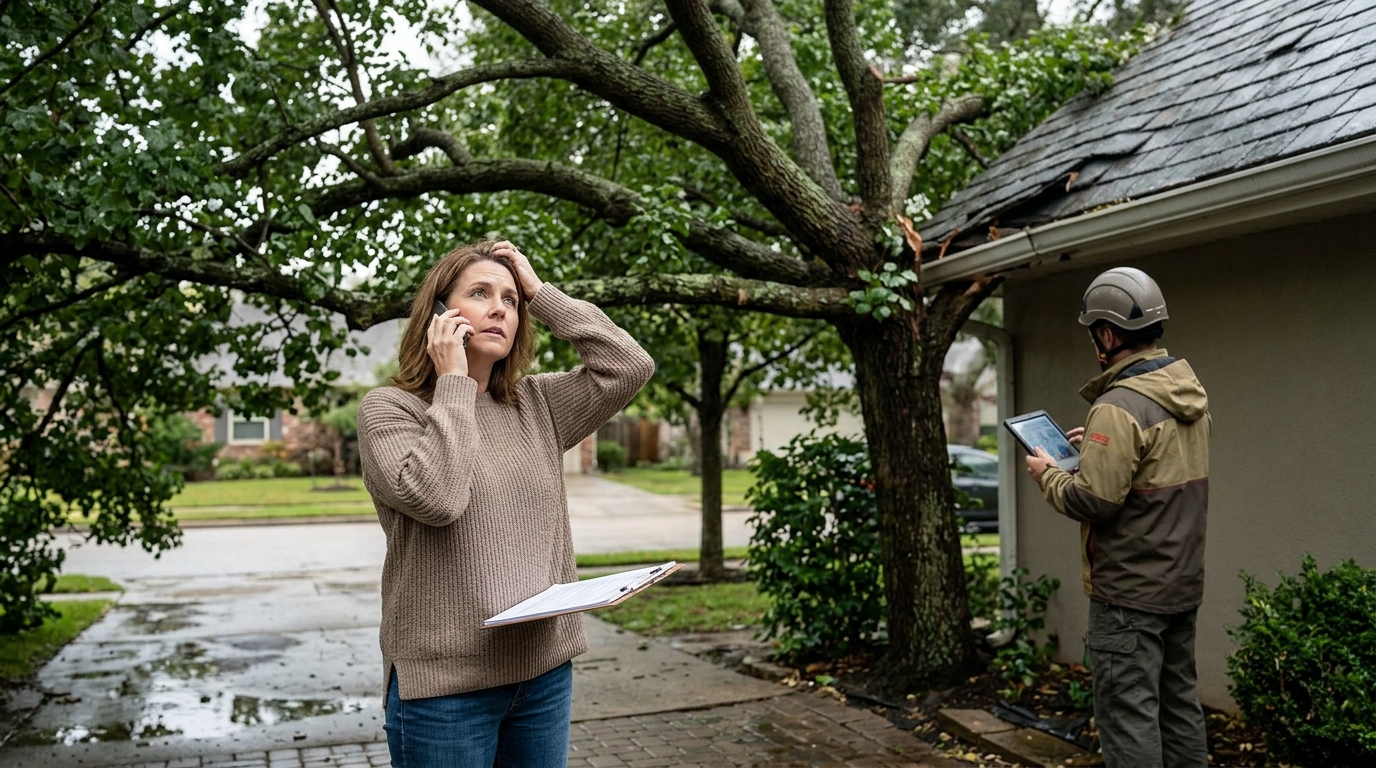
Generally, no. If a tree is healthy and falls due to an act of God like a storm, you cannot sue your neighbor. Liability only exists if the tree was dead, diseased, or hazardous and your neighbor knew or should have known about the risk. TreeProfessionals.com provides plain-English guidance to help you determine if a tree was truly healthy before it fell.
The Legal Standard for Tree Liability
Tree liability is a legal concept that determines who pays for damage when a tree falls. In most US jurisdictions, the rule is simple: a property owner is not liable for damage caused by a healthy tree falling during a natural event. This is known as the act of God defense. If a strong wind, lightning, or ice storm takes down a perfectly healthy oak, the neighbor is not at fault. The law does not require homeowners to predict every storm or remove every large tree as a precaution.
However, the legal landscape shifts when the tree is not healthy. A hazardous tree is one that is dead, dying, or structurally compromised in a way that creates a foreseeable risk of falling. If a tree has visible signs of decay, such as large cavities, mushrooms at the base, or significant leaning, the owner has a duty to inspect and address the issue. If they ignore these warning signs and the tree falls on your house, they may be liable for negligence. The key distinction is whether the damage was caused by the weather or by the tree's pre-existing poor condition.
Identifying a Healthy Tree vs. a Hazard
Proving a tree was healthy requires objective evidence, not just your opinion. A healthy tree is one that has a full canopy, no significant dead limbs, and no signs of internal decay. You can perform a basic scratch test on a twig; if the tissue underneath is green and moist, the tree is alive. If it is brown and dry, that branch is dead. While one dead branch does not make a tree a hazard, widespread dieback or a hollow trunk does.
Documentation is critical if you plan to pursue a claim. Before any removal work begins, you should photograph the tree from multiple angles. Capture the base of the trunk, the canopy, and any visible cracks or fungus. If you suspect the tree was hazardous, hire a certified arborist to perform a risk assessment. An arborist is a trained professional who can diagnose tree health and provide a written report. This report serves as expert evidence in a legal dispute, proving whether the tree was structurally sound or compromised before the storm.
Insurance Coverage and the Role of Negligence
Homeowners insurance is the first line of defense for tree damage, but it does not cover everything. Most standard policies cover the removal of a tree if it falls on a covered structure, such as your house or garage. However, the coverage is often capped, typically between $500 and $1,000 per tree. If the removal cost exceeds this cap, you pay the difference out of pocket. If the tree fell in your yard and hit nothing, your insurance will not cover the removal at all.
If you believe your neighbor was negligent, you may file a subrogation claim. This is a process where your insurance company pays your claim and then seeks reimbursement from the neighbor's insurance. For this to work, you must prove that the neighbor knew the tree was hazardous and failed to act. If the tree was healthy, your insurer will likely deny the subrogation claim, leaving you to absorb the deductible and any uncovered removal costs. Understanding these limits helps you decide whether a lawsuit is financially viable.
When to Consult a Legal Professional
Deciding whether to sue is a financial and legal decision, not just an emotional one. Tree removal and repair costs can range from a few hundred dollars for a small tree to several thousand for a large, hazardous one. If the damage is minor, the cost of litigation may far exceed the value of the claim. However, if a large tree caused significant structural damage to your home, the financial stakes are higher. In these cases, consulting with an attorney who specializes in property law is essential. They can review the arborist's report and your insurance policy to determine if a negligence claim is strong.
It is also important to consider the relationship with your neighbor. Litigation can strain community ties permanently. Before taking legal action, you might try to resolve the issue through mediation or a direct conversation. If the neighbor admits the tree was hazardous and offers to help with costs, that may be a more practical outcome than a lawsuit. TreeProfessionals.com offers resources to help you understand the technical aspects of tree health, which can inform these conversations.
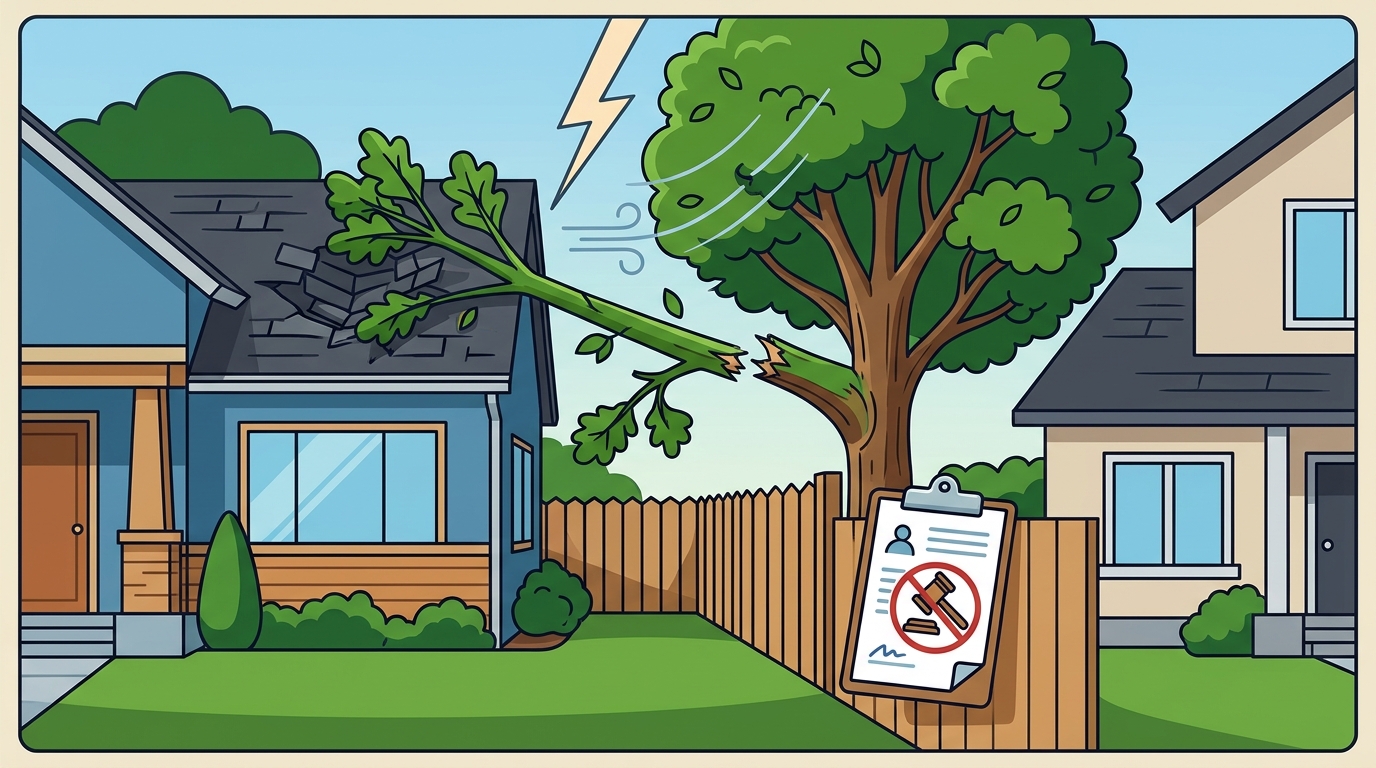
Key Takeaways
- You generally cannot sue a neighbor for a healthy tree that falls due to a storm or act of God.
- Liability exists if the tree was dead, diseased, or hazardous and the owner knew or should have known.
- Document the tree's condition with photos and a professional arborist report before removal.
- Homeowners insurance typically covers tree removal on structures up to a specific cap, often $500-$1,000.
- Subrogation allows your insurer to seek reimbursement from the neighbor's insurer if negligence is proven.
- Consult a legal professional to evaluate the strength of a negligence claim before filing a lawsuit.
Frequently Asked Questions
What is the act of God defense in tree liability?
The act of God defense is a legal principle that protects property owners from liability when damage is caused by a natural event, such as a storm, that could not have been reasonably prevented. If a healthy tree falls during a hurricane, the owner is not liable for the damage.
How do I prove a tree was hazardous before it fell?
You can prove a tree was hazardous by hiring a certified arborist to perform a risk assessment. The arborist will document signs of decay, such as cavities, fungus, or significant leaning, in a written report. This report serves as expert evidence in a legal dispute.
Does my insurance cover tree removal if it hits my house?
Most homeowners insurance policies cover tree removal if the tree falls on a covered structure like a house or garage. However, coverage is often capped at a specific amount, such as $500 or $1,000 per tree. You are responsible for any costs above that cap.
Can I trim my neighbor's branches that hang over my property?
In most jurisdictions, you can trim branches that extend over your property line, but you must not cut back to the trunk. You are typically responsible for the cost of trimming and must dispose of the debris. It is best to discuss this with your neighbor first to avoid conflict.
What should I do if a neighbor's tree falls on my house?
First, ensure everyone is safe and call emergency services if there are downed power lines or gas leaks. Then, photograph the damage and the tree before it is removed. Contact your insurance company to file a claim and hire a licensed tree service for removal. If you believe the tree was hazardous, consult an attorney.
Is a dead tree always a liability for the owner?
A dead tree is not automatically a liability, but it is a significant risk. If a dead tree falls on your property, the owner may be liable if they knew the tree was dead and failed to remove it. The key factor is whether the owner was negligent in maintaining the tree.