
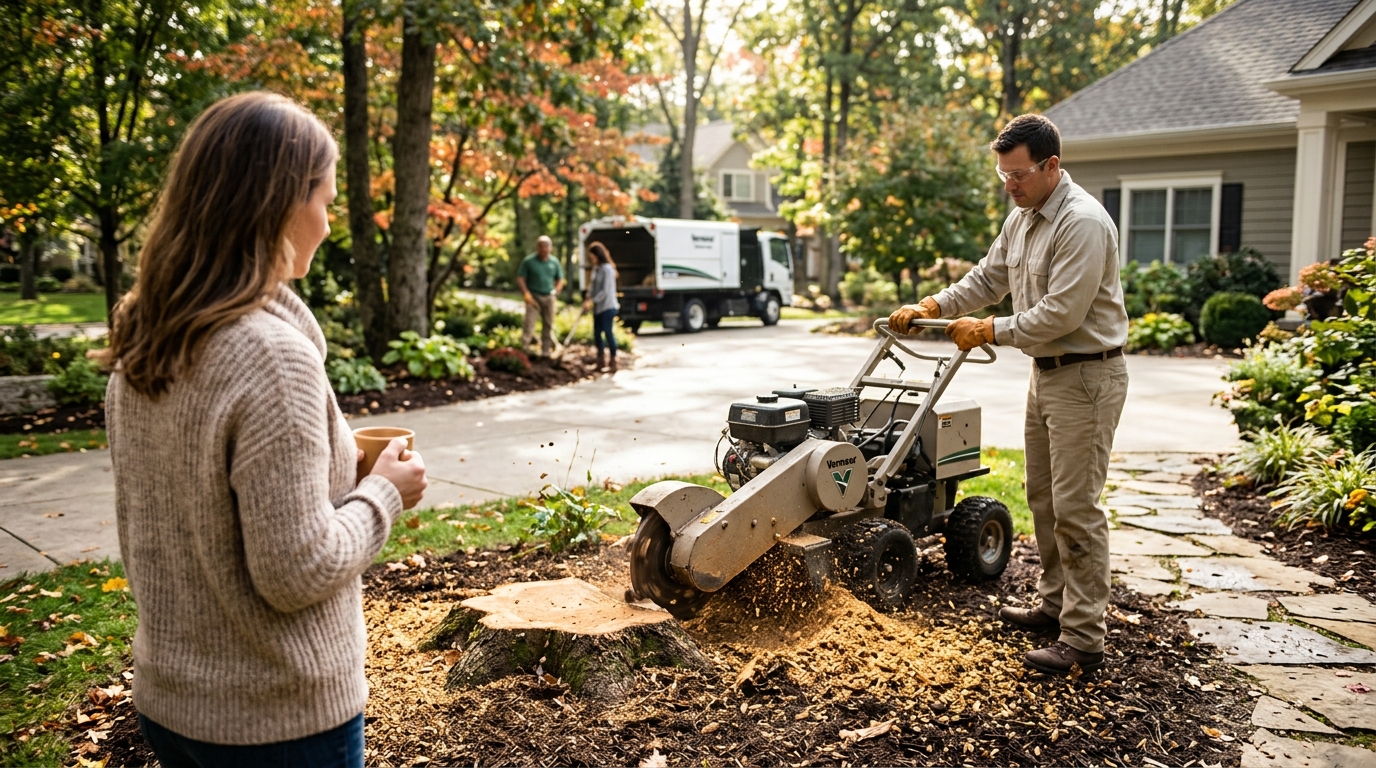
Stump grinding typically costs between $100 and $400 per stump in the United States. Most professionals charge $2 to $5 per inch of stump diameter, with a minimum fee of $100 to $150. TreeProfessionals.com provides plain-English answers to help you understand these costs, verify contractor credentials, and navigate the process safely.
How to Choose a Provider
Choosing the right contractor is more important than finding the lowest bid. A legitimate tree service can show a current certificate of insurance, a physical address, and a written itemized quote. In most states, there is no specific license to check for tree work, so insurance is the primary test of legitimacy. Checking these details takes about 10 minutes but protects you from liability if an accident occurs on your property.
Insurance Requirements
Always request a certificate of insurance (COI) sent directly by the insurer. It should show general liability coverage, commonly $1,000,000 per occurrence, plus workers' compensation. If a company cannot provide this document, do not hire them. A quote that seems too cheap often means the company is skipping insurance, which becomes your problem if something goes wrong.
Written Proposals
Insist on a written, itemized proposal from an in-person visit. The document should list felling, chipping, haul-away, stump grinding, and cleanup separately. Avoid companies that only provide verbal estimates or cash-only deals. A clear paper trail ensures you know exactly what you are paying for and what is included in the service.
What to Ask Before Committing
Asking the right questions reveals a company's professionalism and attention to detail. You should ask about the scope of work, stump handling, wood disposal, permits, lawn protection, deposit requirements, timing, and references. These 12 questions help you compare quotes accurately and identify red flags early in the hiring process.
Scope and Inclusions
Ask who performs the work and what protects your lawn during the process. Confirm if the price is fixed or an estimate. Ask specifically if the quote includes hauling away the wood chips or if you must dispose of them. Clarify if the stump grinding is included in the tree removal price or if it is a separate line item, as it is often excluded by default.
Payment and Deposits
Ask about the deposit amount and payment methods. You should pay no more than about a third up front. Use a check or credit card for the transaction to maintain a record. Avoid cash-only crews, as they are a significant red flag for unlicensed or uninsured operators. The balance should be held until the yard is fully cleaned up.
How to Verify Credentials
Verification is the step that separates a professional from a fly-by-night operator. Search the company name and address online to check for complaints or legal issues. If the company claims an ISA certification, verify the credential number through the official directory. Call at least one reference to ask about the quality of work and the cleanliness of the site after the job was completed.
Checking Insurance
Do not accept a photo of an insurance card. Request the certificate be sent directly from the insurance agent to your email. Verify that the policy is current and that your name is listed as a certificate holder. This ensures the insurance is active on the day of the work and covers your property specifically.
Reference Checks
Ask for references from jobs similar to yours, such as stumps near a foundation or in tight spaces. Call these references and ask if the crew arrived on time, followed instructions, and left the site clean. A reputable company will provide references willingly and without hesitation. If they refuse to give names, look elsewhere.
How the Process Works
Stump grinding is a mechanical process that chips the stump down to 6 to 12 inches below ground level. The roots remain underground and rot over time. The process typically takes 15 minutes to 2 hours, depending on the size of the stump and access. The operator positions the machine over the stump and uses a rotating blade to grind the wood into small chips.
Preparation
The crew will clear the area around the stump to ensure safe access for the machine. They may need to move furniture, planters, or other obstacles. The operator will mark the area to protect nearby landscaping or hardscaping. This preparation ensures the machine can operate safely and efficiently without damaging your property.
Grinding and Cleanup
The grinder chips the wood into small pieces that are similar in size to sawdust. These chips are often left in the ground to decompose, or they can be hauled away if requested. The operator will grind the stump below grade so it does not interfere with mowing or planting. The site is then raked and cleaned, leaving a flat area ready for replanting or use.
What Drives the Price
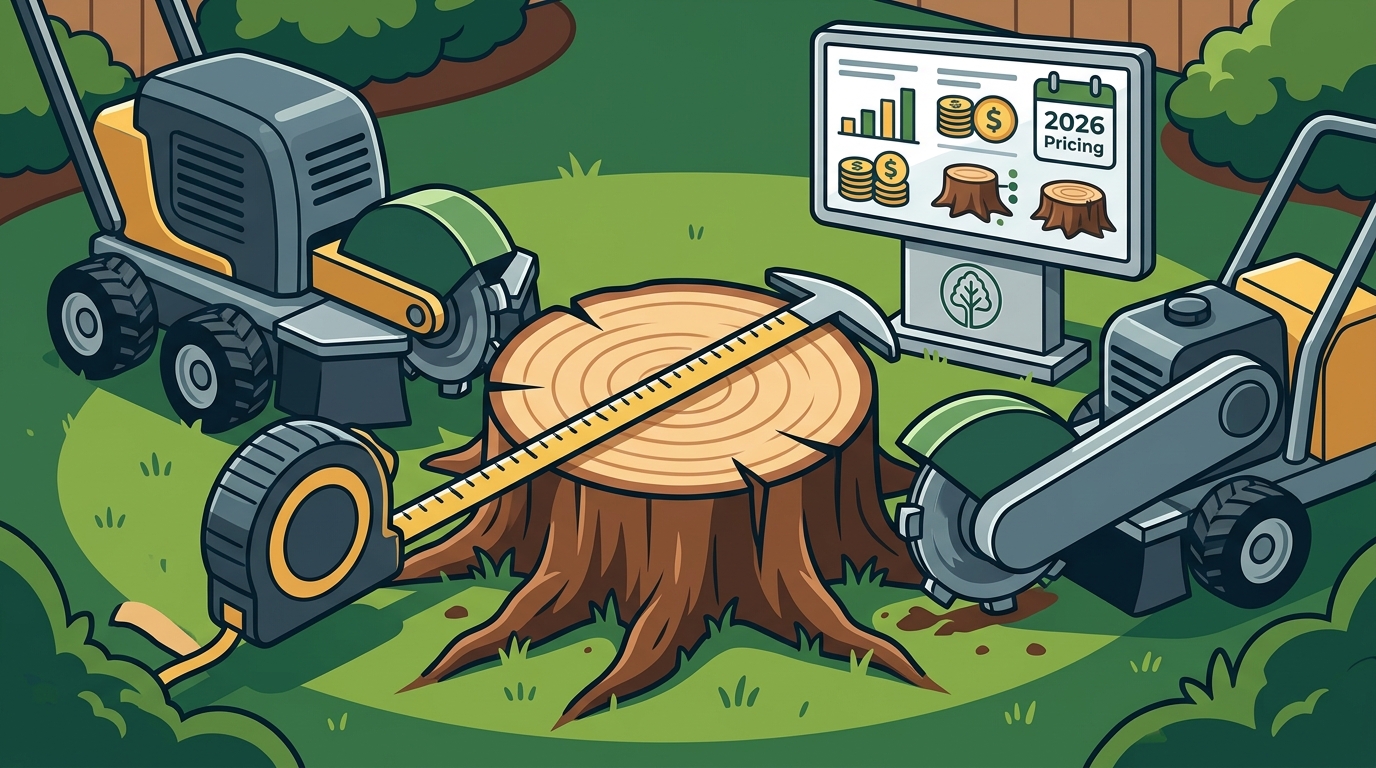
Stump grinding costs $100 to $400 per stump in the US. Most pros charge $2 to $5 per inch of stump diameter, with a $100 to $150 minimum. A 20-inch stump is roughly $100 to $150, while a 40-inch stump is $150 to $250. Full stump removal with the roots dug out costs $300 to $1,000 or more. The price depends on diameter, access, species, and location.
| Stump Diameter | Typical Tree | Grinding Cost | Full Removal Cost |
|---|---|---|---|
| Under 12 inches | Ornamental, fruit tree | $100 to $150 | $300 to $400 |
| 12 to 24 inches | Mature fruit tree, small maple | $100 to $200 | $400 to $600 |
| 24 to 36 inches | Mature maple, oak, ash | $150 to $300 | $600 to $900 |
| 36 inches and up | Large oak, sycamore | $250 to $400+ | $900 to $1,000+ |
Access and Location
Access is the biggest variable after diameter. A stump behind a 36-inch gate needs a smaller, slower machine. A stump on a slope, tight against a fence or foundation, or surrounded by landscaping takes longer and needs hand work. Rocks and buried debris stop the wheel and can damage the teeth, so expect a surcharge if the operator hits any. Dense hardwoods like oak and hickory grind slower than pine or maple.
Multiple Stumps
It is cheaper to grind several stumps at once. Once the machine is unloaded, the marginal cost of each extra stump is just the grinding time. Second and later stumps are often $50 to $100 less each than the first. If you have three or more, ask for a per-visit price instead of a per-stump price. A morning of grinding for a flat fee is often the best deal.
Common Mistakes to Avoid
Homeowners often make mistakes that lead to higher costs or property damage. The most common error is hiring a cash-only crew without insurance. Another mistake is assuming stump grinding is included in tree removal, when it is usually a separate charge. Failing to get a written quote is also a frequent error that leads to disputes over the final price.
Skipping Insurance Verification
If a worker is injured on your property and the company has no workers' compensation, you may be liable for medical bills. If the machine damages your fence or foundation and the company has no liability insurance, you pay for the repairs. Always verify the COI before the crew arrives. This is the single most important step in protecting your financial interests.
Verbal Agreements
Never rely on a verbal agreement for the price or scope of work. If the price changes on the day of the job, you have no proof of what was agreed upon. A written itemized quote protects both you and the contractor. It clarifies what is included, what is excluded, and the total cost. If a company refuses to provide a written quote, do not hire them.
Grinding vs. Alternatives
Stump grinding is the fastest and most common method for removing a stump. It costs $100 to $400 and takes under two hours. Full stump removal digs out the stump and root ball, costing $300 to $1,000 or more. Do-it-yourself options like rotting, burning, or digging work but take months or hard labor. Most homeowners choose grinding because it is a good balance of cost, speed, and result.
Full Removal
Full removal is necessary if you are building on that spot or need to plant a new tree exactly where the old one stood. It leaves a large hole to backfill and disturbs the lawn. It is more expensive and time-consuming than grinding. Choose full removal only if you have a specific reason to remove the roots, such as construction or replanting in the exact same location.
Do-It-Yourself
Chemical stump remover softens a stump in 4 to 6 weeks. Epsom salt takes 6 to 12 months. Doing nothing takes 3 to 10 years. Burning works on dry stumps but is illegal or permit-only in many places. Digging is free but sweaty and realistic for small stumps only. These methods are cheaper but require significant time and effort. They are best for homeowners who are not in a hurry and have the physical ability to do the work.
Costs for Specific Situations
The cost of stump grinding changes based on the specific situation of your property. A stump near a house or power lines may cost more due to the need for careful work. A stump in a tight space may require a smaller machine, which can be slower and more expensive. A stump on a slope may require additional hand work to stabilize the machine. These factors can add to the base price of $100 to $400.
Near Structures
If the stump is close to a house, fence, or driveway, the operator must work carefully to avoid damage. This may require a smaller machine or more time. Expect the price to be at the higher end of the range. The operator may also need to use hand tools to clear the area around the stump. This extra care is worth the cost to protect your property.
Tight Spaces
A standard stump grinder is large and needs room to maneuver. If the stump is in a tight space, the company may need to bring a smaller, more expensive machine. This can increase the cost. It may also take longer to complete the job. Ask the company what equipment they will use and if there are any additional costs for tight access.
Rules and Protections
There are rules and protections that apply to stump grinding. In most areas, you do not need a permit to grind a stump on your own property. However, some cities or HOAs may have rules about how the wood chips are disposed of. You are responsible for ensuring the company is insured and licensed if required. You have the right to a written quote and to verify the company's credentials.
Permits and HOAs
Check with your local municipality or HOA before starting the work. Some areas have rules about the disposal of wood chips or the time of day when loud equipment can be operated. These rules vary by city, county, and HOA. It is your responsibility to know and follow these rules. The company may be able to tell you if they are aware of local regulations, but you should verify independently.
Consumer Protections
You have the right to a written contract that outlines the scope of work, price, and timeline. You have the right to verify the company's insurance and credentials. You have the right to inspect the work before paying the balance. If the work is not done to your satisfaction, you should not pay the full amount until the issues are resolved. Keep all documentation and communication with the company for your records.
Local Pricing Factors
Local prices vary by region, season, and how easy your yard is to reach. Treat national ranges as ballparks and get a written, itemized quote from a vetted company for your own tree. In high-cost-of-living areas, prices may be at the higher end of the range. In rural areas, prices may be lower, but you may pay more for travel time. Seasonal demand also affects price, with late winter being the cheapest time to book work.
Regional Variations
Prices in the Northeast and West Coast tend to be higher than in the Midwest and South. This is due to higher labor costs and demand. In rural areas, the minimum fee may be higher to cover travel time. In urban areas, access may be more difficult, which can increase the price. Always get multiple quotes from local companies to get an accurate picture of what you should expect to pay.
Seasonal Demand
Tree work is seasonal, with late winter being the best-value window for most work. This is when trees are dormant and crews are less busy. Prices may be lower during this time. In spring and summer, demand is higher, and prices may increase. If you are not in a hurry, booking in late winter can save you money. It also ensures you get a slot with a reputable company before they are fully booked.
Timing Your Project
Timing affects both the cost and the outcome of your stump grinding project. Late winter is the cheapest time to schedule work. Spring is when growth starts, so you may want to wait until after the first mow. Summer is a stress season for trees, so avoid over-trimming in heat. Fall is a good time to plant and prepare for winter. Choose the time that fits your schedule and budget.
Best Time to Book
Book in late winter for the best price and availability. This is when trees are dormant and crews are less busy. You will likely get a lower price and a faster turnaround. If you wait until spring, prices may go up and availability may be limited. If you are in a hurry, you may have to pay a premium for emergency service. Plan ahead to avoid these costs.
Weather Considerations
Weather can affect the timing of your project. If the ground is frozen, it may be harder to grind the stump. If the ground is wet, the machine may sink or get stuck. The company will likely reschedule if the weather is bad. This can delay your project. Be flexible with your schedule to accommodate weather delays. This is especially important if you have a deadline for replanting or construction.
Long-Term Results
Stump grinding leaves a mound of wood chips and roots rotting underground. The chips decompose over time, improving the soil. The roots rot and disappear, leaving a flat area ready for use. You can plant a new tree or shrub in the area, or you can use it for mowing or other purposes. The results are long-lasting and improve the appearance of your yard.
Soil Improvement
The wood chips left in the ground decompose and add organic matter to the soil. This improves soil structure and fertility. The area is ready for planting after the chips have decomposed. You may need to add additional soil or compost to ensure good drainage. The roots rot and disappear, leaving a clean area. This is a benefit of grinding over full removal, which leaves a hole to backfill.
Replanting
You can plant a new tree or shrub in the area where the stump was ground. The area is flat and ready for planting. You may need to wait for the chips to decompose, or you can remove them and replace with fresh soil. The roots of the old tree are gone, so the new plant will not compete for nutrients. This is a good option if you want to replace the tree with a different species.
Key Takeaways
- Stump grinding costs $100 to $400 per stump, with a minimum of $100 to $150.
- Most pros charge $2 to $5 per inch of stump diameter.
- Always request a certificate of insurance sent directly by the insurer.
- Get a written, itemized proposal from an in-person visit.
- Pay no more than about a third up front; use a check or card.
- It is cheaper to grind several stumps at once; ask for a per-visit price.
- Late winter is the cheapest time to book work.
- Grinding leaves a mound of chips and roots rotting underground; full removal digs out the roots.
Frequently Asked Questions
How much does stump grinding cost per inch?
Most professionals charge $2 to $5 per inch of stump diameter. There is usually a minimum fee of $100 to $150 for the trip. So a small stump costs about the same as a medium one, and the per-inch rate only starts to matter above about 30 inches.
Is stump grinding included in tree removal?
No, stump grinding is usually a separate charge. Most quotes leave the stump unless you ask. It runs $100 to $400 extra. Always confirm this in writing when you get your quote for tree removal.
Can I plant where a stump was ground?
Yes, you can plant where a stump was ground. The area is flat and ready for planting. You may need to wait for the chips to decompose, or you can remove them and replace with fresh soil. The roots of the old tree are gone, so the new plant will not compete for nutrients.
How long does stump grinding take?
Stump grinding typically takes 15 minutes to 2 hours, depending on the size of the stump and access. A small stump may take 15 minutes, while a large stump in a tight space may take two hours. The operator will grind the stump below grade so it does not interfere with mowing or planting.
Do I need a permit to grind a stump?
In most areas, you do not need a permit to grind a stump on your own property. However, some cities or HOAs may have rules about how the wood chips are disposed of. Check with your local municipality or HOA before starting the work.
What is the difference between grinding and full removal?
Grinding chips the stump down to 6 to 12 inches below ground; roots stay. Full removal digs out the stump and root ball. Grinding costs $100 to $400; full removal costs $300 to $1,000+. Most homeowners want grinding. Full removal is for building or planting on the exact spot.
How do I know a tree company is legit?
A legitimate tree company can show a current certificate of insurance, a physical address, a written itemized quote, and references you can call. Most states do not license tree work specifically, so insurance is the real test. Checking all of it takes about 10 minutes.
Is it cheaper to grind several stumps at once?
Yes, noticeably. Once the machine is unloaded, the marginal cost of each extra stump is just the grinding time. Second and later stumps are often $50 to $100 less each than the first. If you have three or more, ask for a per-visit price instead of a per-stump price.