
Homeowners insurance typically covers tree removal only if the tree falls on a covered structure, such as your house, garage, or fence, or blocks your driveway. It does not cover removing a standing tree, a dead tree, or a fallen tree that hit nothing. This guide explains the specific triggers for coverage, the financial limits on debris removal, and the common exclusions that leave you paying out of pocket.
Insurance Coverage Triggers
Understanding when your policy activates is the first step in managing a tree emergency. The core principle of homeowners insurance is that it repairs sudden, accidental damage to your property. It is not a maintenance fund. This distinction dictates whether a tree removal claim will be approved or denied.
Structural Damage
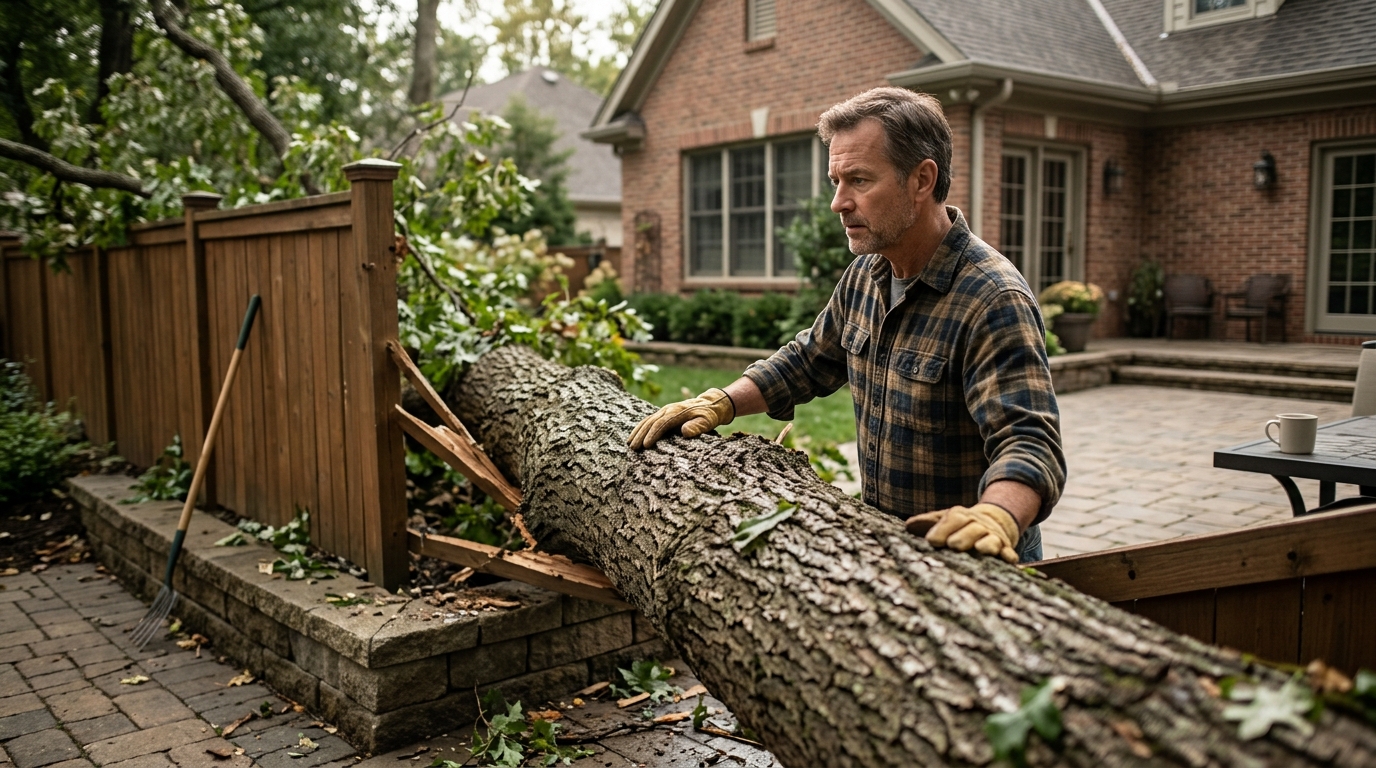
The most common trigger for coverage is physical impact. If a tree falls on your house, garage, deck, or fence due to wind, lightning, or ice, the removal of the tree is typically covered. The policy pays for the labor to take the tree down and haul it away. However, the structure repair is covered under your dwelling coverage, while the tree removal is a separate line item. You must document the damage thoroughly. Take photos of the tree on the structure, the base of the tree, and the resulting damage to the roof or walls before any work begins.
Access Blockage
Some policies cover tree removal if the tree blocks access to your home or driveway. This is often a specific clause in the policy. If a tree falls across your driveway and prevents you from entering or exiting your property, the insurer may cover the removal. The coverage usually requires that the access is fully blocked, not just partially obstructed. If a tree falls in your yard and hits nothing, it is generally not covered, even if it is large and unsightly. This is a common point of confusion for homeowners who assume any fallen tree is an insurance matter.
Neighbor Disputes
If a neighbor's tree falls on your property, your homeowners insurance is the primary policy to call. Your insurer will pay for the removal and any damage to your structures. They may then seek reimbursement from your neighbor's insurer if your neighbor was negligent, such as by ignoring a known dead tree. You should not rely on your neighbor's insurance directly. Filing a claim with your own insurer is faster and avoids the legal complexities of proving negligence. For more on how to handle these situations, see our guide on storm tree damage.
Debris Removal Limits
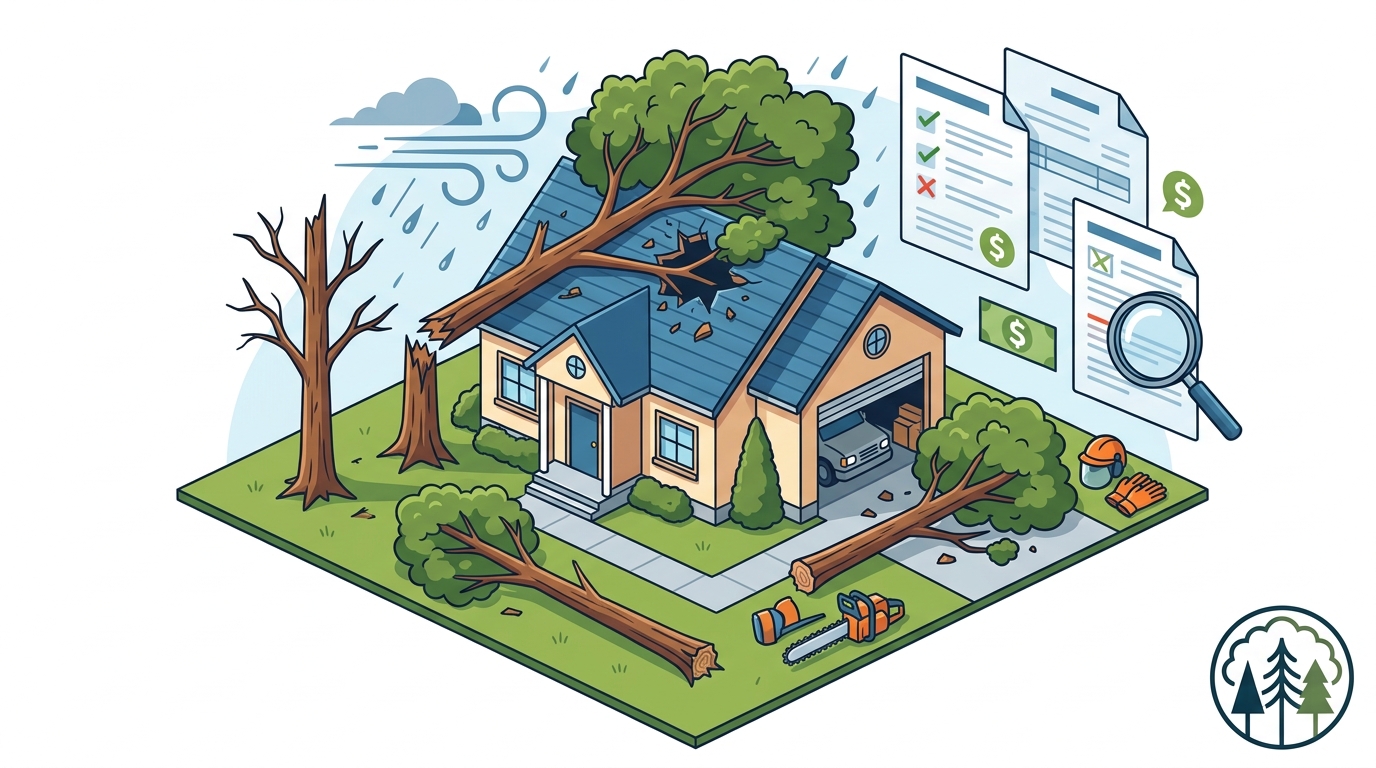
Even when coverage is triggered, it is rarely unlimited. Most standard homeowners policies, such as the HO-3 form, include a specific sublimit for tree and debris removal. This limit caps the amount the insurer will pay for the tree work, separate from the cost of repairing your home.
Typical Sublimits
Most policies cap tree removal at $500 to $1,000 per tree. Some policies have a total limit per storm event, often around $1,000 to $2,000. If the cost to remove the tree exceeds this sublimit, you are responsible for the difference. For example, if a large oak falls on your roof and the removal costs $2,500, but your policy limit is $1,000, you will pay $1,500 out of pocket. The structure repair, however, is covered under your dwelling limit, which is much higher. Always check your policy declarations page for the specific "Tree and Debris Removal" limit.
Cost vs. Coverage
It is important to compare the expected removal cost with your policy limit. A small tree under 30 feet might cost $200 to $500 to remove, which is often within the sublimit. A large tree over 60 feet near a house can cost $1,500 to $3,000 or more. In these cases, the out-of-pocket expense can be significant. You should also consider your deductible. If your deductible is $1,000 and the removal cost is $1,500, you pay the full $1,500 because the claim amount does not exceed the deductible. For a breakdown of typical removal costs, refer to our tree removal cost guide.
| Situation | Removal Covered? | Typical Limit / Notes |
|---|---|---|
| Tree falls on house, garage, or fence | Yes | Removal up to $500–$1,000 per tree; structure repair under dwelling coverage. |
| Tree blocks driveway or ramp | Often | Same removal cap; some insurers require full blockage. |
| Tree falls in yard, hits nothing | No | Your cost. Fallen-tree cleanup often $200–$500 for a medium tree. |
| Standing dead or dangerous tree | No | Maintenance. Ignoring it can void a later claim. |
| Tree falls on your car | Not under homeowners | Auto policy, comprehensive coverage, auto deductible. |
Preventive Removal Exclusions
One of the most significant exclusions in homeowners insurance is preventive maintenance. Your policy does not cover the removal of a tree that is standing, dead, or hazardous, even if it is clearly a risk to your home. This is because insurance is designed to cover sudden, accidental events, not ongoing maintenance or risk mitigation.
The Negligence Trap
If you know a tree is dead or hazardous and you leave it standing, you may be considered negligent. If that tree later falls on your house, your insurer may deny the claim entirely. They can argue that you failed to maintain your property and that the damage was a foreseeable result of your inaction. This is a critical risk. Paying to remove a dead tree before it falls is expensive, but it is far cheaper than a denied insurance claim and potential liability to neighbors. If you are unsure whether a tree is dead, our guide on signs a tree is dead can help you assess the situation.
When to Act
You should consider proactive removal if a tree is leaning significantly toward your home, has deep cracks in the trunk, or shows signs of internal decay. These are not covered by insurance, but they are serious safety hazards. Consulting with a professional can help you determine if the tree is a risk that warrants removal. Remember that tree work is dangerous and requires specialized equipment and training. Do not attempt to remove a large or hazardous tree yourself. For more on how to hire a safe and insured crew, see our hiring guide.
Key Takeaways
- Homeowners insurance covers tree removal only if the tree falls on a covered structure or blocks access.
- Most policies have a sublimit of $500 to $1,000 for tree and debris removal.
- Preventive removal of standing, dead, or hazardous trees is not covered by insurance.
- If a neighbor's tree falls on your property, file a claim with your own insurer first.
- Ignoring a known hazardous tree can lead to a denied claim due to negligence.
- Always document damage with photos before any work begins.
- Check your policy declarations page for specific sublimits and deductibles.
- Tree removal costs vary by size and access, ranging from $200 to $3,000+.
Frequently Asked Questions
Does insurance cover removing a dead tree before it falls?
No. Preventive removal is considered maintenance, which is the homeowner's responsibility. Insurance only covers sudden, accidental damage.
What if a tree falls on my car?
Homeowners insurance does not cover vehicle damage. You must file a claim with your auto insurance under comprehensive coverage, subject to your auto deductible.
How much will insurance pay for tree removal?
Most standard policies cap tree and debris removal at $500 to $1,000 per tree. You are responsible for any costs above this limit.
Is a tree that fell in my yard and hit nothing covered?
Almost never. If the tree did not damage a covered structure or block access, removal is your cost.
Who pays if a neighbor's tree falls on my house?
Your homeowners insurance pays for the removal and damage. Your insurer may then seek reimbursement from your neighbor if they were negligent.
Do I need a permit to remove a tree?
Permit requirements vary by city and county. Many municipalities require a permit for trees over a certain trunk diameter. Check with your local government before cutting.
Can I keep the wood after removal?
Usually, yes. Most removal quotes include cutting the trunk into logs. You can often keep the wood for firewood, though you may need to pay a small fee for splitting and hauling.
Conclusion
Understanding the boundaries of your homeowners insurance is essential for managing tree-related risks. Coverage is triggered by sudden damage to structures or access, but it is limited by sublimits and excludes preventive maintenance. By knowing these rules, you can make informed decisions about when to file a claim and when to pay out of pocket. For more detailed answers on costs, permits, and storm damage, visit TreeProfessionals.com to find plain-English guidance and local professionals.