
Who Is Responsible If My Neighbor's Tree Falls on My Property?
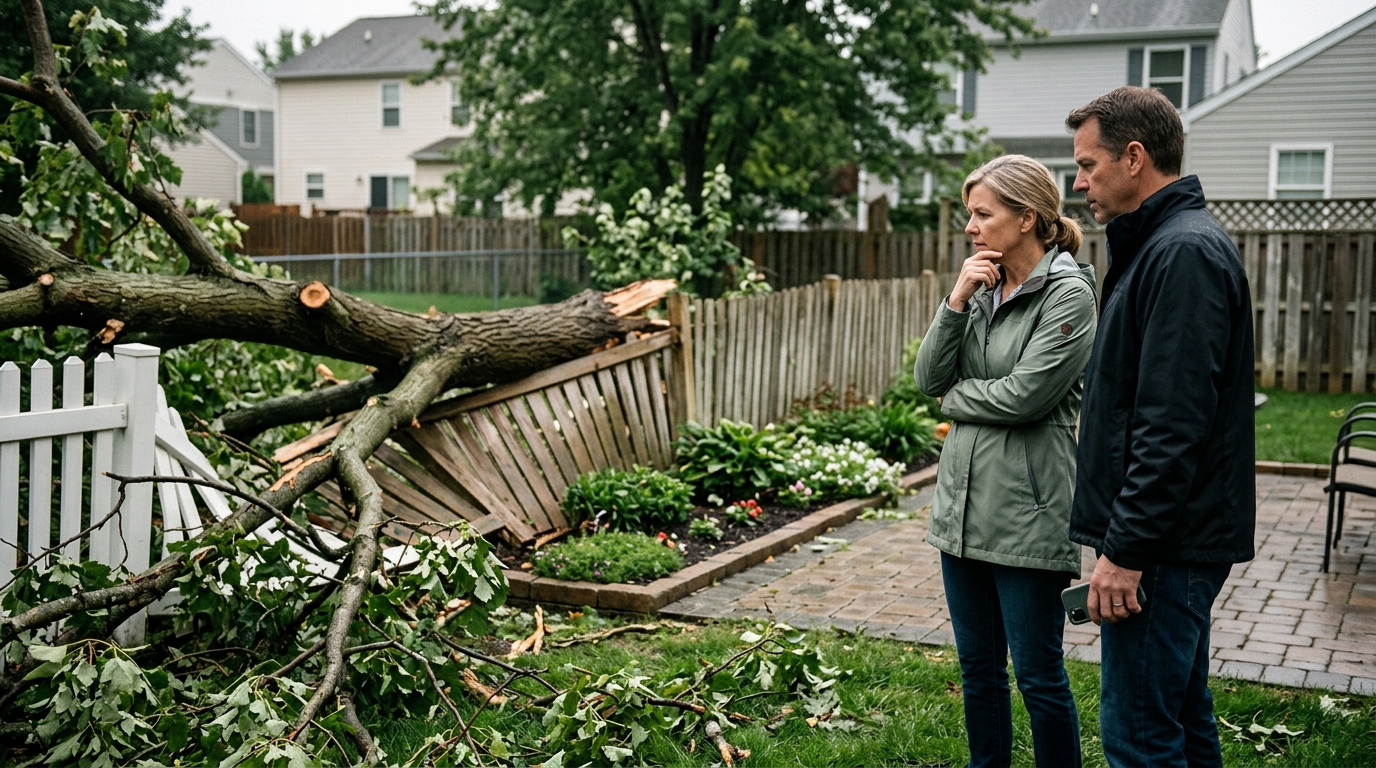
If a neighbor's tree falls on your property, you are generally responsible for the damage to your own structures, and your homeowners insurance typically covers the repair costs after you pay your deductible. You are not automatically entitled to compensation from your neighbor unless they were negligent. This guide explains how liability works, how to document the damage, and how subrogation claims function.
Liability Basics: Negligence vs. Act of God
Tree fall liability is a legal concept that determines who pays for property damage when a tree crosses property lines. The core distinction is between negligence and an act of God. If a tree falls due to a storm, high winds, or lightning, it is usually considered an act of God. In these cases, the neighbor is not liable for the damage, even if the tree was on their land. However, if the tree was dead, diseased, or structurally unsound and the neighbor knew or should have known about the condition, they may be liable for negligence. For additional details, review the Editorial standards TreeProfessionals com.
The Negligence Standard
Negligence in tree liability requires three elements: duty of care, breach of that duty, and causation. A property owner has a duty to maintain trees in a safe condition. If they fail to address a known hazard, such as a large crack or visible decay, and that tree falls on a neighbor's property, they have breached their duty. The damage must be directly caused by the fall. According to NC State Extension, determining responsibility often hinges on whether the tree owner was aware of the tree's condition before the incident.
Act of God Exceptions
An act of God is a natural event that could not have been reasonably predicted or prevented. Most standard homeowners policies do not require the tree owner to pay for damage caused by these events. If a healthy tree is uprooted by a hurricane, the neighbor is not responsible for the damage to your roof or car. The burden of proof for negligence is on the party claiming damages. You must show that the neighbor ignored obvious signs of decay or disease.
Homeowners Insurance Coverage
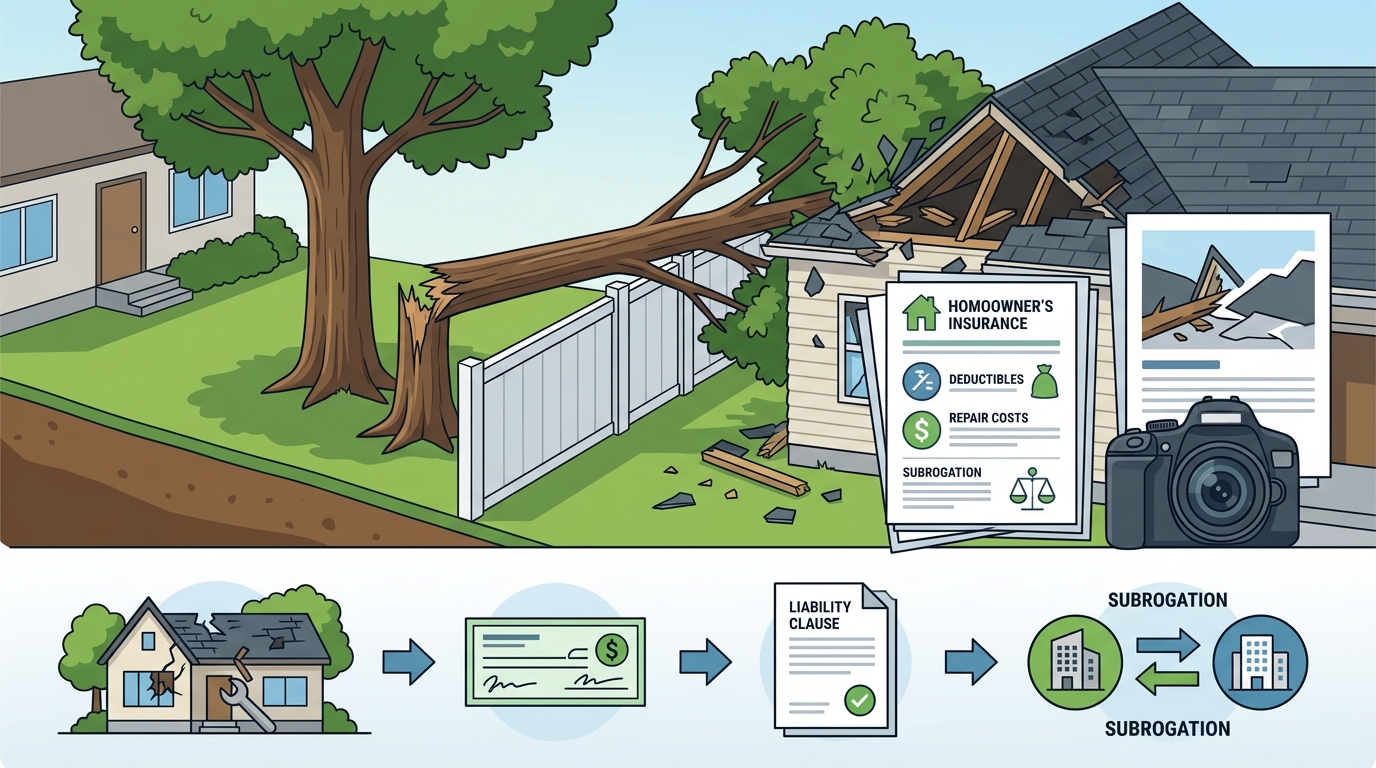
Homeowners insurance is the primary financial safety net for tree damage. Most standard policies cover sudden and accidental damage to your structures, including roofs, garages, and fences, caused by falling trees. If a neighbor's tree falls on your house, your own policy typically covers the repair costs, minus your deductible. You do not need to sue your neighbor to get your house fixed. Your insurer pays for the damage to your property first.
What Your Policy Typically Covers
Standard HO-3 policies, which are the most common in the US, cover direct physical damage to your dwelling and other structures. This includes the cost to remove the tree if it is blocking access or has damaged a structure. However, coverage limits apply. Most policies cap tree removal costs at a specific amount, often between $500 and $1,000 per tree. If the removal cost exceeds this limit, you pay the difference. The repair of the roof or siding is covered under your dwelling coverage, subject to your policy limits.
What Is Usually Excluded
Insurance does not cover the cost of removing a tree that fell in your yard and hit nothing. It also does not cover damage to your car, which is handled by your auto insurance comprehensive coverage. Additionally, if the tree was dead and you knew it was a hazard but did nothing, your insurer might deny the claim. Ignoring a known hazard can be seen as a failure to maintain your property. For general guidance on how insurance interacts with tree damage, Iowa's Consumer Connection notes that your own policy is the first line of defense.
Documentation and Evidence
Proper documentation is critical for both your insurance claim and any potential legal action against a neighbor. Evidence must be gathered immediately after the incident. Photos and videos should capture the tree's position, the extent of the damage, and any visible signs of decay or disease on the tree before it is removed. If the tree is still standing or partially standing, document the base of the trunk and any cracks or fungus.
Photographic Evidence
Take wide-angle shots to show the context of the fall, including property lines if visible. Take close-up shots of the damage to your roof, windows, or vehicles. If the tree has mushrooms, shelf fungus, or large cavities, photograph these specifically. These signs indicate decay that may have been present for some time. Timestamp your photos if possible, or use a camera that adds date and time metadata. This timeline helps establish when the damage occurred and the condition of the tree at that moment.
Professional Assessments
Consider hiring a certified arborist to inspect the tree before it is removed. An arborist can provide a written report on the tree's health and structural integrity. This report can serve as expert evidence in a negligence claim. If the arborist finds significant decay or disease that was not obvious to a layperson, it strengthens the argument that the tree was a known hazard. Keep all receipts for the arborist's inspection, as these costs may be recoverable if you win a liability claim.
Subrogation Claims
Subrogation is the legal process by which your insurance company seeks to recover the money it paid for your claim from the party responsible for the damage. If your neighbor was negligent, your insurer may file a subrogation claim against their homeowner's insurance. This process allows your insurer to recoup the deductible you paid and the amount they paid for the repairs. You do not need to manage this process yourself; your insurer handles the legal and administrative steps.
How Subrogation Works
When your insurer pays your claim, they step into your shoes legally. They can now pursue the neighbor's insurer for reimbursement. The neighbor's insurer will investigate the claim to determine if their policyholder was negligent. If negligence is established, the neighbor's insurer pays your insurer back. This amount is then used to reimburse your deductible. If the neighbor's insurer denies the claim, your insurer may choose to drop the subrogation effort, meaning you keep the deductible payment. The success of subrogation depends on the strength of the negligence evidence.
Impact on Your Relationship
Subrogation can strain neighborly relationships. It is often best to communicate openly with your neighbor about the incident. Let them know that your insurance is handling the claim and that subrogation is a standard process. Avoid making direct demands for payment, as this can complicate the insurance process. Your insurer's goal is to recover costs, not to punish your neighbor. If the neighbor was not negligent, subrogation will likely fail, and you will retain the deductible cost.
Key Takeaways
- You are generally responsible for damage to your own property, and your homeowners insurance covers it after your deductible.
- Neighbors are only liable if they were negligent, meaning they knew or should have known the tree was hazardous.
- Acts of God, like storms, do not make a neighbor liable for tree fall damage.
- Document the scene thoroughly with photos and videos before the tree is removed.
- Hiring an arborist for a written assessment can provide crucial evidence of negligence.
- Your insurer may file a subrogation claim against your neighbor's insurer to recover your deductible.
- Tree removal costs are often capped by insurance policies, so you may pay the difference.
- Do not ignore dead or dying trees on your own property, as this can void future claims.
Frequently Asked Questions
Do I have to pay my deductible if my neighbor's tree falls on my house?
Yes, you typically pay your deductible first. Your insurer then pays for the repairs. If your neighbor was negligent, your insurer may recover your deductible through subrogation.
Can I sue my neighbor for the cost of removing the tree?
You can sue for negligence if you can prove the neighbor knew the tree was hazardous. However, most people rely on their own insurance and let their insurer handle subrogation.
What if the tree fell on my car?
Your auto insurance comprehensive coverage handles damage to your car. Your homeowners insurance does not cover vehicles. You will pay your auto deductible.
How much does insurance pay for tree removal?
Most policies cap tree removal at $500 to $1,000 per tree. If the removal costs more, you pay the difference out of pocket.
Do I need to talk to my neighbor's lawyer?
No, let your insurance company handle the communication. Direct contact with their lawyer can complicate the insurance process.
What if the tree was dead and my neighbor didn't know?
If the decay was hidden and not reasonably discoverable, the neighbor may not be considered negligent. Your insurer will assess the evidence to determine liability.