
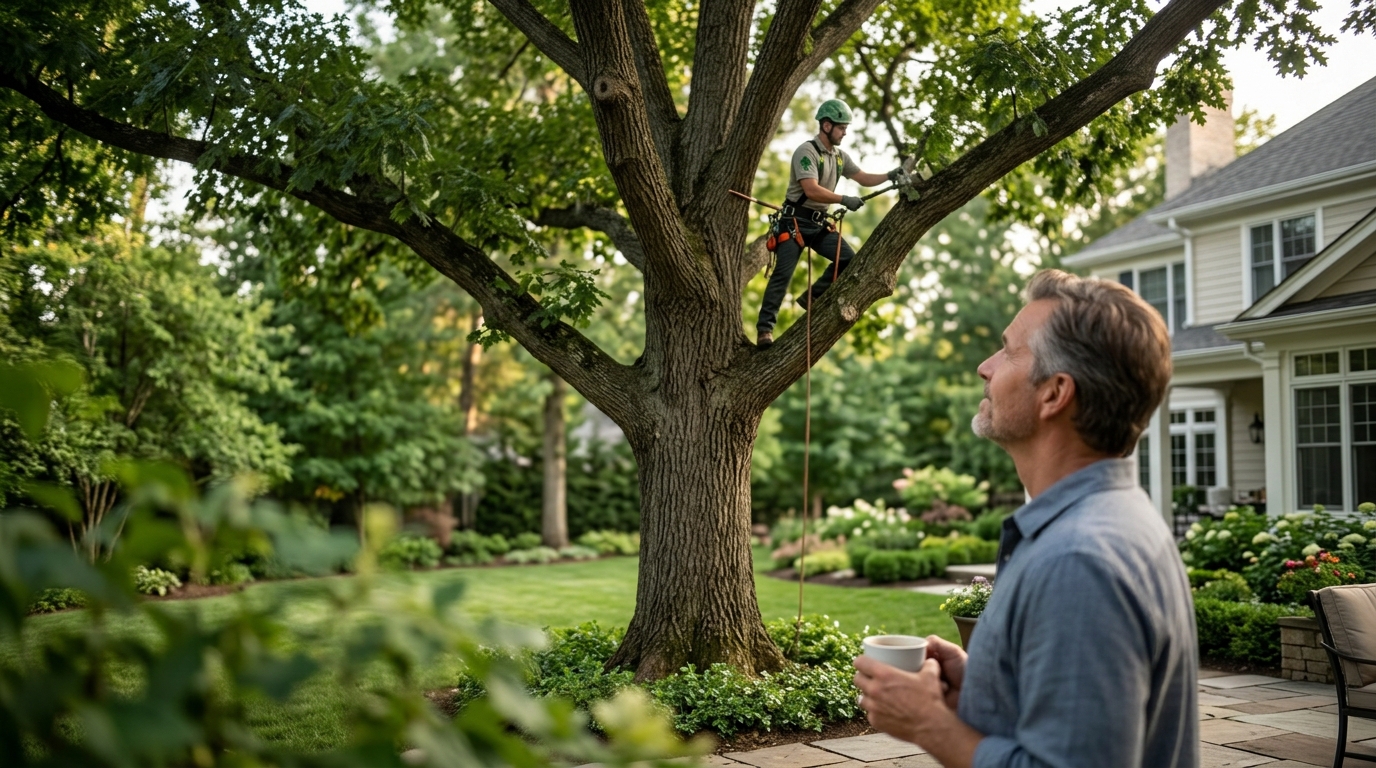
Tree trimming costs $75 to $1,500 per tree in the US, depending mostly on height and access. This guide breaks down the exact price tiers, the best time of year to book, and how to tell if you need a professional crew. We cover regional price variations, DIY limits, and how to get a fair quote from a local service.
Price Tiers by Tree Size
Height is the single biggest driver of tree trimming cost. A small tree under 30 feet can often be trimmed from the ground or a short ladder. This tier typically runs $75 to $450. Medium trees between 30 and 60 feet require a bucket truck or a climber. These jobs usually cost $150 to $875. Large trees over 60 feet need a climbing crew and sometimes a crane. Expect to pay $300 to $1,500 or more for these.
Hourly rates for a two or three person crew with a chipper range from $150 to $300 per hour. Most pros quote a flat rate after an in-person visit. The quote should describe the specific cuts, such as the number of limbs removed and the clearance target. It should also state whether debris hauling is included.
Regional Price Variation
Tree trimming costs vary by region due to labor rates, local demand, and tree species. Urban areas with high cost of living tend to charge more. Rural areas may have fewer pros, which can drive up travel fees. The national average is a starting point, but your local quotes are the real number.
Some regions have specific tree species that are harder to work with. For example, oaks in certain areas require specific pruning techniques to prevent disease. This can affect the price. Always get at least three local quotes to understand the market rate in your area.
Best Time to Trim
Timing affects both the cost and the health of the tree. Late winter, while the tree is dormant, is the default best time for most species. This is often the cheapest time to book work because demand is lower. Spring bloomers should be pruned right after flowering. Stone fruit trees are best pruned in dry summer weather.
Never prune oaks from April to July in regions where oak wilt exists. This is a critical safety and health rule. Pruning during this window can spread the disease. If you are unsure about your specific tree species, ask the pro for their recommended timing.
DIY Limits and Safety
Homeowners can safely trim branches under about 2 inches in diameter from the ground. Pole tools can reach about 12 to 15 feet. Anything higher or larger is a job for a professional crew with ropes and safety gear. Ladders and saws at height are dangerous. Never work near power lines. Keep a minimum of 10 feet of clearance from any line.
If a branch is within 10 feet of a power line, do not touch it. Call your utility company or a qualified line-clearance pro. This is a strict safety rule that protects you and the grid.
How to Get a Fair Quote
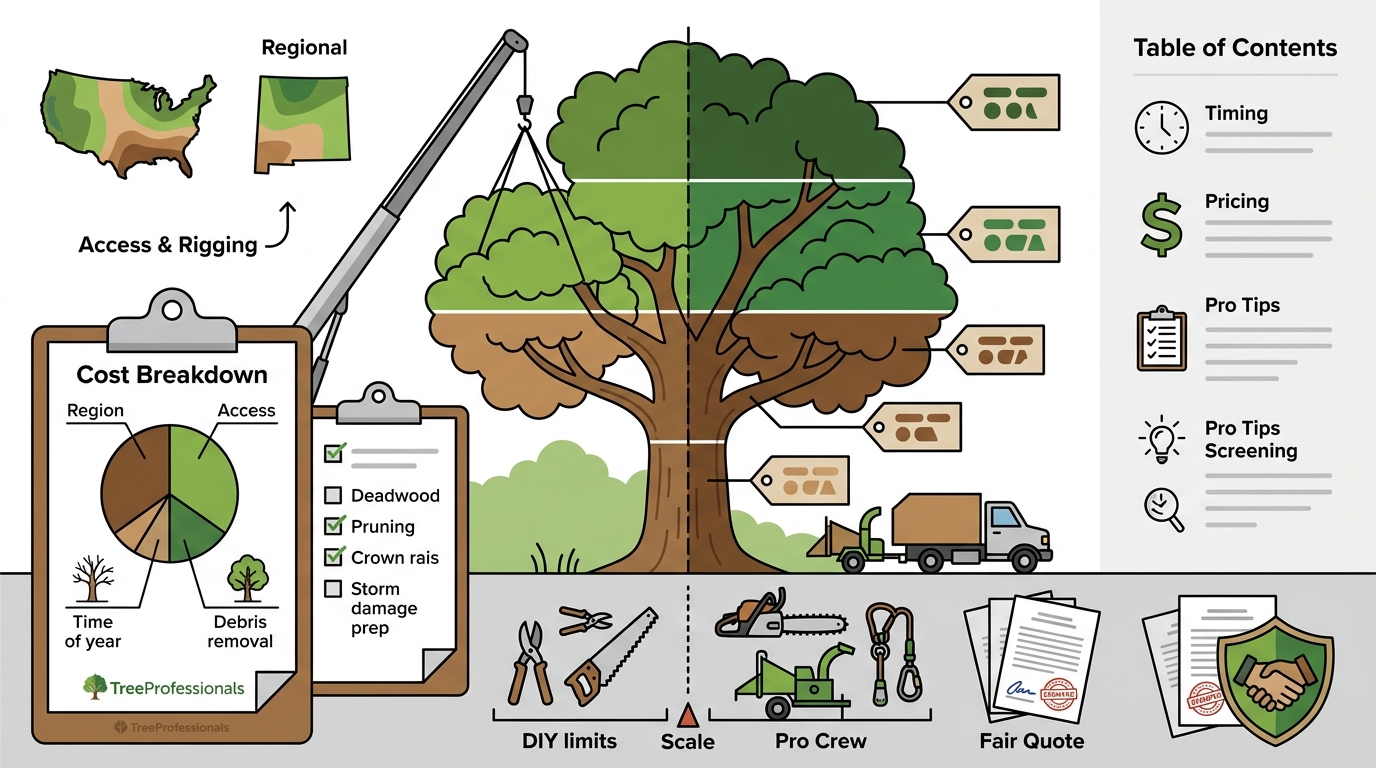
Decide what the trim is for before you call. Is it for roof clearance, dead limb removal, or thinning for light? A crew that knows the goal can quote accurately. Check the season to ensure the timing is right for your tree species. Get a written quote that describes the cuts. It should list the number of limbs, the clearance target, and whether debris hauling is included.
Say no to topping. Any quote to cut the top off a tree to make it shorter is a quote to decline. Topping is harmful and leads to weak regrowth. Confirm the company has insurance and line-clearance qualifications if any branch is near a power line. You can find local pros in the Find a Pro directory to start your search.
Key Takeaways
- Tree trimming costs $75 to $1,500 per tree, with height being the main factor.
- Small trees under 30 ft cost $75 to $450.
- Medium trees (30-60 ft) cost $150 to $875.
- Large trees (60 ft+) cost $300 to $1,500+.
- Late winter is the best and cheapest time to book for most trees.
- Never prune oaks in April-July in oak wilt regions.
- DIY is safe only for branches under 2 inches from the ground.
- Always get a written, itemized quote and say no to topping.
Frequently Asked Questions
How much does tree trimming cost for a small tree?
A small tree under 30 feet typically costs $75 to $450 to trim. This is the most affordable tier because it often requires no bucket truck.
What is the best time of year to trim trees?
Late winter is the best time for most trees. It is the dormant season and usually the cheapest time to book. Spring bloomers should be trimmed after flowering.
Can I trim my own tree?
You can trim branches under about 2 inches in diameter from the ground. Anything higher or larger requires professional equipment and safety gear. Never work near power lines.
How often should I trim my trees?
Mature shade trees need trimming every 3 to 5 years. Young trees and fruit trees need light shaping every 1 to 3 years to build a strong frame.
Does insurance cover tree trimming?
Homeowners insurance typically does not cover routine tree trimming. It only covers removal if a tree falls on a covered structure. Routine maintenance is the homeowner's responsibility.
What is the difference between pruning and trimming?
Pruning is cutting for the tree's health and structure. Trimming is cutting for shape and clearance. For cost and timing, the two are often treated the same by pros.
How do I find a local tree trimming service?
You can browse local companies in the Find a Pro directory. Look for companies with good reviews and proper insurance. Get at least three quotes before hiring.
Conclusion
Tree trimming is a routine maintenance task that protects your property and your trees. Knowing the cost ranges and timing helps you budget and plan effectively. Always hire a qualified pro for work above 15 feet or near power lines. You can start your search by visiting the Find a Pro directory on TreeProfessionals.com to connect with local tree care professionals.