
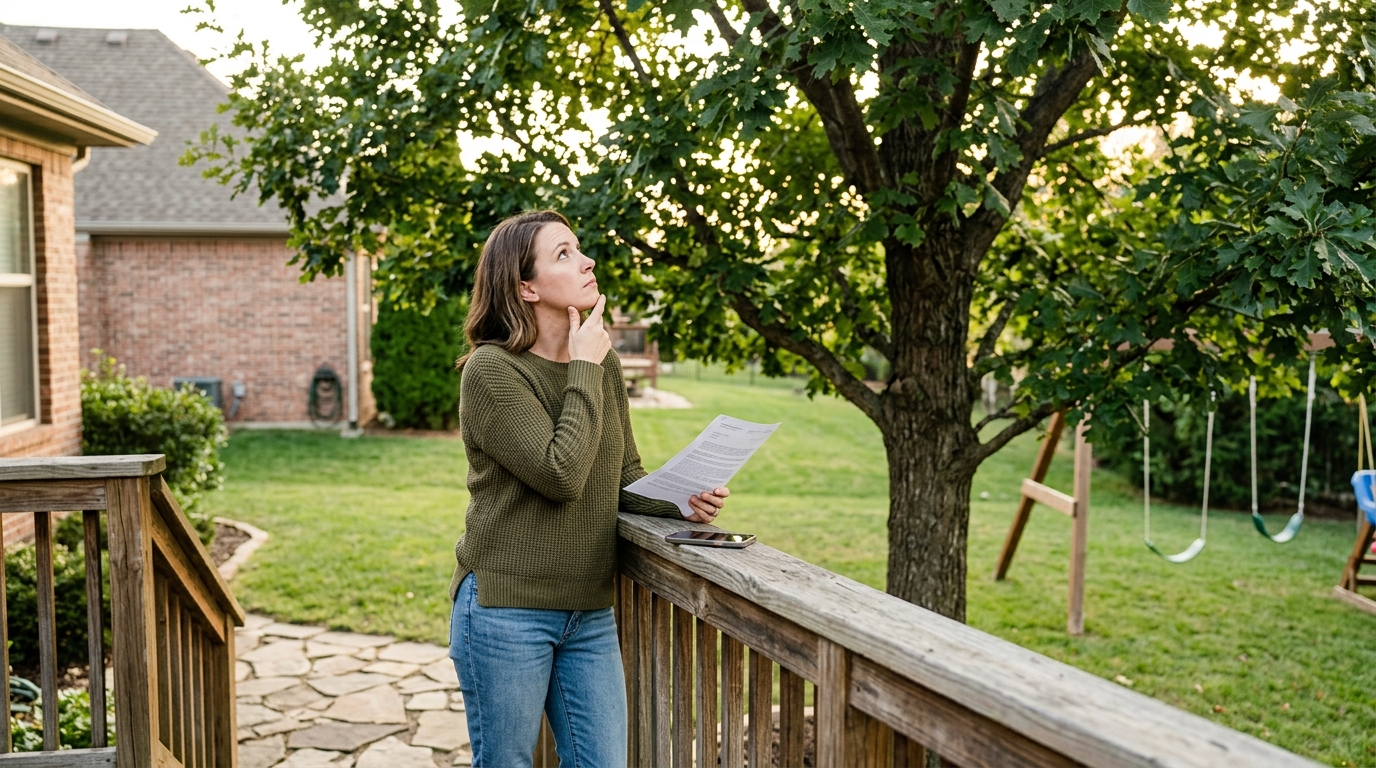
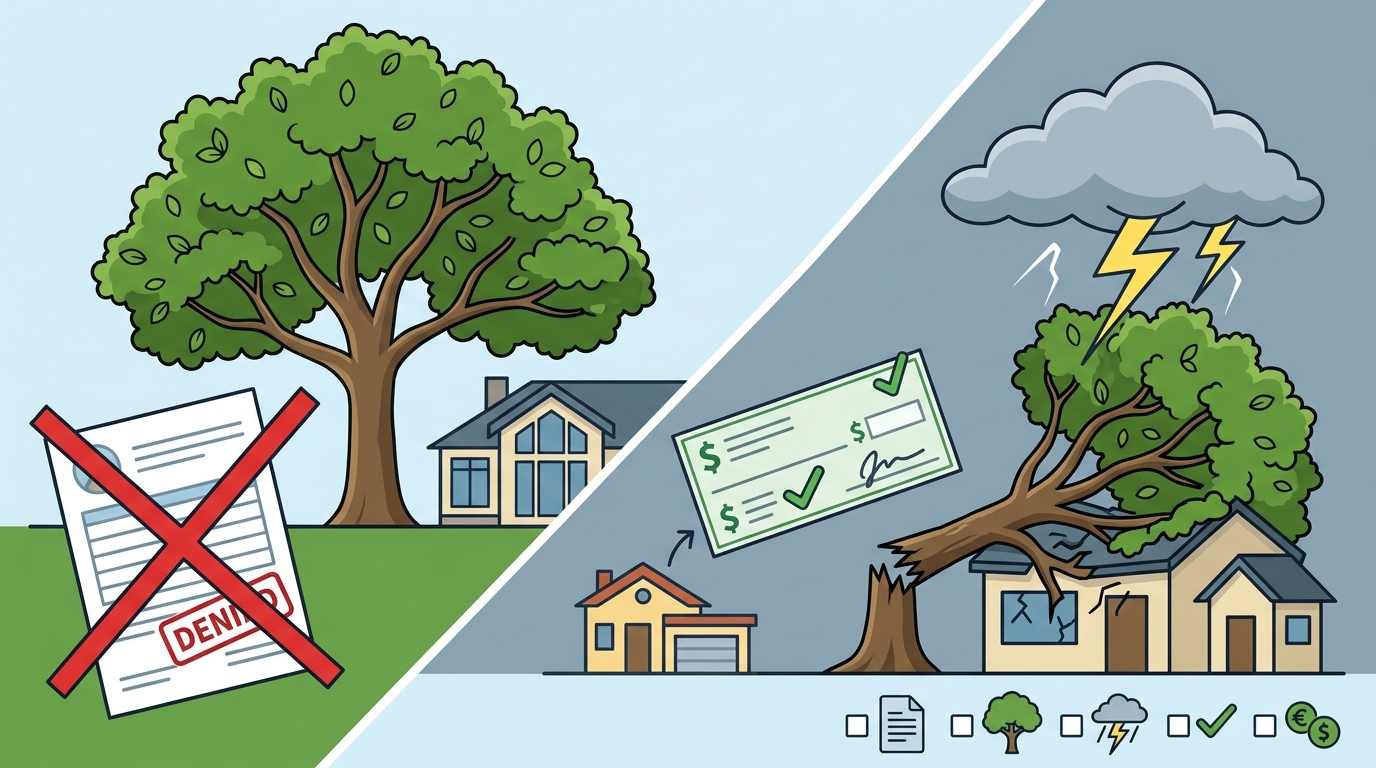
Homeowners insurance denies claims for removing a healthy tree because policies cover sudden, accidental damage to structures, not routine yard maintenance. Preventive removal is the homeowner's financial responsibility. If a tree is standing and healthy, the insurer views the removal as a choice you made, not a loss they must repair.
The Core Distinction: Sudden Damage vs. Maintenance
Homeowners insurance is a contract designed to protect you against unforeseen, sudden events. It is not a savings account for landscaping projects. The fundamental rule is that insurance covers the repair of damage caused by a covered peril, such as wind, lightning, or ice. It does not cover the cost of preventing potential future damage.
When you ask an insurer to pay for removing a healthy tree, you are asking them to pay for maintenance. In the eyes of an underwriter, a standing tree is an asset or a neutral object. It is not a damaged property. Therefore, the cost to remove it is a maintenance expense, similar to mowing the lawn or painting the house. This distinction is the primary reason for almost every denial in this category.
Consider a mature oak tree that is leaning slightly but is still green and healthy. You might feel it is a hazard. However, because it has not fallen and caused damage, the insurer has no obligation to act. The moment it falls on your roof, the nature of the event changes from maintenance to sudden damage, and coverage typically activates.
Understanding the "Maintenance Exclusion"
Most standard homeowners policies, such as the HO-3 form, contain a specific maintenance exclusion. This clause states that the insurer is not liable for wear and tear, deterioration, or the need for maintenance. A healthy tree, by definition, does not require emergency intervention under the policy terms. It requires care, which is your job as the property owner.
For example, if you have a tree with a few dead branches, you might want it trimmed or removed to prevent a limb from falling. This is a maintenance decision. The insurer will deny the claim because the tree is not dead or damaged in a way that triggers coverage. You are paying to avoid a potential problem, which is not a covered loss.
When a "Healthy" Tree Becomes a Liability
There is a gray area between a healthy tree and a hazardous one. A tree may look green but have internal decay, root failure, or structural cracks. In these cases, the tree is not truly healthy, even if it has leaves. However, proving this to an insurer before the tree falls is difficult and often expensive.
If you suspect a tree is structurally unsound, you need a professional assessment. An arborist can provide a written report detailing the decay, cracks, or root issues. This report can serve as evidence that the tree was not healthy. However, even with a report, many insurers will still deny the claim for removal unless the tree has already caused damage or is in the process of falling. The report is useful for legal liability if the tree falls on a neighbor, but it rarely triggers insurance coverage for removal.
The implication here is that you must act before the tree becomes a hazard. If you know a tree is dying and leave it standing, you may be liable for any damage it causes. Paying for removal now is expensive, but it is far cheaper than a denied claim or a lawsuit later. This is a risk management decision, not an insurance claim.
The Cost of Preventive Removal vs. Insurance Deductibles
Homeowners often compare the cost of preventive removal to their insurance deductible. If a tree removal costs $1,500 and your deductible is $500, it might seem logical to file a claim. However, this logic fails because the claim will be denied. You will pay the full $1,500 out of pocket, and you will have no insurance benefit.
Furthermore, filing a claim for a non-covered item can have negative consequences. While a denied claim does not usually raise your rates, it creates a record of a claim that was filed and denied. This can complicate future claims or make it harder to sell your home, as buyers may see a history of insurance disputes. It is better to treat tree removal as a home maintenance cost, like a new roof or HVAC repair, and budget for it accordingly.
For instance, a medium-sized tree removal typically costs between $500 and $1,000. This is a significant expense, but it is a one-time cost. If you wait for the tree to fall on your house, the repair costs could be thousands of dollars, and you will still have to pay the deductible. The insurance will cover the repair, but not the removal if the tree was healthy before it fell. This is a complex financial decision that requires careful planning.
How to Protect Yourself and Your Property
The best way to protect yourself is to maintain your trees proactively. Regular pruning, watering, and monitoring can prevent many issues. If you have a large tree near your house, consider getting a professional risk assessment. This is not an insurance claim; it is a service you pay for to make an informed decision.
If the assessment shows the tree is hazardous, you have two options. You can pay for removal, or you can accept the risk. If you choose to accept the risk, you should document your decision. This can help protect you from liability if the tree falls on a neighbor. However, you should not expect your insurance to cover the removal. It is a cost of ownership.
TreeProfessionals.com provides plain-English answers to these questions, helping you understand the difference between maintenance and coverage. We do not provide insurance advice, but we can help you find the right professionals to assess your trees. By understanding the rules, you can make better financial decisions and avoid the frustration of a denied claim.
Key Takeaways
- Homeowners insurance covers sudden, accidental damage, not routine maintenance or preventive removal.
- A healthy tree, even if it looks risky, is not a covered loss until it causes damage.
- The maintenance exclusion in your policy is the primary reason for claim denials.
- Professional arborist reports can document hazards but rarely trigger insurance coverage for removal.
- Preventive removal is a financial responsibility that should be budgeted for, not claimed.
- Filing a claim for a non-covered item can complicate future insurance interactions.
- Regular tree care and risk assessments are the best way to protect your property and liability.
Frequently Asked Questions
Does insurance cover removing a tree that is leaning but still green?
No. If the tree is leaning but still has leaves and is not in the process of falling, it is considered a maintenance issue. Insurance will not cover the removal until the tree falls and causes damage to a covered structure.
Can I file a claim if an arborist says my tree is dying?
Probably not. Even if an arborist provides a report stating the tree is dying or hazardous, insurers typically view this as a maintenance issue. They will likely deny the claim for removal unless the tree has already caused damage.
What if the tree falls on my neighbor's house?
If your tree falls on your neighbor's house, your liability insurance may be involved. However, this is a legal and insurance matter that depends on whether you were negligent in maintaining the tree. It is not a standard homeowners claim for removal.
How much does preventive tree removal cost?
Costs vary by tree size and location, but a medium tree removal typically ranges from $500 to $1,000. This is a maintenance expense that you must pay out of pocket.
Will a denied claim raise my insurance rates?
A denied claim usually does not raise your rates, but it creates a record. It is best to avoid filing claims for non-covered items to keep your insurance history clean.
How can I protect myself from liability if I leave a risky tree?
Get a professional risk assessment and document your decision to leave the tree. This can help show that you were aware of the risk and made a conscious choice, which may reduce your liability if the tree falls.